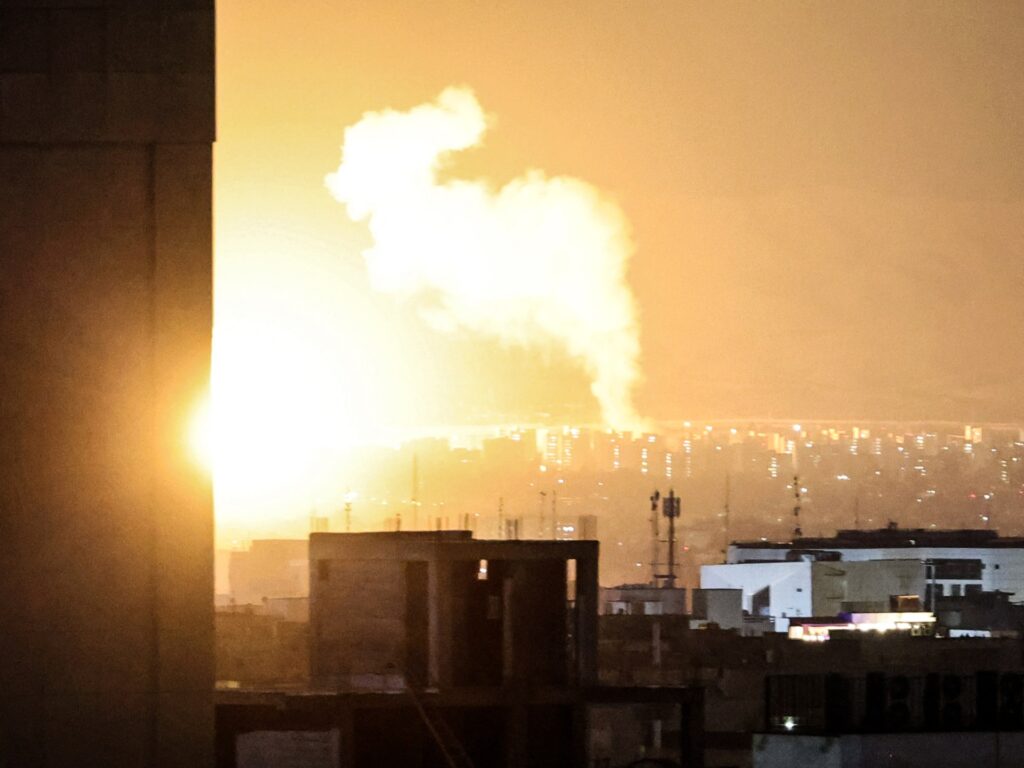
As the US-Israeli conflict with Iran extends into its second week, Tehran has declared a stance of conditional restraint, stating it will not attack neighbouring countries unless the aggression begins from those territories. This development adds a complex layer to the unfolding war, emphasizing Iran’s focus on self-defense and limiting the geographical spread of hostilities.
The ongoing conflict, ignited by heightened tensions and covert operations, has seen a series of strikes and counterstrikes, with no immediate signs of de-escalation. The US and Israel have intensified their efforts aiming to limit Iran’s military capabilities and regional influence. Tehran’s latest statement appears to be an attempt to contain the war within its borders and avoid a broader regional conflict.
Iranian officials have repeatedly accused the US and Israel of orchestrating attacks on Iranian soil and assets in neighbouring countries. However, Tehran maintains it will not target neighbouring states unless those nations become active participants or launch attacks against Iran first. This position underscores Tehran’s strategic approach to avoid alienating or embroiling neighbour states unnecessarily, trying to paint itself as a defensive actor rather than an aggressor.
The conflict traces back to longstanding disputes over Iran’s nuclear program, regional dominance, and international sanctions. Recently, the escalation stemmed from a series of sabotage attempts, bombings, and cyber attacks attributed by both sides to one another. In response, Iran has retaliated selectively against what it calls terrorist bases within its borders and in border regions.
Neighbouring countries, including Iraq, Syria, and Lebanon, have become critical zones in the confrontation, hosting various militias and proxy forces linked to Iran. Tehran’s warning serves as a message to these local actors and regional governments, cautioning against allowing their territories to be used as launchpads for attacks.
International actors and analysts remain deeply concerned about the risk of a larger regional war breaking out. Diplomats are working intensively behind the scenes to find avenues for ceasefires and negotiations amid the escalating hostilities.
The humanitarian impact of the conflict has already been severe, with civilian casualties and infrastructure damage reported in both Iran and neighbouring zones. Economic repercussions are rippling through global markets, especially affecting oil prices and regional trade routes.
Tehran’s declaration marks a strategic communication aimed at deterring further escalation while maintaining readiness for defense. The international community watches closely as the conflict continues with unpredictable outcomes.
As the war progresses, the balance between restraint and retaliation remains fragile. Any misstep could trigger wider involvement by regional powers or international coalitions, escalating the conflict beyond its current borders.
In summary, the Iran war remains a highly volatile situation with Tehran pledging restraint conditional on attacks originating from neighbouring territories. The conflict continues to challenge diplomatic efforts for peace while reshaping the geopolitical landscape in the Middle East.