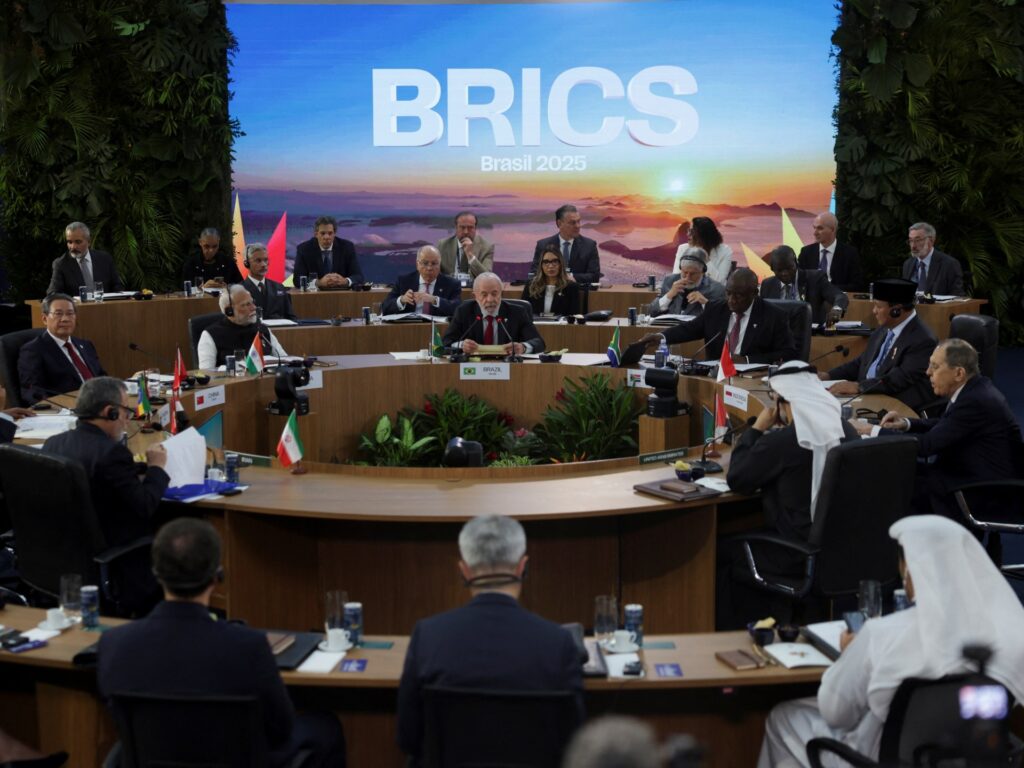
The BRICS bloc, comprising Brazil, Russia, India, China, and South Africa, has traditionally been a platform for assertive and sometimes divergent geopolitical stances. However, since India assumed the chairmanship of BRICS this year, the group has exhibited a noticeably more cautious approach, particularly concerning the escalating tensions involving the US, Israel, and Iran.
Recent developments in the Middle East, especially the US and Israel’s military actions against Iran, have put the BRICS coalition under increased scrutiny. While the bloc has historically positioned itself as a counterbalance to Western dominance and often voiced critiques of unilateral military interventions, the current geopolitical scenario exposes subtle fault lines within the group.
India, as the current chair, appears to be steering the coalition toward a more measured and diplomatic discourse, avoiding outright condemnations or criticisms of the US and Israel’s operations. This shift likely reflects India’s complex diplomatic balancing act, as it maintains strategic partnerships with Western powers while also fostering relations with Middle Eastern countries, including Iran.
China and Russia, two major BRICS players with vested interests in the Middle East, have been more vocal in expressing concern over US-Israel actions. They emphasize de-escalation and dialogue, implicitly criticizing the aggressive postures without explicitly condemning the bloc’s Western counterparts.
Brazil and South Africa have also adopted a reserved tone, reflecting their own strategic calculations and the broader BRICS consensus under India’s stewardship. The result is a bloc that, while unified in principle about sovereignty and resistance to external interference, is currently divided in its rhetoric and tangible responses to the Middle East conflict.
Analysts suggest that this subdued stance marks a departure from BRICS’s traditionally more forthright rhetoric, possibly signaling a realignment or greater pragmatism in its geopolitical engagement.
In summary, the BRICS bloc is visibly divided and more cautious than usual about the US-Israel military activities against Iran since India took over as chair. The group’s usual assertiveness has given way to measured diplomacy, indicating the complexities of balancing varied national interests within an influential global coalition.