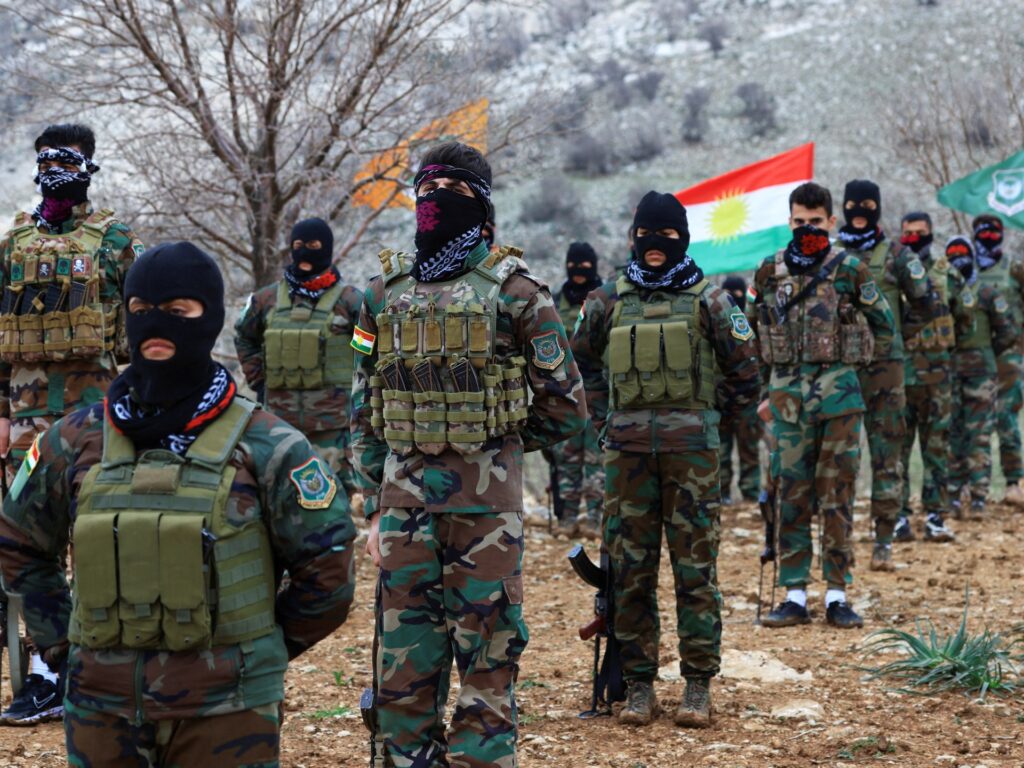
In recent days, US President Donald Trump has engaged in talks with several Kurdish groups operating in Iran and Iraq. This move signals a strategic effort by the United States to rally Kurdish factions in the region as part of its broader objective to counter Iranian influence.
The Kurdish groups involved are primarily located in the border areas of Iran and Iraq, where Kurdish populations have long sought greater autonomy and recognition. These groups have historically had contentious relationships with central governments, and their aspirations often put them at odds with Iran’s regime.
By engaging with at least three Kurdish factions, the US aims to forge alliances that could play a significant role in its geopolitical strategy against Iran. The Kurdish groups possess considerable local knowledge and influence, which could be leveraged in intelligence and operational efforts.
The Kurdish people have a complex political landscape with multiple groups operating independently, each with its own leadership, agenda, and alliances. However, common among these groups is the desire to protect Kurdish interests and push back against external oppression.
In Iraq, Kurdish forces, primarily the Peshmerga, have been significant players in regional security and have occasionally cooperated with US forces in combating extremist threats. Meanwhile, Kurdish groups in Iran have faced harsher repression and operate under more challenging conditions.
The US involvement with Kurdish groups in both nations signifies a nuanced approach to the region’s dynamics. This includes balancing support for Kurdish autonomy without destabilizing broader regional alliances.
This development also reflects broader US foreign policy trends that prioritize countering Iranian regional influence through unconventional partnerships and local proxies.
Analysts suggest that such alliances could lead to increased pressure on Iran, particularly in contested border areas, potentially disrupting Tehran’s strategic calculations.
However, these engagements also risk escalations and increased tensions between Iran and the Kurdish groups, potentially drawing the US further into regional conflicts.
The Kurdish groups involved in these US discussions likely see the engagement as an opportunity to enhance their political leverage and security capabilities.
At the same time, the US faces challenges in ensuring that its support does not exacerbate regional instability or alienate other regional partners.
Overall, the US rallying Kurdish groups in Iraq and Iran highlights the complex interplay of local aspirations, regional power struggles, and international diplomacy in the Middle Eastern geopolitical arena.