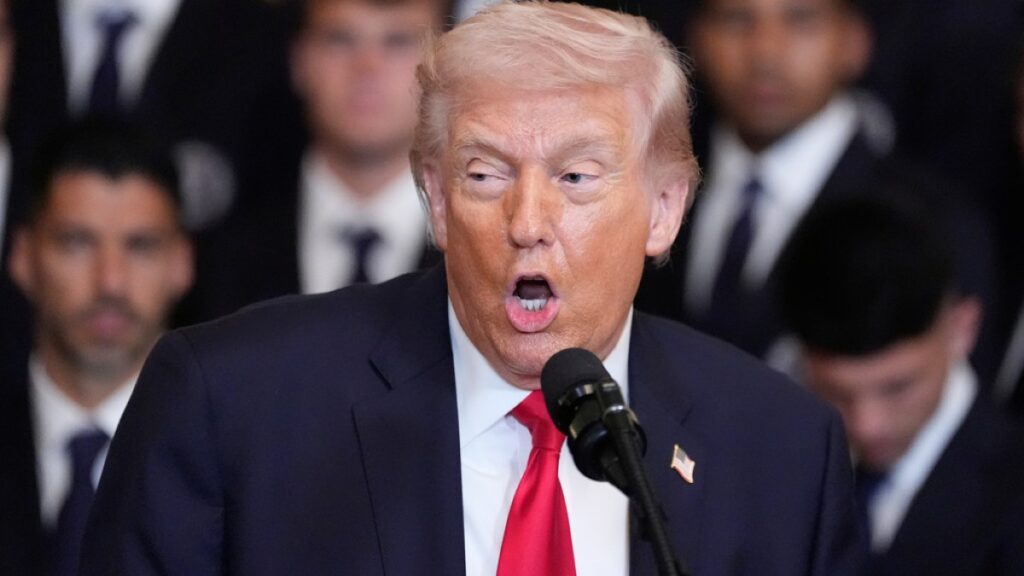
In a provocative statement, former U.S. President Donald Trump declared that regime change in Cuba is merely a “question of time,” drawing a parallel with the recent approach taken against Iran. Trump’s assertion comes against the backdrop of his administration’s intensified efforts to apply economic pressure on the Cuban government through tougher sanctions, aiming to destabilize the island nation’s economy and government.
During his tenure, the Trump administration implemented a series of stringent sanctions targeted at crippling Cuba’s financial and economic infrastructure. These measures were designed to limit Cuba’s access to international markets, restrict remittances, and target entities associated with the regime, thereby weakening the government’s hold and pushing for political change.
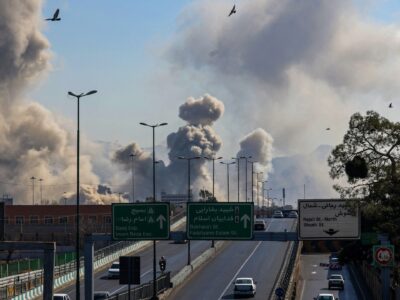
Trump’s comment underscores a foreign policy standpoint rooted in aggressive economic tactics to prompt regime shifts. The approach mirrors the U.S.’s strategy toward Iran, where the focus has been on maximizing economic hardships to coerce governmental concessions or regime transformation.
Cuba, long an adversary of U.S. policies since the Cold War era, has been under various sanctions and restrictions. However, the Trump administration marked a departure with a significant tightening of these sanctions, reversing prior efforts at normalization seen during the Obama administration.
This shift involved closing loopholes that previously allowed financial transactions and travel, imposing stricter bans on business dealings with Cuban entities linked to the military, and targeting the tourism sector that generates vital income for the Cuban regime.
The tightening of sanctions was part of a broader strategy to increase pressure on Cuba’s Communist government. The intent was to trigger internal unrest and economic instability that might lead citizens to demand political reform or an outright change in leadership.
Critics argue that these measures disproportionately affect ordinary Cubans, worsening their living standards without guaranteeing political change. However, proponents believe sustained economic pressure is the most effective non-military means of influencing authoritarian regimes.
Trump’s recent remarks reiterate a belief in maintaining robust economic sanctions until regime change is achieved. By grouping Cuba’s potential upheaval with Iran’s, Trump signals an intention to replicate the same high-pressure tactics deemed successful in other contexts.
This stance reinforces the U.S. policy of not engaging diplomatically with the Cuban government except under the condition that democratic reforms are enacted. It likely foresees a continuation of sanctions and possible escalation if the Cuban government does not reciprocate with concessions.
The international response has been mixed. Some allies support the firm approach against authoritarian regimes, while others advocate for dialogue and gradual reforms. The Biden administration, in contrast, has shown signs of easing some sanctions to engage Cuba more constructively.
Nevertheless, Trump’s declaration remains a stark reminder of the enduring U.S. objective to influence regime dynamics in Havana through economic leverage. Whether this will result in actual political change or further entrench Cuba’s government is a key question facing policymakers and observers.
As tension persists, the Cuban population continues to face economic hardships exacerbated by these sanctions, combined with internal governance challenges and global economic factors.
Overall, Trump’s statement and actions reflect a continuation of U.S. hardline policies aimed at regime change via economic destabilization, underscoring a long-standing geopolitical contest involving Cuba and the United States.