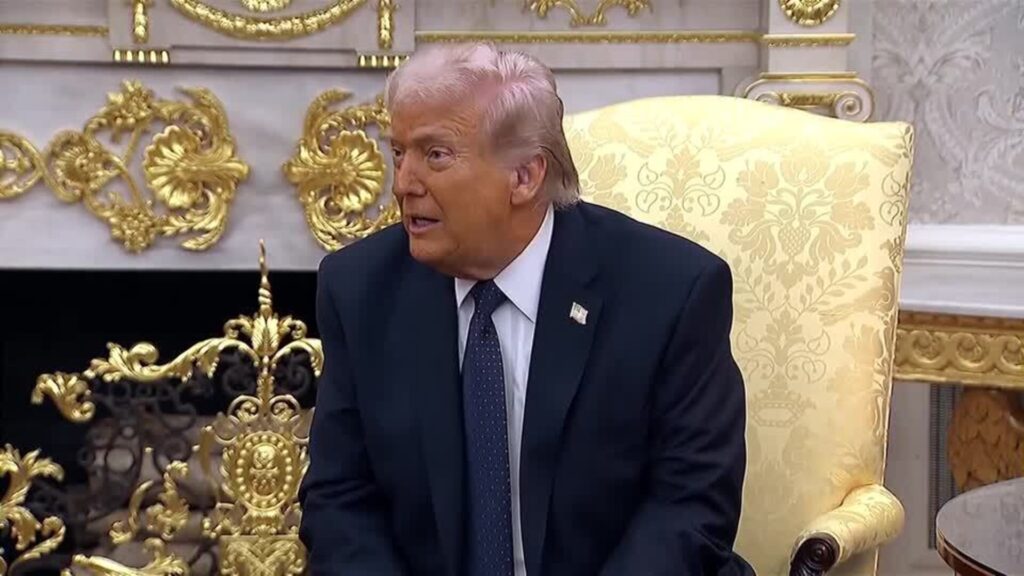
In a recent statement to reporters, former U.S. President Donald Trump asserted that most of the individuals he regarded as potential future leaders for Iran have died. This comment highlights the complexities and challenges surrounding Iran’s political leadership and the ongoing tensions between the United States and Iran.
Trump’s remark came amid discussions about the state of Iranian leadership and the future trajectory of the country. He suggested that the pool of leaders who might have emerged as replacements or alternatives to the current regime has largely been diminished by deaths.
While details about the identities of these individuals were not extensively elaborated on, Trump’s statement implies a significant impact on the power vacuum and stability within Iran’s political landscape.
Iran’s leadership has been a focal point of international attention, particularly due to its influence in regional geopolitics and its contentious relationship with the West. The country’s supreme leader, Ayatollah Ali Khamenei, holds substantial authority, and the question of succession is a subject of speculation and concern.
The assertion that many potential successors are deceased might reflect the turbulent history of Iranian politics, involving purges, political imprisonments, and even targeted killings over the years.
This revelation adds an additional layer to the ongoing discourse on U.S.-Iran relations, especially considering past efforts and policies aimed at influencing Iran’s political structure.
Experts on Middle Eastern politics note that leadership transitions in Iran are complex and influenced by various power centers including the Revolutionary Guards, clerical authorities, and hardliner factions.
Trump’s statement may also be interpreted as a commentary on the difficulties faced by external parties in influencing or predicting Iran’s internal political dynamics.
Iran continues to face internal and external pressures, including economic sanctions, political dissent, and regional conflicts, all of which contribute to uncertainties about its future leadership.
The statement underscores the broader narrative of instability and the contested nature of power within Iran. It also raises questions about how the international community, including the United States, should approach engagement with Iran moving forward.
Despite Trump’s comments, the leadership structure in Iran remains robust, with institutionalized mechanisms for succession and governance.
The international community watches closely as Iranian politics unfold, aware of the significant implications for global security and diplomacy.
Trump’s remarks have sparked reactions and discussions among analysts and policymakers, examining the impact of leadership changes and the legacy of external influences on Iran.
In conclusion, the former president’s claim that most potential alternative leaders in Iran are deceased brings to light the precarious nature of leadership within the country, the historical turbulence it has experienced, and the ongoing challenges in predicting and shaping its political future.