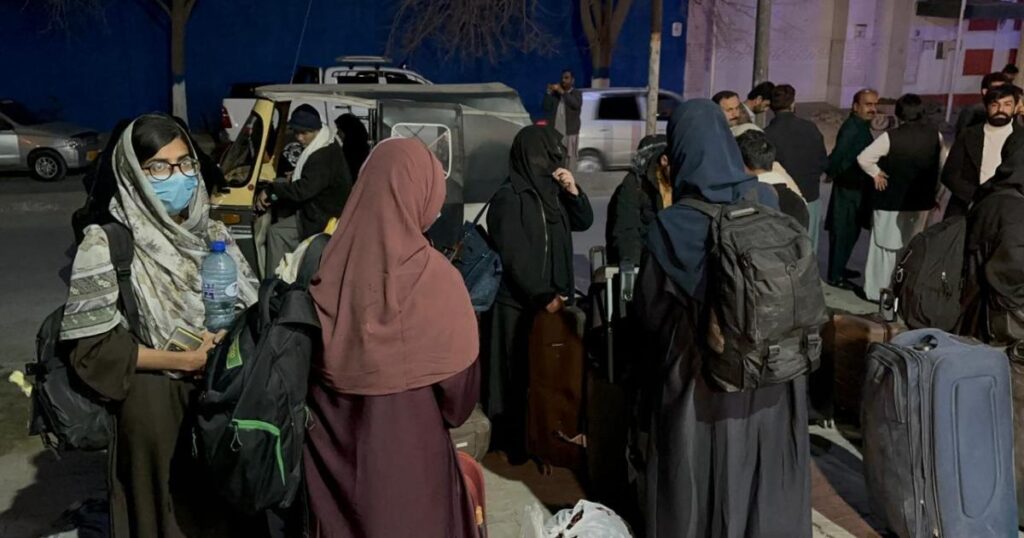
Tensions have escalated in Iran following attacks by US and Israel, forcing many foreign nationals to flee the country. Among those affected are approximately 3,000 Pakistani students studying in Iran, now left uncertain about their futures. These students, who had come to Iran for education and career advancement, were caught off guard by the sudden outbreak of violence and military action.
Several Pakistani students shared harrowing accounts of their escape from the conflict zones. Many described moments filled with fear and desperation as they tried to navigate through areas plagued by chaos and instability. Graeme Khan, one of the students, recounted, “We were just praying, hoping for safety and a chance to get out of there.”
The attacks, driven primarily by geopolitical hostilities between the US, Israel, and Iran, have intensified the already fragile conditions in the region. The safety of foreign nationals, including the Pakistani student community, has become increasingly precarious as fighting continues.
Pakistani students, many of whom had been living in Iran for years, are now urgently seeking alternatives to resume their education elsewhere. Some have turned to their home government and international organizations for assistance and repatriation plans.
The Pakistani embassy in Tehran has been actively working to facilitate the safe evacuation of its nationals and has issued statements encouraging students and citizens to avoid travel within high-risk areas. Diplomatic channels have been busy coordinating with Iranian authorities and international partners to ensure an effective response during the crisis.
Education experts warn that the disruption caused by the conflict may have long-term repercussions on the educational trajectories of these students. Many fear that their academic progress may be halted indefinitely, with resulting impacts on their careers and futures.
Parents back in Pakistan have expressed deep concern over their children’s safety, urging government agencies to expedite evacuation and support measures. The emotional toll on families is compounded by the uncertainty surrounding when peace and stability might be restored in Iran.
Non-governmental organizations have also stepped in, offering counseling and logistical support for stranded students. They emphasize the importance of psychological and emotional care in such high-stress situations.
Meanwhile, international media continue to highlight the human stories amid the geopolitical conflict. The plight of these Pakistani students serves as a poignant reminder of the widespread humanitarian implications that extend beyond the immediate battlefield.
As the situation in Iran remains volatile, the international community faces growing pressure to find a diplomatic resolution that ensures the safety and well-being of all civilians, including foreign nationals like the Pakistani student population. Until then, those caught in the middle endure an uncertain and frightening reality, relying on hopes of peace and safe passage home.