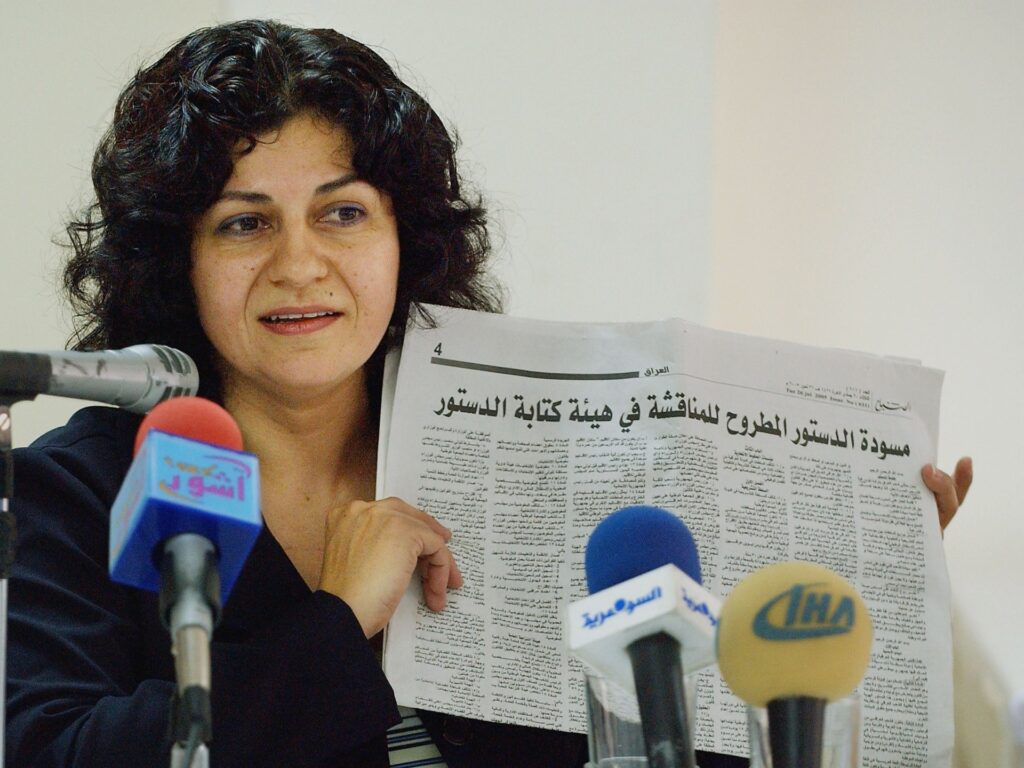
The tragic killing of Iraqi women’s rights activist Yanar Mohammed has sparked widespread outrage and calls for justice from human rights organizations and the international community. Mohammed, a prominent advocate for women’s rights and gender equality in Iraq, was brutally murdered, a loss that has sent shockwaves through activist circles and beyond.
Amnesty International, a global human rights watchdog, condemned the killing as a ‘calculated assault to stifle human rights defenders’ in Iraq. The organization highlighted that Mohammed’s death is not only a personal tragedy but also a direct attack on the broader movement fighting for social justice and equality in the country.
Yanar Mohammed was known for her fearless activism, championing the rights of women in a society frequently marked by patriarchal norms and ongoing conflict. She led efforts to challenge discriminatory laws and cultural practices, striving to improve the safety and dignity of Iraqi women. Her advocacy extended to providing support for survivors of violence and raising awareness about gender-based injustices.
The killing has reignited concerns over the safety of human rights defenders in Iraq, a region where activists often face threats, harassment, and violence. Despite advances in legislation aimed at protecting human rights, enforcement remains weak, and impunity for attacks against activists is a persistent issue.
Human rights groups have called on Iraqi authorities to conduct a thorough and transparent investigation into Mohammed’s death and to bring those responsible to justice. They stress that ensuring accountability is crucial not only to honor her legacy but also to protect other activists from similar dangers.
The loss of Yanar Mohammed underscores the ongoing challenges faced by women’s rights advocates in Iraq, a country grappling with political instability, cultural resistance to change, and security concerns. Her death has become a rallying point for activists worldwide, emphasizing the urgent need for stronger protections and support mechanisms for human rights defenders.
International bodies and local organizations alike have voiced solidarity with Mohammed’s family and colleagues, demanding the international community’s continued attention to the perilous conditions under which Iraqi activists operate. They argue that safeguarding human rights defenders is essential for the promotion of democratic values and social progress in Iraq.
In response to the killing, there have been calls for enhanced measures to prevent violence against activists, including improved security protocols, legal reforms, and increased public awareness campaigns. Activist networks are mobilizing to keep Mohammed’s mission alive, advocating for justice and systemic change.
The brutal murder of Yanar Mohammed is a stark reminder of the risks faced by those who stand up against oppression and fight for equality. It highlights the urgent necessity for collective action to create a safer environment for human rights defenders in Iraq and beyond. Her legacy will continue to inspire efforts towards justice, equality, and respect for human dignity in the face of adversity.