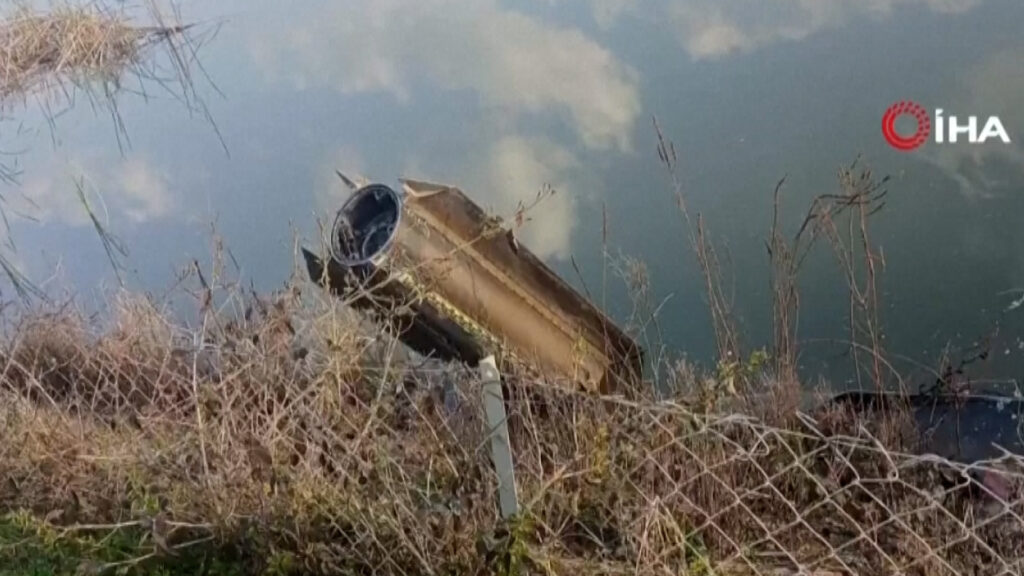
In a significant recent defense event, debris from a NATO missile interception involving an Iranian ballistic missile has been recovered from Turkish waters. This incident signifies the collaborative defense efforts within the NATO alliance and highlights the ongoing challenges posed by missile threats in international waters and airspace.
The missile interception was carried out by NATO forces as part of their commitment to secure member states against potential threats. The intercepted missile originated from Iran, showcasing the complexities involved in regional security dynamics. The debris retrieval from Turkish territory underlines the geographic proximity and strategic importance of Turkey in NATO’s defense infrastructure.
Turkey, as a pivotal NATO member located at the crossroads of Europe and Asia, has been actively involved in regional security operations. The recovery of missile fragments on Turkish soil emphasizes the direct impact and risks faced by the country due to the ongoing geopolitical tensions involving missile deployments and interceptions.
Officials from NATO and Turkish defense authorities collaborated closely during the retrieval operation to ensure the debris was safely collected and analyzed. The examination of the missile debris will contribute to better understanding of missile technologies and enhance interception strategies, ultimately strengthening NATO’s missile defense capabilities.
This event also serves as a reminder of the persistent missile threats posed by ballistic capabilities of certain regional actors, necessitating vigilant and sustained interception efforts. The cooperation between NATO and Turkish forces in this incident highlights the alliance’s unity and readiness to address emergent security challenges.
Furthermore, the recovery and analysis of the debris are expected to provide valuable intelligence that could influence future defense planning and policymaking within NATO. It also reinforces the importance of advanced missile defense systems to protect member nations from potential missile attacks.
Turkey’s strategic location and its defense infrastructure make it a critical frontline state in countering missile threats in the region. The incident reflects broader security concerns in the Middle East and surrounding areas, where missile technology proliferation continues to be a significant challenge.
NATO’s action against the intercepted Iranian ballistic missile and the subsequent recovery of debris in Turkey symbolize a proactive stance in maintaining regional stability and protecting member countries. Such operations are crucial in deterring adversaries and mitigating risks associated with missile attacks.
The incident will likely prompt further discussions among NATO members regarding missile defense enhancements and collaborative security measures. It also underscores the necessity for continuous monitoring and rapid response capabilities to address evolving missile threats effectively.
In conclusion, the retrieval of missile debris from NATO’s interception in Turkish waters marks a notable development in allied defense efforts. It illustrates the shared commitment to security, the importance of strategic partnerships like NATO, and the ongoing need to adapt to emerging missile challenges in an increasingly complex geopolitical landscape.