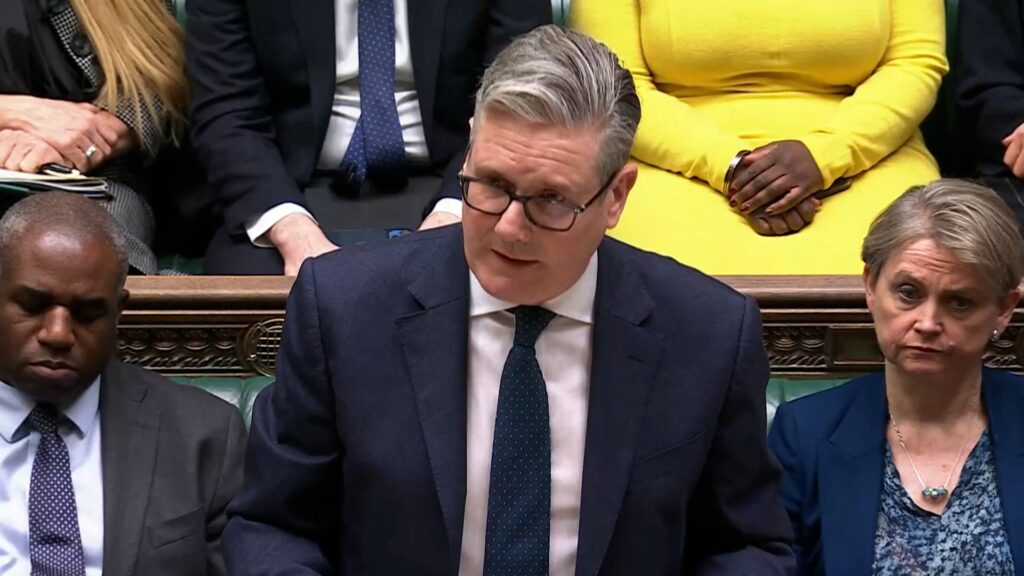
Keir Starmer, the leader of the Labour Party in the UK, has addressed the recent UK involvement in the US military strikes on Iran, describing the decision to allow the use of British military bases by US forces as “defensive.” This statement comes amid heightened tensions in the Middle East, where US-Iran relations have been particularly strained.
Starmer’s framing of the UK’s role in these operations marks a significant stance in the ongoing political discourse about Britain’s foreign policy and military commitments overseas. He emphasized that the British government’s support is primarily aimed at protecting national and allied interests rather than engaging in offensive military actions.
The UK’s use of its military bases, strategically located and essential for US operations, has long been a point of cooperation between the two countries. The recent decision to permit these bases to be used for strikes on Iran was justified by Starmer as necessary to maintain defensive security measures against what the allied forces consider escalating threats.
Critics of the government’s position argue that involvement in these actions could exacerbate conflict and destabilize the region further. They express concern that such military collaboration without clear parliamentary approval might lead to unintended consequences.
Supporters, however, believe that strong cooperation with the US is vital for the UK’s security interests and for maintaining its role on the global stage. They also argue that the defensive nature of the strikes aligns with international efforts to deter aggression and uphold regional stability.
Starmer’s comments also underline the complexity of modern international relations where alliances and strategic interests often require difficult decisions. The UK’s balancing act involves managing its commitments to international allies like the United States, while navigating the geopolitical risks inherent in conflict zones.
Diplomatic efforts continue alongside military measures, as the UK government, together with its allies, aims to reduce tensions and seek long-term peace in the region. Starmer reiterated the importance of dialogue and peaceful resolution but acknowledged that defensive actions become necessary when faced with potential threats.
This development has sparked a broader debate within the UK about the direction of its foreign policy and the extent of its involvement in international military operations. It also highlights the ongoing challenges leaders face in responding to global security threats while maintaining public and political support.
As the situation evolves, the UK’s role in supporting US military actions serves as a reminder of the interconnected nature of contemporary security and the fine line between defense and aggression. Observers around the world are closely watching how these dynamics will shape the future of international relations in a volatile region.