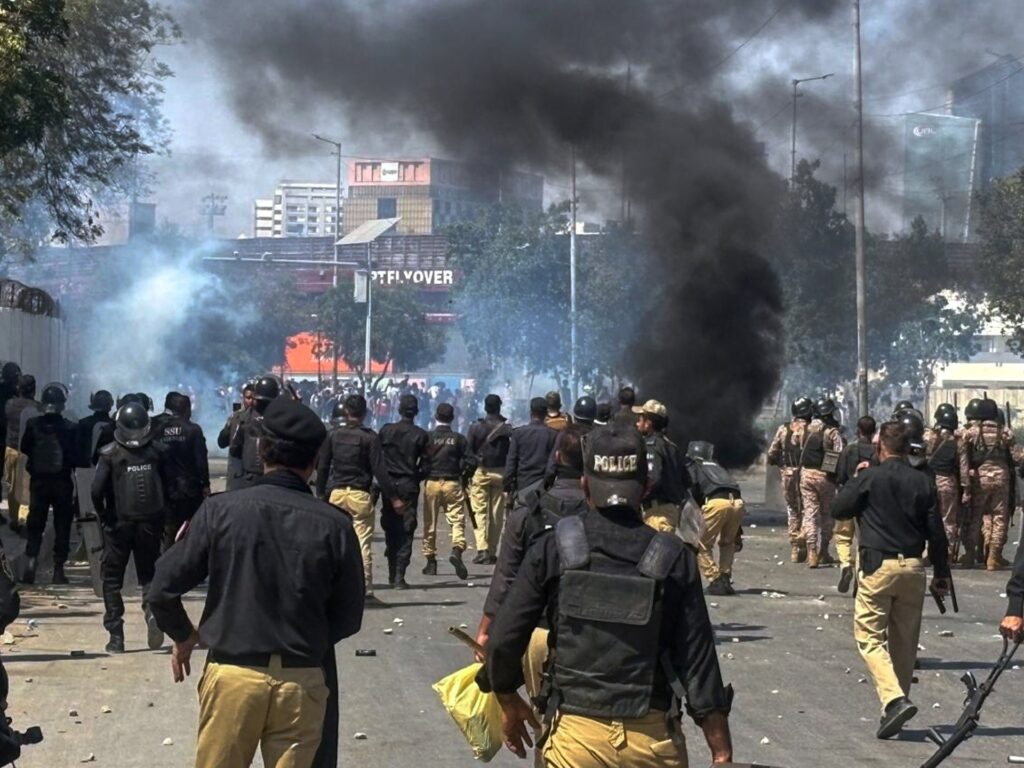
In a serious escalation of regional unrest, Pakistan has deployed troops and imposed a three-day curfew in parts of northern Gilgit-Baltistan after violent outbreaks during pro-Iran rallies resulted in the deaths of 24 people. The unrest was triggered by demonstrations expressing support for Iran and mourning the killing of Ayatollah Ali Khamenei’s close aides, which have deeply resonated with certain communities in Pakistan.
The Gilgit-Baltistan region, known for its diverse ethnic and religious groups, has witnessed a surge in tensions as protesters took to the streets chanting slogans and carrying out demonstrations. The Pakistani government responded swiftly to the disturbance by calling in the army to restore order and prevent further casualties.
Authorities have reported that the curfew, effective immediately, affects several key areas in northern Gilgit-Baltistan where the clashes were most intense. The measure aims to curb movement, restrict gatherings, and ensure the safety of citizens amid the volatile situation.
Local security forces faced significant challenges managing the protests which saw a mix of peaceful rallies and violent incidents. Some demonstrations turned destructive, involving stone-pelting and clashes with police forces attempting to disperse crowds.
The death toll, currently at 24, includes civilians and law enforcement personnel caught in the crossfire of these confrontations. Medical facilities in the region have been overwhelmed with casualties, prompting urgent calls for humanitarian aid and emergency response measures.
The Pakistani government has condemned the violence and appealed for calm, emphasizing the need for dialogue and restraint to prevent further bloodshed. Officials indicated ongoing investigations to identify instigators and hold them accountable.
International observers and human rights organizations have also expressed concern regarding the situation, urging Pakistan to respect the rights of peaceful protesters while maintaining law and order.
This crisis illustrates the complex geo-political dynamics impacting Pakistan’s northern territories, where local sentiments are frequently influenced by regional conflicts and alliances. The death of prominent figures in Iran has ramifications beyond its borders, often mobilizing emotionally charged responses among allied populations.
The deployment of troops underscores the gravity with which the Pakistan government views the unrest and its commitment to restoring stability. However, the long-term resolution of such deep-rooted tensions will require diplomatic efforts and addressing the underlying social and political grievances.
As the curfew continues and security operations proceed, civilians remain hopeful for a peaceful resolution that will allow normalcy to return to the affected areas. Meanwhile, the government is reportedly coordinating with both local leaders and international partners to manage the aftermath and prevent recurrence of violence.
This episode stands as a poignant reminder of the fragile security environment in regions where local and international issues intersect, demanding vigilant and balanced governance to safeguard peace and human rights.