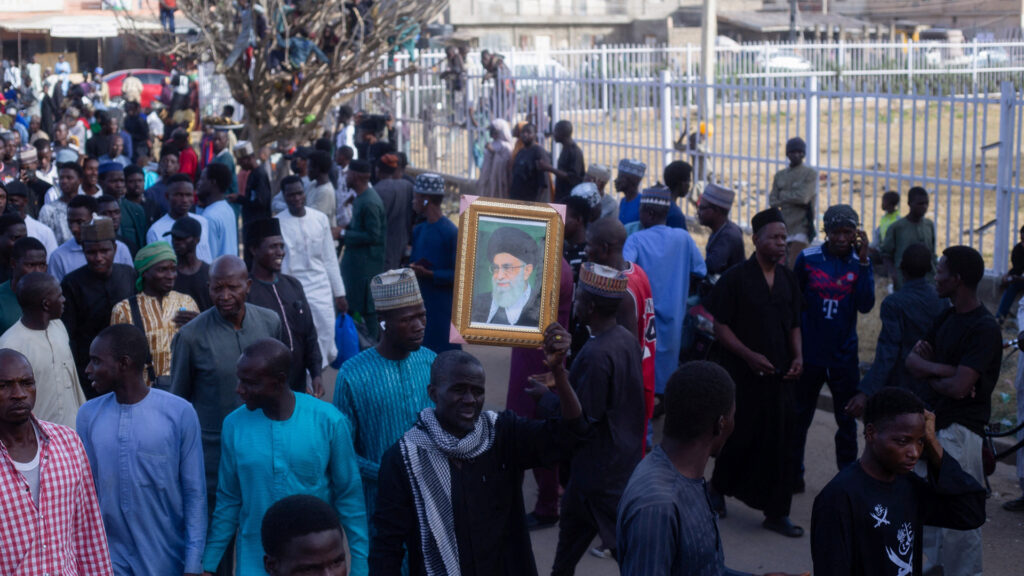
The tragic news of the killing of Iran’s Supreme Leader Ayatollah Ali Khamenei has sent waves of sorrow across the globe, with members of Nigeria’s Shia Muslim community expressing profound grief and mourning. Ayatollah Khamenei, a significant religious and political figure, played a central role in shaping Iran’s direction and its influence within the Islamic world.
In Nigeria, the Shia Muslim community has deeply felt the loss of a leader they revered not only as a spiritual guide but also as a symbol of resistance and steadfastness in the face of geopolitical challenges. The mourning is reflective of the close religious and cultural ties that connect Shia Muslims in Nigeria with their counterparts in Iran.
Nigeria is home to a vibrant Shia community that has historically looked up to Ayatollah Khamenei for his leadership and teachings. His death marks a critical moment for these communities as they grapple with the loss and the broader implications it may have on their identity and religious practice.
Community leaders and religious scholars in Nigeria have called for unity and resilience among Shia Muslims during this difficult time. Vigils and prayer sessions have been organized in various parts of the country to honor the memory of Ayatollah Khamenei and to offer prayers for peace and stability in the region.
The Nigerian Shia community is also reflecting on the political and religious legacy of Ayatollah Khamenei, whose leadership inspired movements advocating for justice, self-determination, and resistance against oppression. His vision for an Islamic society centered on moral and spiritual values resonates strongly with his followers worldwide.
Across Nigeria, there is a shared sense of loss and a collective desire to continue the work and teachings of Ayatollah Khamenei. Many believe that his ideals will live on through the continued dedication of his followers to promote peace, faith, and social justice.
The death of Ayatollah Khamenei has also sparked conversations about the future of Iran and its leadership. For many in Nigeria’s Shia community, the hope is for a peaceful transition that maintains the values and principles he stood for.
This event has brought to light the interconnectedness of Muslim communities across continents and the impact of significant religious figures beyond their national borders. It underscores the importance of solidarity, especially in times of grief.
As Nigeria’s Shia community mourns, they are also reminded of the enduring spirit of their faith and the power of collective prayer and remembrance to heal and strengthen bonds within the community.
The international Muslim community watches closely, recognizing that the passing of such a pivotal figure will undoubtedly influence religious and political landscapes around the world, including those in Nigeria.
Despite the sadness, the mourning period is marked by a renewed commitment to uphold the values exemplified by Ayatollah Khamenei and to work towards a future rooted in faith, unity, and perseverance.
In conclusion, the killing of Iran’s Supreme Leader Ayatollah Ali Khamenei has profoundly affected Nigerians, especially the Shia Muslim community, highlighting the deep spiritual and cultural connections that transcend borders, and the collective mourning that unites believers in seeking peace and continuity in the legacy of their revered leader.