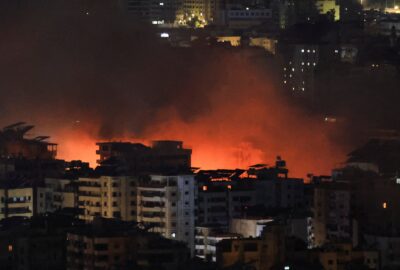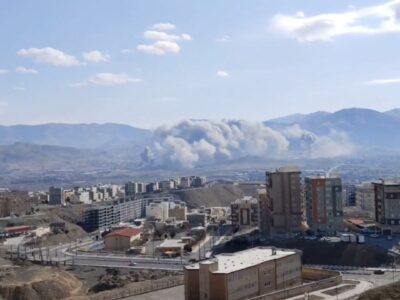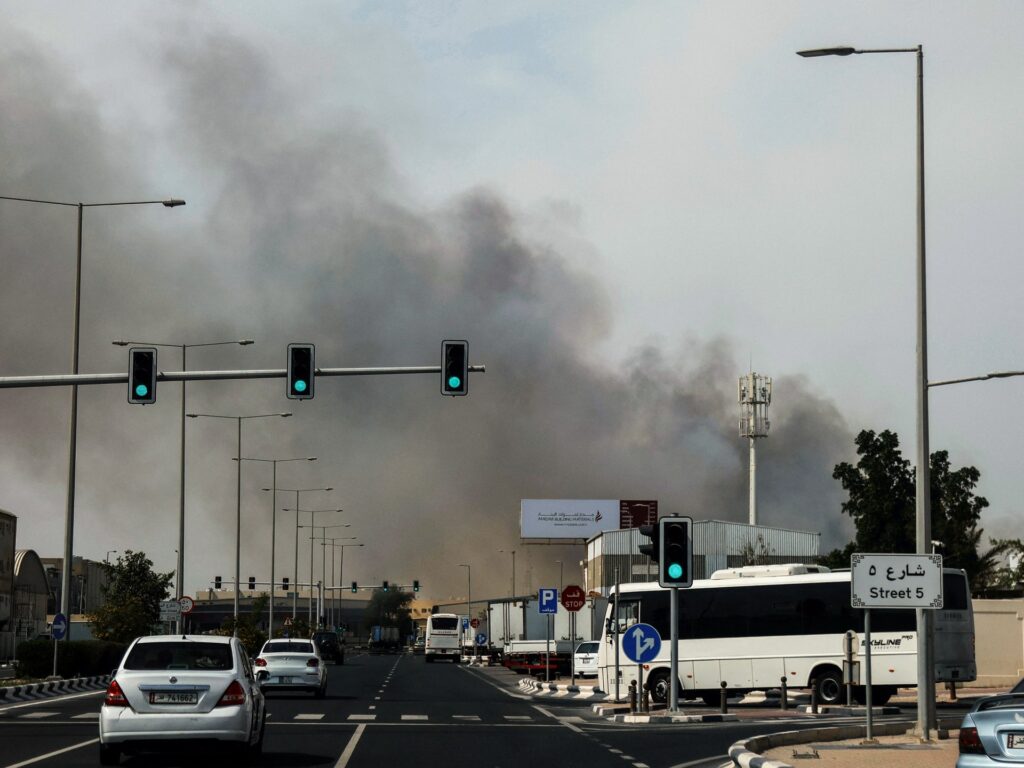
For the third consecutive day, Iran has launched retaliatory strikes targeting US assets across the Middle East, with blasts reported in Qatar, the United Arab Emirates (UAE), and Kuwait. These attacks have intensified fears of a prolonged regional conflict, as tensions between Iran and the United States continue to escalate.
The recent wave of violence began following an unspecified incident that Iran cites as justification for its military response. Iranian forces have engaged in strikes that have caused significant damage and casualties, prompting widespread concern among Gulf Cooperation Council (GCC) countries and their allies.
On the ground, the blasts have disrupted daily life in several key cities across the three nations. Qatar, a strategic US ally hosting a large American military presence, reported explosions near critical infrastructure, raising alarms about the safety of personnel and civilians alike. Similarly, the UAE and Kuwait, both pivotal economic hubs in the region, have also experienced targeted attacks, leading to increased security measures and emergency responses.
These strikes come amidst a fragile geopolitical landscape marked by longstanding hostilities and diplomatic efforts to curb escalating tensions. The US government has condemned the Iranian actions, reinforcing its commitment to protecting its assets and partners in the region. Washington has also heightened military readiness, though it continues to emphasize diplomatic channels to resolve the crisis.
Regional powers find themselves in a precarious situation, as ongoing conflict threatens to destabilize the Gulf, which is crucial for global energy supplies and trade routes. Neighboring countries are closely monitoring the situation, wary of the potential for spillover violence that could further destabilize the Middle East.
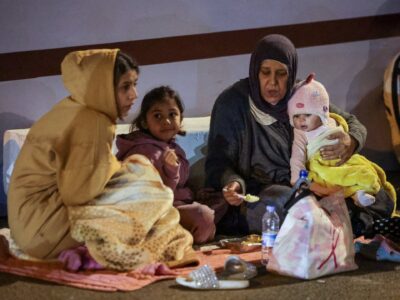
International organizations and the United Nations have called for restraint from all parties involved, urging dialogue over further military confrontations. Global leaders are increasingly concerned about the humanitarian impact, including displacement and casualties, that prolonged conflict might bring to the already volatile region.
Meanwhile, economic markets have reacted to the uncertainty, with oil prices rising on fears of supply disruptions from the Gulf. Investors and governments worldwide are watching developments closely, anticipating how this conflict might reshape geopolitical alliances and economic stability.
As the retaliatory strikes by Iran persist, the prospect of a drawn-out conflict looms large. Diplomatic efforts are ongoing but face significant challenges given deep-rooted animosities and strategic interests at stake.
In summary, the blasts shaking Qatar, the UAE, and Kuwait are stark reminders of escalating tensions and the fragile state of peace in the Middle East. The international community remains vigilant, hoping for a peaceful resolution to prevent further deterioration of stability in this critical region.