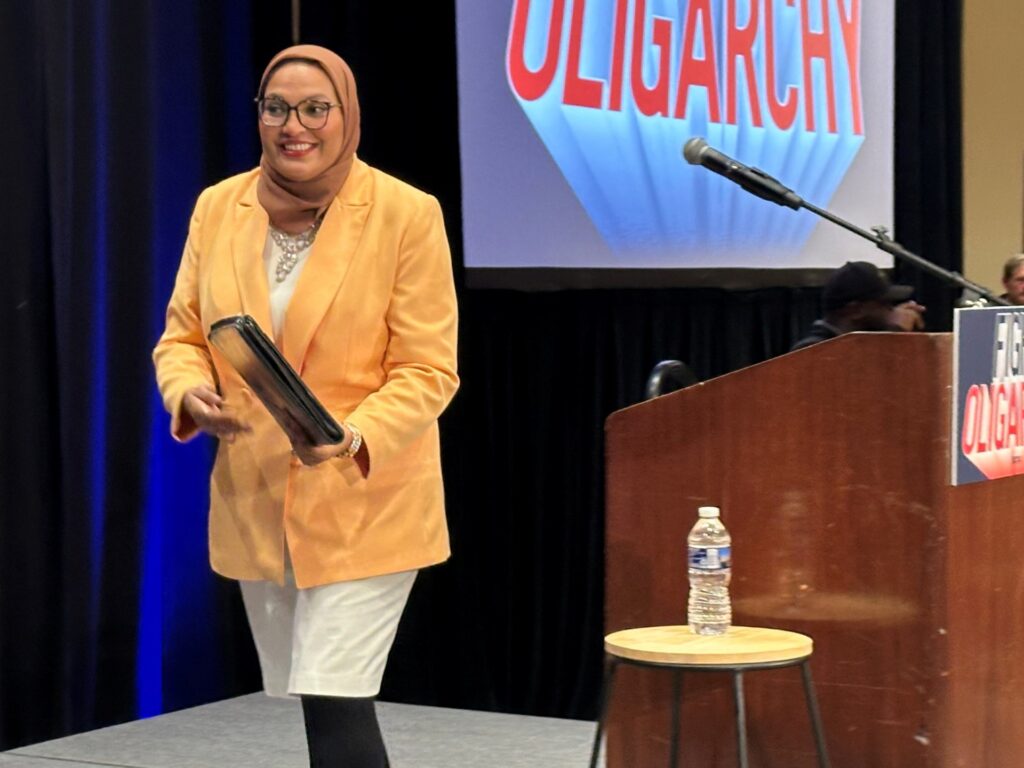
As tensions escalate following recent attacks on Iran, a group of anti-war candidates within the US Democratic Party are emerging as a significant force seeking to reshape the party’s priorities ahead of the upcoming midterm elections. Notable figures such as Nida Alla and Kat Abughazaleh are leading this charge, advocating for bold changes including the abolition of Immigration and Customs Enforcement (ICE) and a definitive end to ongoing US military interventions abroad.
These candidates represent a growing faction within the Democratic Party that calls for a fundamental rethinking of US foreign and domestic policies. Against the backdrop of heightened geopolitical unrest, their campaign platforms focus intensely on peace-oriented strategies, social justice, and the protection of immigrant communities.
Nida Alla, a vocal critic of current military engagements, highlights the risks associated with prolonged conflicts and unilateral military actions. She argues that these operations not only destabilize regions but also drain vital resources that could otherwise be used to address pressing economic and social issues at home. “Our priority should be investing in our communities, not fueling endless wars,” Alla states.
Kat Abughazaleh, another prominent anti-war advocate, emphasizes the interconnectedness of immigration policy and foreign interventions. She pushes for the dismantling of ICE, asserting that its existence perpetuates fear and division among immigrant populations. According to Abughazaleh, ending wars and abolishing ICE are linked steps toward building a more equitable society.
The emergence of this anti-war bloc challenges traditional Democratic approaches, where military intervention has at times been justified as necessary for global security and upholding American values. These candidates question such narratives, advocating instead for diplomacy, humanitarian aid, and international cooperation.
Their stance has sparked vigorous debate within the party, as some members view these positions as idealistic and potentially alienating moderate voters. Others see them as vital to mobilizing younger and more progressive constituents who are increasingly disillusioned with the status quo.
The timing of these campaigns coincides with broader public scrutiny following recent US actions that have heightened tensions with Iran, raising concerns about the possibility of further conflict. Anti-war Democrats hope that their message will resonate with voters weary of war and eager for a new direction.
Midterm elections will serve as a critical test for these candidates and their platforms. Success would signal a shift in the Democratic Party toward a stronger anti-war stance and greater emphasis on social justice reforms.
Observers note that the anti-war movement within the Democrats aligns with a global trend of youth-led activism calling for peace and systemic change. Social media has played a crucial role in amplifying these voices, creating communities of support across diverse demographics.
As campaign season unfolds, the impact of anti-war candidates like Alla and Abughazaleh will be closely watched. Their ability to influence party policies and election outcomes could redefine Democratic priorities for years to come, shaping the political landscape in a time of unprecedented international tension.