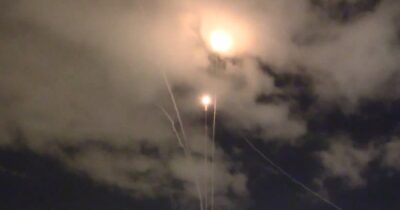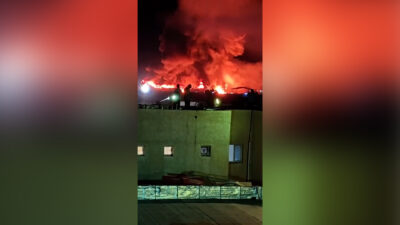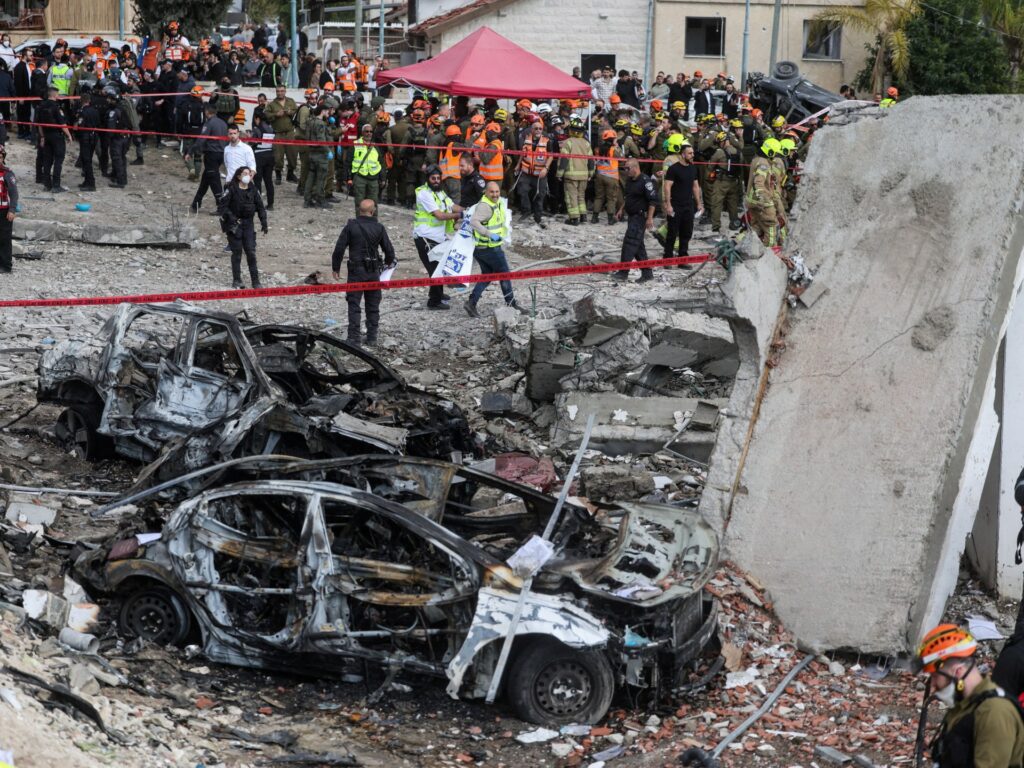
In a significant escalation of Middle Eastern conflicts, the United States and Israel have launched coordinated attacks against targets in Iran. This military action comes in the wake of increasing hostilities in the region, including a deadly incident in Bahrain where one person was killed. Concurrently, Hezbollah has fired rockets, further intensifying the volatile situation.
Former US President Donald Trump has publicly stated that attacks on Iran will continue until all of his administration’s objectives are fully achieved. Trump’s comments underscore a relentless approach to countering Iranian influence and activities, particularly in relation to US interests and allies in the area.
Tehran, on the other hand, has maintained a persistent campaign of raids against American assets, reflecting the ongoing tit-for-tat nature of the conflict. These raids and the new attacks represent deepening tensions that risk broader instability in the Middle East.
The killing in Bahrain marks a grim milestone, highlighting the expanding geographic scope of the conflict beyond the immediate Iran-Israel-US axis. The involvement of Hezbollah, firing rockets, signals the potential for proxy battles and escalation involving non-state actors aligned with Iran.
Analysts warn that the continued cycle of violence threatens to derail diplomatic efforts and could lead to a wider regional war. International calls for de-escalation have so far had limited effect, as each side remains committed to their respective strategic goals.
The United States and Israel view Iran as a paramount threat due to its nuclear ambitions, support for militant groups, and influence across the Middle East. In response, they have conducted a series of military strikes intended to degrade Iran’s capabilities and deter further aggression.
Iran’s leadership has condemned the attacks and vowed to retaliate, signaling that the conflict could intensify in the coming days. The regional alliances and enmities, involving countries like Bahrain, Lebanon (via Hezbollah), and others, complicate the security landscape.
Civilians in affected areas face increasing danger as military operations and rocket attacks threaten lives and infrastructure. Human rights organizations have called for immediate steps to protect non-combatants and ensure humanitarian access.
Diplomatic channels remain open but strained, with global powers seeking to mediate yet cautioned by the hardened stances of involved parties. The ongoing violence serves as a stark reminder of the fragile nature of peace in the Middle East and the high stakes for global security.
As the situation develops, observers will be watching closely for signs of either further escalation or potential breakthroughs toward conflict resolution. For now, the region stands on edge, grappling with the ramifications of these bold military moves and the uncertain future that lies ahead.