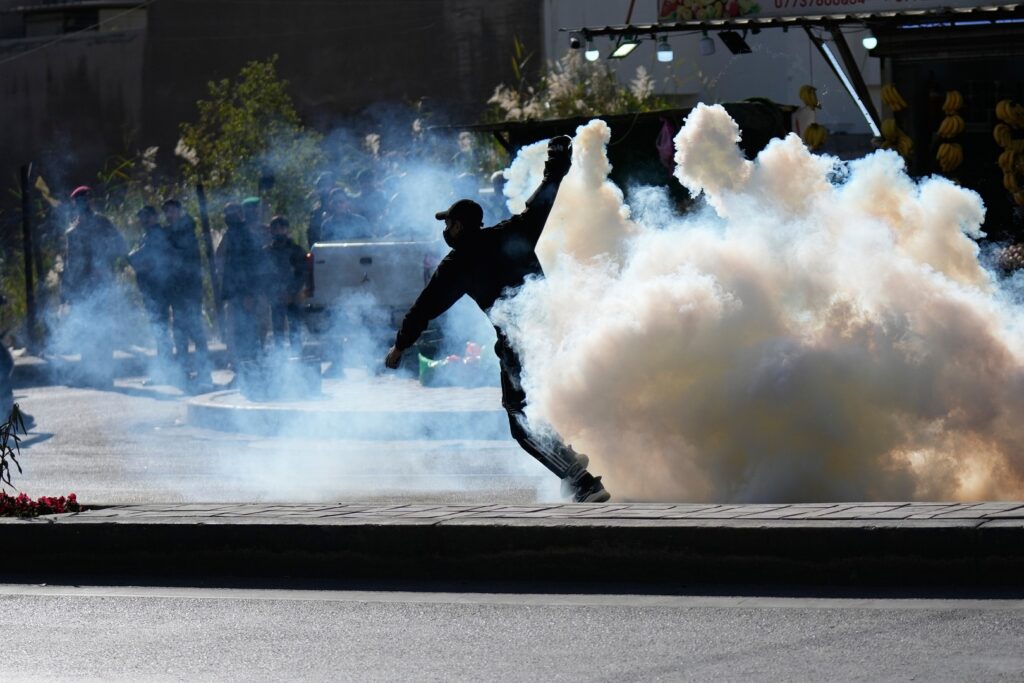
Security forces fire tear gas to disperse a protest against U.S. and Israeli attacks on Iran, at a bridge leading to the fortified Green Zone where the U.S. Embassy is located in Baghdad, Iraq, Sunday, March 1, 2026. (AP Photo/Hadi Mizban)
On a tense day in Baghdad, Iraqi riot police deployed warning shots and tear gas to disperse a group of pro-Iran protesters gathered near the US embassy. The demonstrators had assembled with the intention of expressing their support for Iran, leading to a volatile standoff in the vicinity of the diplomatic mission. The security forces’ response, including the use of warning shots and tear gas, was aimed at preventing the protesters from breaching the embassy’s perimeter and escalating violence.
The pro-Iran protests in Iraq have been a recurring phenomenon, reflecting ongoing regional tensions and political dynamics in the Middle East. The US embassy in Baghdad remains a focal point for such demonstrations due to America’s strategic and military presence in the country.
During the confrontation, police sought to maintain order and protect the diplomatic enclave while managing the crowd’s intensity. Eyewitnesses reported the chaotic scene involving smoke from tear gas canisters and loud warning shots that momentarily unsettled the demonstrators.
Authorities have emphasized the importance of respecting diplomatic missions and have cautioned protesters against resorting to violence or trespassing on embassy grounds. Iraq’s government continues to balance its foreign relations carefully, especially amid competing influences from the United States and Iran within its borders.
This incident highlights the fragile security situation in Baghdad and the ongoing influence of Iran-backed groups in Iraqi politics and society. It also signals the challenges faced by the Iraqi government in managing protests that have the potential to impact international relations.
Security officials have promised further measures to safeguard diplomatic sites and maintain public order in the coming days. Meanwhile, the protests underscore the volatile atmosphere and the persistent tensions between factions favoring Iran’s regional agenda and those aligned with the US presence in Iraq.
The international community has been closely watching the developments in Baghdad, with concerns about the implications for regional stability and the safety of diplomatic personnel.
As the situation evolves, Iraqi authorities are expected to engage with community leaders and political factions to prevent further escalations. The recent dispersal of the protesters serves as a reminder of the complex geopolitical currents swirling through Iraq, situating the country at the crossroads of wider Middle Eastern conflicts.
Officials have reiterated their commitment to protecting diplomatic missions and ensuring freedom of expression, while balancing security requirements.
This episode marks another chapter in Iraq’s turbulent journey towards political stability and reflects the enduring contest for influence between the United States and Iran in the region.