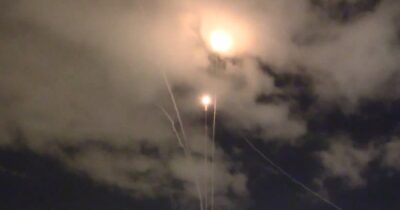
In recent escalations involving missile strikes from Israel and the United States, Iran has demonstrated its military capabilities through targeted responses against Israel and US bases in the Gulf. The weapons powering Iran’s counterattacks reflect a blend of indigenous development, strategic partnerships, and asymmetric warfare tactics.
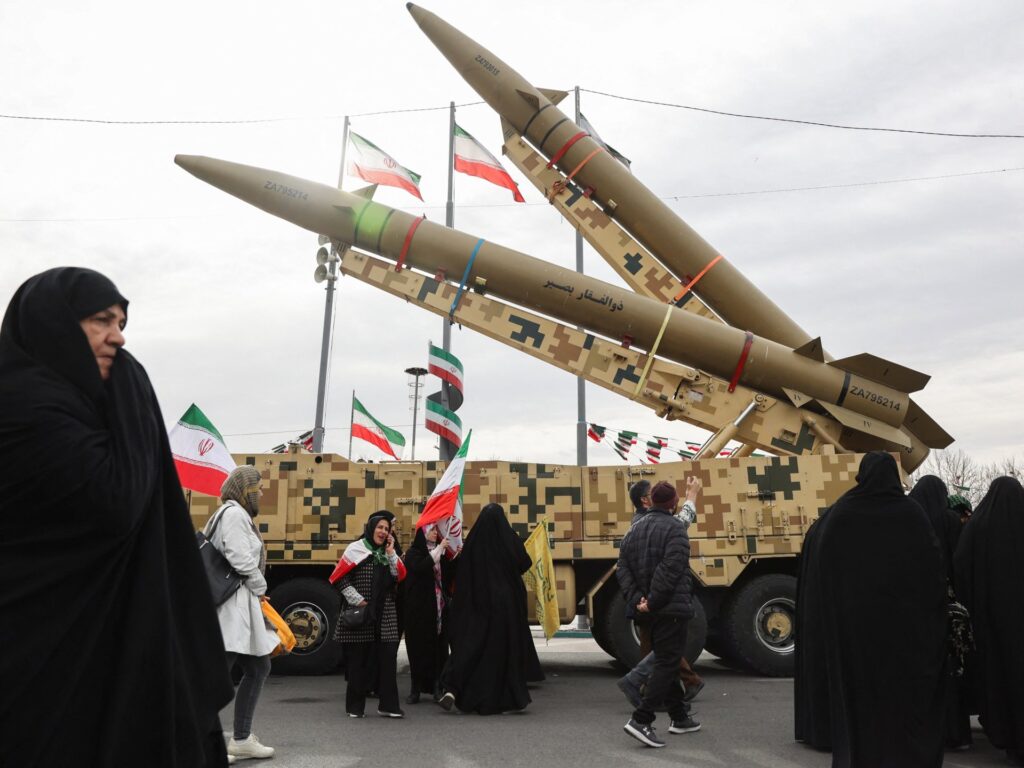
Central to Iran’s arsenal are its ballistic missiles, which vary in range, payload, and sophistication. The most notable among these are the medium- and short-range ballistic missiles, including the Fateh-110 and its variants, capable of precise strikes up to several hundred kilometers away. These missiles provided Iran the ability to hit strategic locations in Israel and US bases in the Gulf States effectively.
Complementing the ballistic missiles, Iran employs cruise missiles such as the Soumar and Hoveyzeh, which possess extended range and can fly at low altitudes to evade radar detection. These missiles enhance Iran’s capacity to strike with accuracy beyond the immediate battlefield.
Iran’s missile technology has reportedly incorporated reverse-engineered components from foreign systems, including the Soviet-era Scud missiles and advanced technology allegedly derived from North Korea and China. This blend has enabled Iran to improve range, accuracy, and lethality.
Additionally, Iran’s conventional military includes a variety of artillery systems and rocket launchers, such as multiple launch rocket systems (MLRS), which provide rapid-fire capabilities against ground targets. These systems serve both defensive and offensive purposes in asymmetric engagements.
Beyond missile technology, Iran’s naval forces employ anti-ship missiles like the Khalij Fars and Noor, which threaten maritime routes and naval vessels, complicating military and commercial navigation in the Gulf.
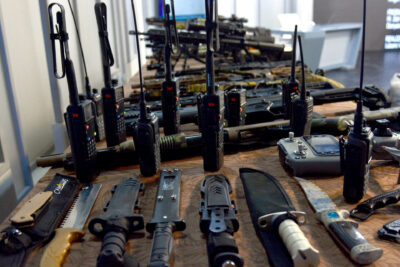
Furthermore, Iran’s Revolutionary Guard and proxy forces possess an array of unmanned aerial vehicles (UAVs or drones). These drones range from reconnaissance types to armed versions capable of delivering precision strikes, surveillance, and disrupting enemy operations.
Iran’s military doctrine emphasizes asymmetric warfare, using a combination of missile strikes, proxy forces, cyber operations, and guerrilla tactics to counter technologically superior adversaries such as the US and Israel.
The response Iran executed in recent strikes reflects a strategic application of this diversified arsenal. The precision and effectiveness underscore not only the development of missile technology but also Iran’s readiness to deploy advanced weaponry to safeguard its interests and project power regionally.
In summary, Iran’s weapons during its conflict with the US and Israel encompass a robust mix of ballistic and cruise missiles, artillery, naval anti-ship missiles, and UAV capabilities. These systems, coupled with a focus on asymmetric warfare tactics, enable Iran to challenge and retaliate effectively against superior military forces.