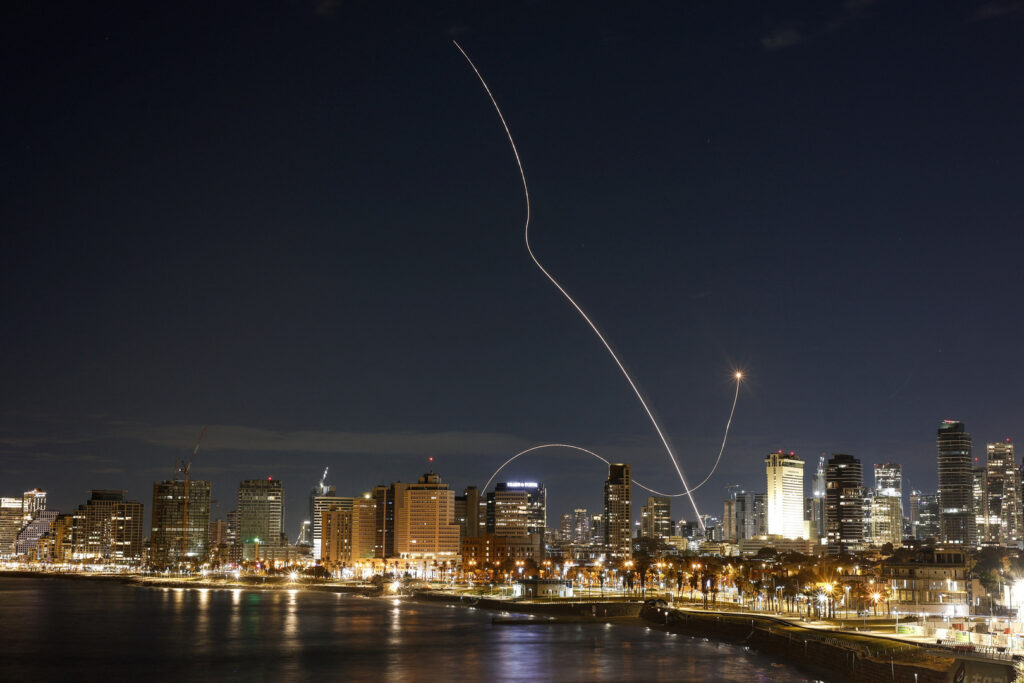
An interception attempt is made by Israel as missiles are launched from Iran, following Israeli and U.S. strikes on Iran, in Tel Aviv, Israel March 1, 2026. REUTERS/Jamal Awad
In a significant escalation of regional tensions, Iranian missiles were reportedly seen over Tel Aviv and the occupied West Bank. The missile launch marked a rare and dramatic event, with some missiles believed to have penetrated Israeli air defenses. This incident has raised international concern and heightened fears of further conflict in the volatile Middle East region.
The missiles, launched by Iranian forces, were observed traveling across the skies, creating a striking visual against the backdrop of the evening. Eyewitnesses in Tel Aviv and the West Bank reported sights of blazing missiles, prompting immediate alerts and defensive responses from Israeli authorities.
Israel’s sophisticated missile defense systems, designed to intercept incoming threats, were reportedly challenged by this sudden attack. While some missiles were intercepted, reports suggest that others may have broken through, causing alarm among Israeli security officials and civilians alike.
The motive behind the missile launch remains unclear, but it is widely interpreted as a response to ongoing regional hostilities and political tensions involving Iran and Israel. This confrontation reflects the broader struggle for influence and control in the Middle East, with long-standing animosities between Iran and Israel playing a central role.
Israeli officials have condemned the missile launches, describing them as acts of aggression that threaten regional stability and security. They have vowed to respond firmly to any such threats and have called on international partners to condemn the attack and support Israel’s right to self-defense.
Iran, on the other hand, has not immediately confirmed responsibility or provided an official statement about the missile launches. However, its proxies and allied groups in the region have previously carried out attacks against Israeli targets, often positioning such actions as retaliation for perceived Israeli aggression.
The international community is watching the situation closely, with diplomatic efforts underway to de-escalate tensions and prevent further violence. The United Nations and various countries have urged all parties to exercise restraint and engage in dialogue to find a peaceful resolution to the conflict.
This incident adds to the complexity of an already volatile region, where decades of conflict, territorial disputes, and political rivalries continue to fuel cycles of violence. The missile attack over Israeli and occupied West Bank skies underscores the fragile security environment and the potential for sudden, dramatic escalations.
Residents of Tel Aviv and the West Bank have been advised to remain vigilant and adhere to safety protocols issued by local authorities. Emergency services remain on high alert, prepared to respond swiftly to any consequences resulting from the missile incidents.
As investigations continue and further details emerge, the event is likely to have significant implications for regional security policies, international relations, and the ongoing peace process efforts. The world awaits the responses from the involved governments and international bodies to ensure stability and prevent any further deterioration of the situation.