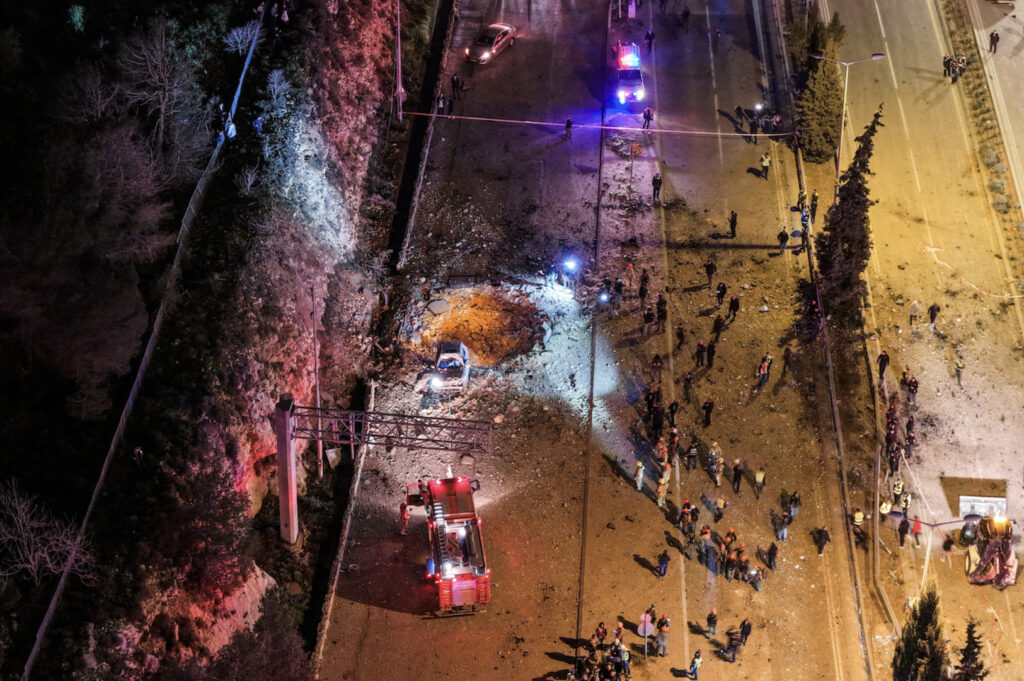
In a shocking escalation of regional tensions, an Iranian ballistic missile struck a road in West Jerusalem, resulting in injuries to several people. The attack marks a significant development in the ongoing conflict dynamics in the Middle East.
The missile hit a busy road, causing immediate chaos and panic among civilians in the area. Emergency services quickly rushed to the scene, providing aid to the wounded and securing the vicinity. Authorities reported that the injured individuals were taken to nearby hospitals for treatment, with the extent of their injuries varying from minor to serious.
This missile strike represents a rare and alarming incident of direct Iranian aggression targeting a site in West Jerusalem, a predominantly Israeli-controlled area. The attack has elicited widespread condemnation from the Israeli government, which vowed to respond decisively to safeguard its citizens and territorial integrity.
Iran’s ballistic missile capabilities have long been a concern for international security observers. Known for their range and destructive power, these missiles enable Iran to project force across the Middle East, escalating tensions with neighboring countries and Israel. The recent attack underscores the enduring volatility in the region and the potential for further conflict.
Analysts suggest that this missile strike may be part of broader geopolitical tensions involving Iran and Israel, possibly linked to ongoing disputes over nuclear development, proxy conflicts, and regional influence. The attack on West Jerusalem raises fears of increased hostilities that could destabilize the already fragile peace landscape.
International reactions have been swift, with calls for restraint and dialogue to prevent further escalation. The United Nations and several countries have urged both Iran and Israel to exercise caution and return to diplomatic channels.
In response to the missile strike, the Israeli military is reportedly on high alert, preparing for potential retaliatory operations and enhancing defensive measures around key urban areas. Security forces are also conducting investigations to assess the vulnerability of critical infrastructure.
This incident symbolizes the heightened tensions and the fragility of peace in a region long plagued by conflict. The international community faces mounting pressure to engage more effectively in mediating peace efforts and addressing the root causes of such violent confrontations.
As the situation develops, the global eyes remain fixed on Jerusalem, hoping for a de-escalation but preparing for possible further conflict. The coming days will be critical in determining the future trajectory of Middle Eastern stability and security.