In a significant development, Iran has established an interim council tasked with overseeing the country’s transition after the killing of its Supreme Leader, Ayatollah Ali Khamenei. The formation of this temporary governing body marks a crucial step in managing the political and administrative upheaval that has followed the unexpected event.
The interim council includes notable figures such as Ayatollah Alireza Arafi, the Iranian president, and the chief justice, reflecting a high-level integration of religious and governmental authority to steer the nation during this sensitive period. Ayatollah Arafi, known for his religious scholarship, has been appointed alongside the country’s top officials to ensure a stable and orderly transition.
Khamenei’s death has left a vacuum at the pinnacle of Iran’s political structure, creating uncertainty across many sectors. The interim council’s main role is to provide continuity and oversee the process of selecting the next Supreme Leader while maintaining the country’s internal stability.
The Iranian president’s involvement highlights the executive branch’s commitment to cooperating with religious authorities and the judiciary in guiding the nation through this critical juncture. Meanwhile, the inclusion of the chief justice underscores the importance of the rule of law and the judiciary’s role in upholding constitutional processes during the transition.
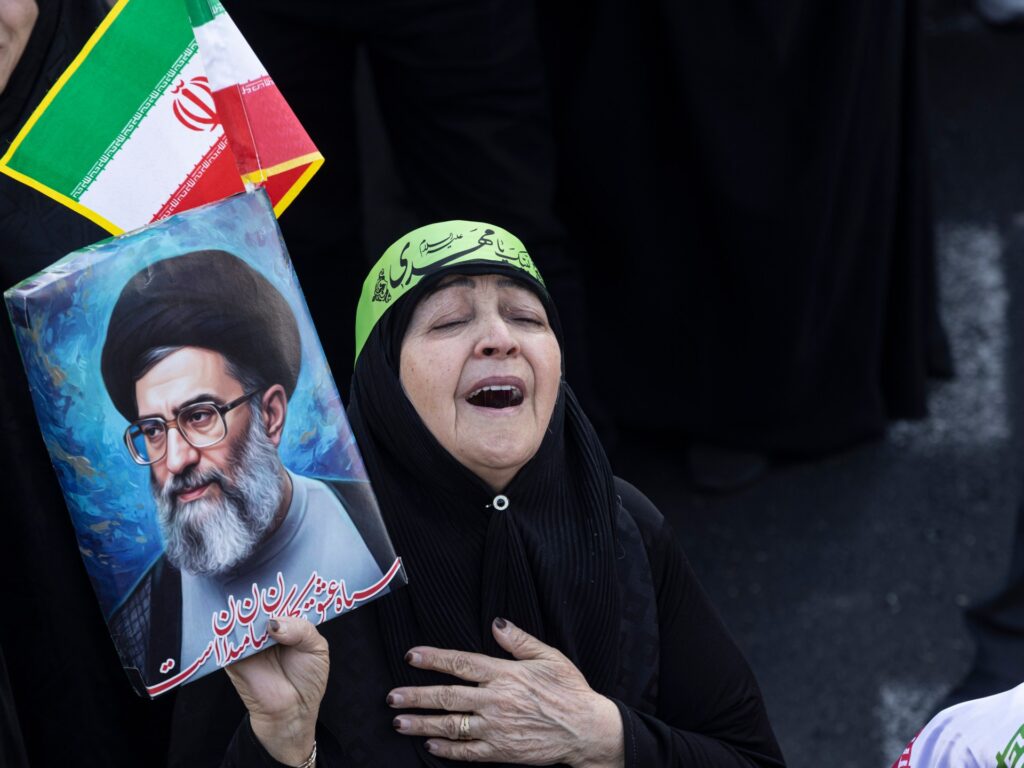
The response from the Iranian public and the international community has been closely observed. Domestically, the formation of the interim council aims to reassure citizens and various stakeholders that governance will continue without disruption despite the leadership change. Internationally, nations are monitoring Iran’s political landscape for any shifts in policy or potential openings for dialogue amid heightened regional tensions.
The interim council is expected to work swiftly and decisively to ensure that the transition does not lead to chaos or power struggles within the country. The council’s mandate includes managing state affairs, maintaining security, and facilitating the constitutional procedures necessary for appointing a new Supreme Leader.
The death of Ayatollah Khamenei, who had been a dominant figure in Iranian politics for decades, marks a turning point in the nation’s history. His leadership style and policies shaped Iran’s domestic agenda and foreign relations extensively, influencing the broader Middle East geopolitical dynamics.
As the interim council takes charge, focus will also be on addressing internal challenges such as economic pressures, public dissent, and regional security issues. The council’s ability to navigate these complexities will be critical to ensuring Iran’s stability and continuity.
Observers and analysts will be watching how the temporary council balances the power dynamics between various political factions and religious authorities during this transitional phase. The council’s composition suggests an effort to create a unified front that transcends factional divides.
This strategic move to appoint Ayatollah Alireza Arafi to the council underlines the influence of the religious establishment in Iran’s governance structure. His role will be pivotal in interpreting religious guidance that aligns with the political transition.
The interim council’s establishment is a decisive step towards maintaining the Islamic Republic’s core principles while adapting to a new leadership reality. The entity is charged with the complex task of guiding Iran through a historic succession process, preserving stability, and upholding the country’s constitutional framework.
In summary, Iran’s formation of an interim council involving Ayatollah Alireza Arafi, the president, and the chief justice represents a critical mechanism to oversee the post-Khamenei transition. This move aims to ensure continuity of governance, manage the selection of the next Supreme Leader, and address the nation’s political and social challenges in a period of significant change.