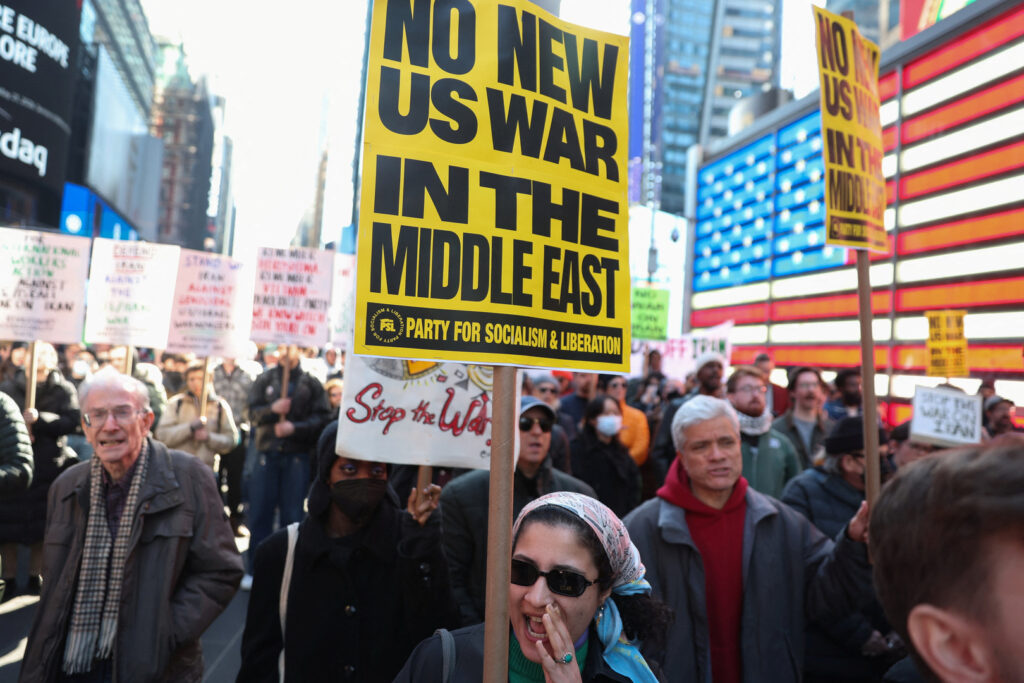
People display signs as the attend a protest against U.S. and Israel strikes against Iran, during a rally in Times Square, in the Manhattan borough of New York City, U.S., February 28, 2026. REUTERS/Heather Khalifa
On Saturday, New Yorkers took to the streets in significant numbers to express their opposition to the United States’ recent military actions against Iran. The protests erupted just hours after U.S. President Donald Trump authorized a series of strikes targeting Iranian forces, which resulted in multiple fatalities. Citizens from various backgrounds congregated in prominent locations across New York City, holding signs and chanting slogans that called for peace and condemned the use of violence. The demonstrations highlighted widespread concern over escalating tensions in the Middle East and the potential consequences of continued conflict. Participants emphasized their desire for diplomatic solutions rather than military interventions. The protest also attracted a diverse group of activists, including peace advocates, members of the Iranian-American community, and human rights organizations. Many speakers addressed the crowd, urging the U.S. government to reconsider its approach towards Iran and prioritize negotiation over aggression. The events underscored the strong public sentiment against the strikes and reflected broader anxieties about the stability of international relations. Law enforcement agencies were present to manage the crowds, ensuring the protests remained peaceful. The New York protests are part of a larger wave of demonstrations across the country and globally, where citizens demand an end to hostilities and advocate for peaceful dialogue. These developments come amid ongoing debates in political circles about the risks and ramifications of military action against Iran. As the situation remains fluid, the voices of concerned citizens continue to resonate, calling for accountability and urging leaders to explore all avenues for peace. The protest serves as a reminder of the power of public opinion in shaping foreign policy and highlights the critical role of civic engagement during times of international crisis. Observers note that such demonstrations can influence policymaking by drawing attention to the human cost of war and the importance of seeking alternative strategies. Moving forward, the dialogue sparked by these protests may contribute to increased pressure on political leaders to resolve conflicts through diplomacy and avoid further bloodshed.