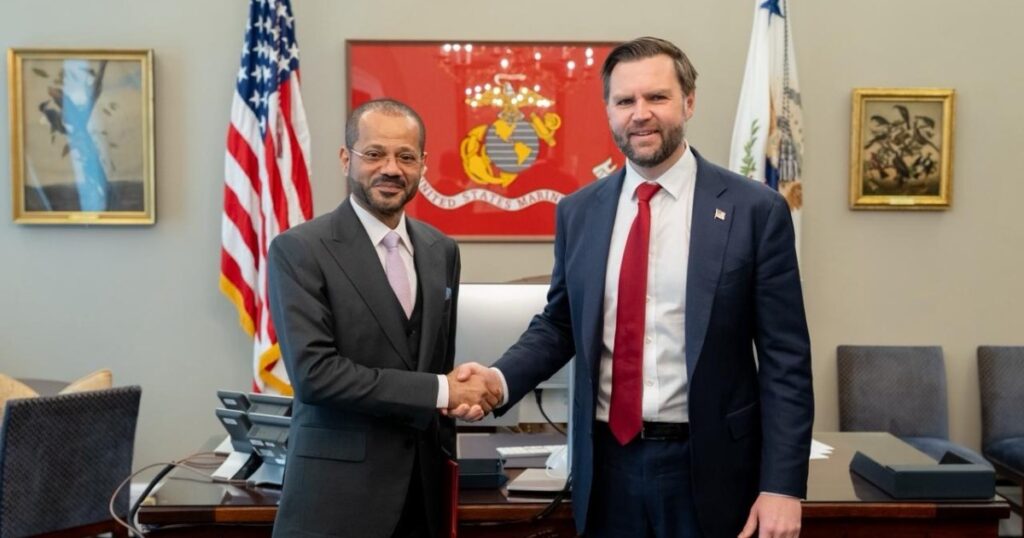
In a critical diplomatic engagement, Badr bin Hamad Al Busaidi, Oman’s Foreign Minister and a pivotal mediator in the ongoing US-Iran nuclear discussions, met with United States Senator JD Vance in Washington, DC. This meeting comes at a time when Middle East tensions are escalating, drawing international focus on diplomatic efforts aimed at de-escalation and conflict resolution.
Oman has traditionally played a unique and stabilizing role in the Middle East, often acting as a discreet intermediary between the United States and Iran. Badr bin Hamad Al Busaidi’s involvement in the US-Iran nuclear talks underscores Oman’s strategic importance in regional diplomacy. By facilitating communication and negotiations, Oman helps bridge significant divides that have long hindered progress in the region.
Senator JD Vance’s discussions with Al Busaidi in the US capital hint at bipartisan interest in understanding and potentially supporting diplomatic avenues that could lead to peaceful solutions amid rising tensions. Vance’s presence highlights a broader political engagement with Middle Eastern affairs beyond traditional diplomatic channels.
The timing of this meeting is significant. The Middle East continues to experience volatility due to various factors, including ongoing conflicts, nuclear ambitions, and shifting alliances. High-level talks such as these send a message of hope that dialogue can prevail over confrontation.
While specific details of the meeting have not been disclosed, sources close to the negotiations indicate the discussions focused on reinforcing diplomatic pathways and exploring new frameworks for bilateral and multilateral cooperation. The meetings reaffirm the critical role Oman plays as a trusted intermediary in sensitive geopolitical matters.
This diplomatic effort aligns with broader international attempts to revive nuclear agreements and reduce hostilities in the region. It reflects a nuanced approach that combines direct engagement with Iran through trusted regional partners like Oman, alongside continued pressure and dialogue from the United States and its allies.
As tensions escalated, there has been increased global attention on diplomatic maneuvers involving key players. Oman’s unique positioning, combined with its history of neutrality and mediation, provides a valuable channel for communication. Its efforts may be crucial in preventing further destabilization and fostering an environment conducive to lasting peace.
The engagement between Al Busaidi and Vance could herald increased collaboration between the US Congress and Middle Eastern diplomats, potentially influencing future policy decisions and strategies. Such cooperation may lead to more robust platforms for dialogue that engage a wider array of stakeholders, thereby enhancing the prospects for effective conflict resolution.
Analysts suggest that continuing these discussions and involving diverse political figures from both the US and Middle East could strengthen diplomatic momentum. This pathway may offer a balanced approach to addressing contentious issues such as nuclear proliferation, regional security, and humanitarian concerns.
In conclusion, the meeting between Oman’s Foreign Minister Badr bin Hamad Al Busaidi and US Senator JD Vance underscores a critical juncture in Middle East diplomacy amid escalating tensions. As a key mediator in US-Iran nuclear talks, Al Busaidi’s efforts, supported by political figures like Vance, could play a defining role in shaping the path towards peace and stability in a region long marked by conflict and uncertainty.
The international community remains watchful, hopeful that such diplomatic engagements will pave the way for renewed negotiations and a de-escalation of conflicts that affect millions. Oman’s continued mediation role, combined with active support from US lawmakers, provides a beacon of hope in these challenging times.