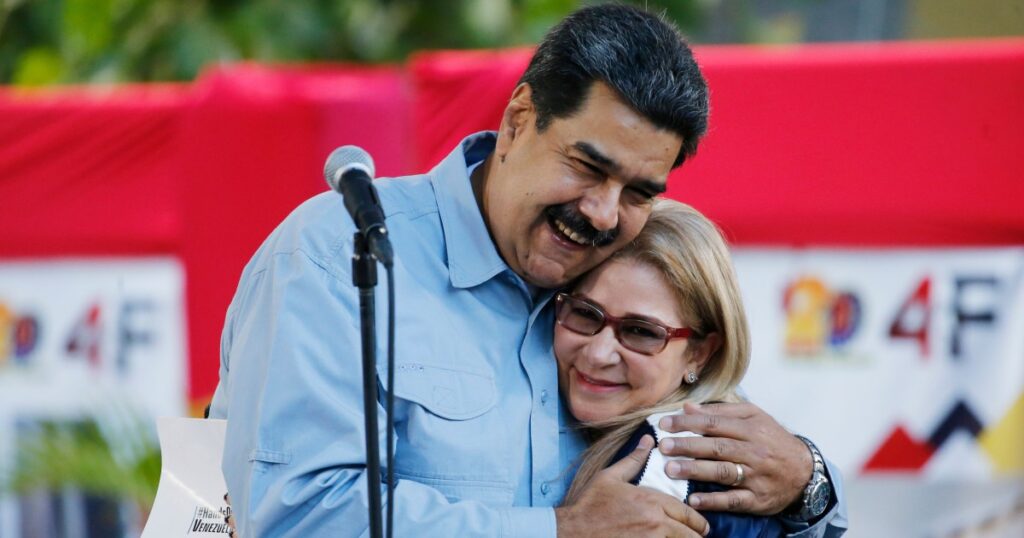
President Nicolás Maduro, the embattled leader of Venezuela, has recently taken a significant legal step by seeking the dismissal of charges against him. This development comes as Maduro’s lawyer publicly alleges that the United States government has deliberately blocked funds intended for his legal defence. According to Maduro’s legal team, this interference has effectively denied the Venezuelan president his constitutional right to counsel of choice, a fundamental principle in international legal practices.
The charges faced by President Maduro have been a subject of intense diplomatic and political scrutiny. Various Western nations, led by the US, have accused him of undermining democratic processes and engaging in corrupt practices. Maduro and his supporters vehemently deny these allegations, claiming they are part of a larger campaign aimed at delegitimizing his government.
Maduro’s legal representatives argue that the obstruction of funds meant for his defence is not just a financial blockade but a violation of legal rights. They claim that without access to the necessary resources to mount a robust defence, Maduro’s ability to ensure a fair trial is severely compromised. This situation, they argue, undermines the very foundation of justice and contravenes numerous international legal standards to which the US is bound.
This claim of interference extends beyond mere allegations of frozen assets. Maduro’s legal team specifically states that attempts to transfer capital to secure competent legal counsel have been systematically hindered by US authorities. Consequently, President Maduro finds himself in a position where his legal strategy is hampered by external political dynamics rather than being judged solely on its legal merits.
The US government, on the other hand, has justified its sanctions and restrictions as necessary measures to hold Maduro accountable for actions that have destabilized Venezuela. American officials contend that their approach targets financial operations linked to criminal activities and corruption, rather than impeding access to a fair legal process.
International human rights organizations have expressed concern over the implications of such financial restrictions on the accused’s right to fair representation. Experts highlight that the right to legal counsel of choice is enshrined not only in domestic laws but also in international treaties and conventions. Blocking financial transactions essential for legal defence could be seen as a tactic that borders on obstructing justice.
The legal battle now moves into a more complex phase, as Maduro files motions aiming to dismiss the charges on grounds that include these alleged violations of his rights. This tactic not only challenges the legitimacy of the accusations but also shines a spotlight on the role of political interference in judicial matters.
Observers note that if Maduro’s motion is successful, it could set a precedent affecting how international sanctions are applied in cases involving individual legal rights. The interplay between political sanctions and judicial process integrity is becoming a critical area of concern for international law experts.
As the situation develops, both the Venezuelan government and the US remain at an impasse, with each side accusing the other of undermining justice and stability in Venezuela. The outcome of the legal proceedings will likely have far-reaching implications for international diplomacy, law, and the ongoing crisis in Venezuela.
In summary, President Nicolás Maduro is seeking dismissal of charges against him, citing improper US government interference that has blocked essential funds for his legal defence. His legal counsel argues that this constitutes a denial of his right to legal counsel of choice, raising fundamental questions about the intersection of international law, politics, and human rights.