USA-TRUMP/CONGRESS
In a fiery response to protests during the recent State of the Union address, US President Donald Trump took to social media to express his disapproval of two prominent congresswomen, Ilhan Omar and Rashida Tlaib. Trump’s remarks highlighted his growing frustration with the outspoken lawmakers, whom he believes should be removed from Congress.
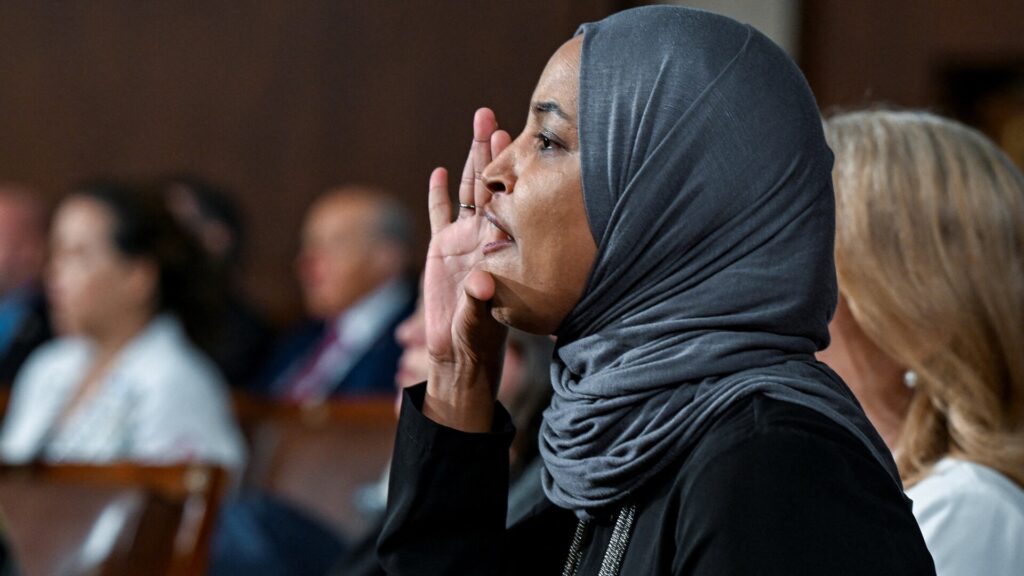
During the highly anticipated State of the Union address, both Omar and Tlaib were seen vocally protesting against several points made by President Trump, drawing significant media attention. These protests were part of a broader wave of dissent among progressive members of Congress, particularly those belonging to the group known as ‘The Squad,’ which includes Omar, Tlaib, Alexandria Ocasio-Cortez, and Ayanna Pressley.
President Trump accused Omar and Tlaib of being divisive figures who do not represent the interests of the American people. He suggested that their protests were not only disrespectful but also detrimental to the unity of the nation. By calling for their removal, Trump intensified the political polarization already prevalent in the current US political climate.
Ilhan Omar, a Democrat from Minnesota, and Rashida Tlaib, a Democrat from Michigan, both have been vocal critics of President Trump’s policies, particularly on immigration and foreign relations. Their protests during the address reflected their ongoing opposition to the administration’s agenda.
Supporters of Omar and Tlaib argue that their protests are a legitimate form of political expression and highlight issues affecting minority communities and marginalized groups in the United States. They contend that removing elected officials based on their dissenting views undermines democratic principles.
The call for removal has sparked debate among politicians, activists, and citizens alike. Some conservatives have echoed Trump’s sentiments, calling for disciplinary measures against the congresswomen. Conversely, many progressives and civil rights groups have condemned Trump’s statement as an attack on free speech and democratic representation.
The controversy underscores the deep divisions within the US political landscape, with sharp disagreements over the boundaries of acceptable political conduct and the role of protest in governance. As the nation grapples with these issues, the debate over the fate of Omar and Tlaib is likely to continue, reflecting broader tensions around identity, representation, and political power in America.
This development adds another chapter to the ongoing saga of political conflict in Washington, where challenges to authority and demands for accountability often collide with differing visions of democracy and justice. The future of both congresswomen remains uncertain as the political and public reactions evolve.
In conclusion, President Trump’s call for the removal of Ilhan Omar and Rashida Tlaib marks a significant escalation in political rhetoric following their protests at the State of the Union address. The situation reveals the ongoing struggles within American politics over unity, dissent, and democratic values, highlighting the complex interplay between leadership and opposition in the nation’s governance.