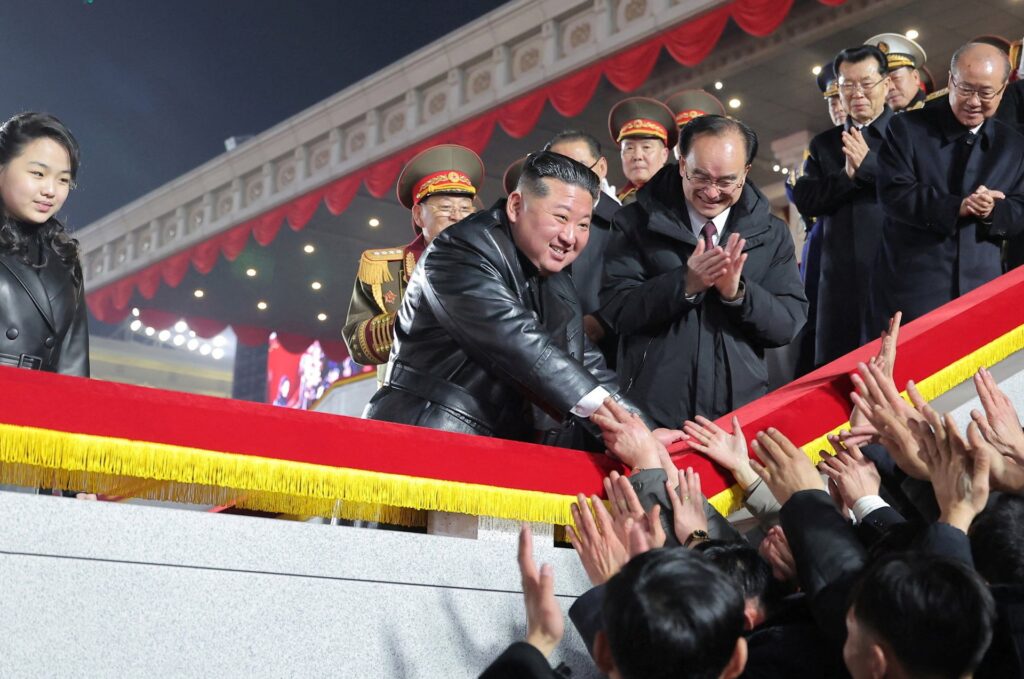
Kim Jong Un, the Supreme Leader of North Korea, recently presided over a grand and massive military parade held in Pyongyang. This parade marked the conclusion of the once-every-five-years Workers’ Party Congress, an event of significant political importance in the Democratic People’s Republic of Korea. The parade showcased the country’s military strength with a formidable display of troops, armored vehicles, missile systems, and other military hardware advancing through the capital’s main avenues.
The event is a vivid demonstration of North Korea’s military capabilities and serves as a prominent reminder of its strategic priorities. Kim Jong Un’s presence underscored the leadership’s commitment to maintaining and showcasing its defense readiness amid ongoing global tensions and regional security concerns. The parade also reflected the organization’s efforts to rally national pride and unity through the grandeur of its armed forces.
Historically, these large-scale parades in Pyongyang have been used to send strong messages both domestically and internationally, affirming the regime’s resolve and military advancements. The Workers’ Party Congress, held every five years, sets the policy direction and political agenda for the country, making the concluding parade an event of dual importance—both militarily and politically.
Participants in the parade included elite units of the Korean People’s Army, as well as special forces and other branches, demonstrating the breadth and depth of North Korea’s military forces. The display also included newly developed weaponry and enhancements to existing military technology, signaling ongoing efforts to modernize the armed forces.
The timing of the parade, immediately following the congress, serves not only as a celebration of North Korea’s ruling party achievements but also as a reaffirmation of the regime’s commitment to its defense policies and strategic objectives. International observers often analyze such events closely for clues about North Korea’s military capabilities and potential future developments.
In addition to the military hardware, the parade featured mass formations of soldiers marching in precise coordination, highlighting the discipline and training of the North Korean military. The event was attended by high-ranking party officials and was likely broadcast state-wide to consolidate public support and showcase national strength.
Kim Jong Un’s speech during the parade emphasized the importance of sovereignty, self-reliance, and military power as pillars for protecting the nation’s interests. The leader called for continued advancements in military technology and a steadfast commitment to the ideological foundations of the Workers’ Party.
As North Korea continues to navigate complex geopolitical landscapes, such displays play a crucial role in its strategic communication both internally to its population and externally to other countries. The large-scale military parade in Pyongyang stands as a powerful symbol of the country’s ongoing dedication to its military-first policy and its leadership’s vision for the future.
Overall, the parade was not only a demonstration of North Korea’s military strength but also a reaffirmation of its political ideology and national unity under Kim Jong Un’s leadership, setting the stage for the country’s policy direction until the next congress.