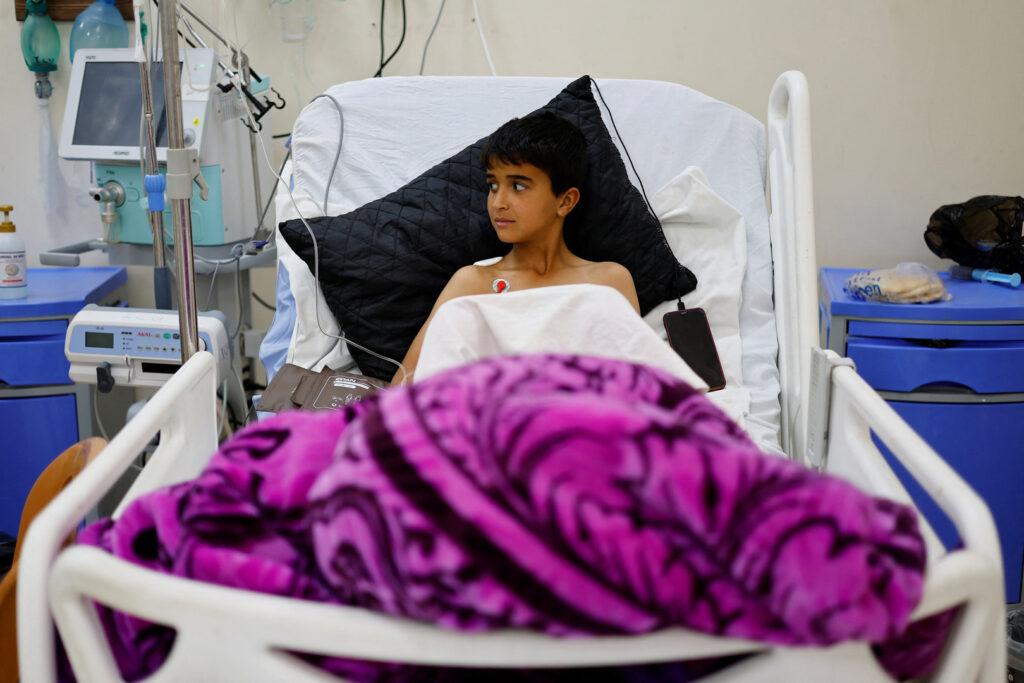
A Palestinian boy lies on a hospital bed receiving treatment for burn injuries at a Doctors Without Borders (MSF) hospital, amid severe shortages of medical equipment, medicines and essential materials needed for burn treatment, in Zawaida in the central Gaza Strip, January 26, 2026. REUTERS/Mahmoud Issa
In a significant development, seventeen humanitarian aid groups have taken a collective stand by petitioning Israel’s Supreme Court following the government’s recent move to ban 37 non-governmental organizations (NGOs) operating in Gaza. Among the groups affected are international medical teams, including doctors who have been providing critical health services in the region.
This action marks a severe escalation in the conflict affecting Gaza, as Israel seeks to limit the presence and operation of various international aid organizations within its borders. The ban has directly resulted in the forced departure of international doctors from Gaza, creating urgent concerns over the availability of medical care for civilians amid ongoing tensions.
The 37 NGOs targeted by the Israeli government include a diverse range of organizations involved in humanitarian aid, medical support, and development work. These NGOs have played a pivotal role in delivering essential services to vulnerable populations, including healthcare, education, and emergency relief.
The decision to ban these organizations has been justified by Israeli authorities on grounds of security and political considerations, though critics argue that the move undermines humanitarian efforts and violates the rights of civilians in Gaza.
The seventeen aid groups that filed the petition emphasize the critical nature of their work in Gaza, appealing to the Supreme Court to reconsider the ban to ensure that life-saving services can continue. They argue that restricting NGOs will have devastating effects on already vulnerable populations, exacerbating the humanitarian crisis in the region.
Medical professionals, particularly international doctors, have voiced deep concern over the ban, noting that their departure leaves a significant gap in medical care. Hospitals and clinics in Gaza are facing increased pressure as they try to manage the health needs of a population under strain from conflict and blockade.
The broader international community has expressed alarm over the escalating restrictions on humanitarian access to Gaza. United Nations agencies and global health organizations have called on all parties to respect humanitarian principles and allow aid workers to operate unhindered.
This legal challenge represents a critical moment for humanitarian operations in the region. If successful, it could potentially reverse the ban and allow NGOs to resume their work, alleviating some of the hardship faced by Gazans. Conversely, if the ban is upheld, it could mark a significant setback for humanitarian efforts and further deepen the crisis.
The forced evacuation of international medical staff underscores the complexities and challenges of delivering aid in conflict zones. It also raises important questions about the balance between national security concerns and the imperative to protect human rights and provide humanitarian assistance.
As the petition is reviewed, thousands of civilians in Gaza await the outcome, hoping for continued access to essential medical and humanitarian services. The case serves as a poignant reminder of the human cost of political decisions and the vital role of NGOs in crisis management.
In summary, the Israeli government’s ban on 37 NGOs, including international medical teams in Gaza, has led to the forced departure of aid workers, sparking a legal petition by seventeen aid organizations to the Supreme Court. This development highlights the ongoing tension between security policies and humanitarian needs in Gaza, with wide-ranging implications for the health and welfare of the civilian population.