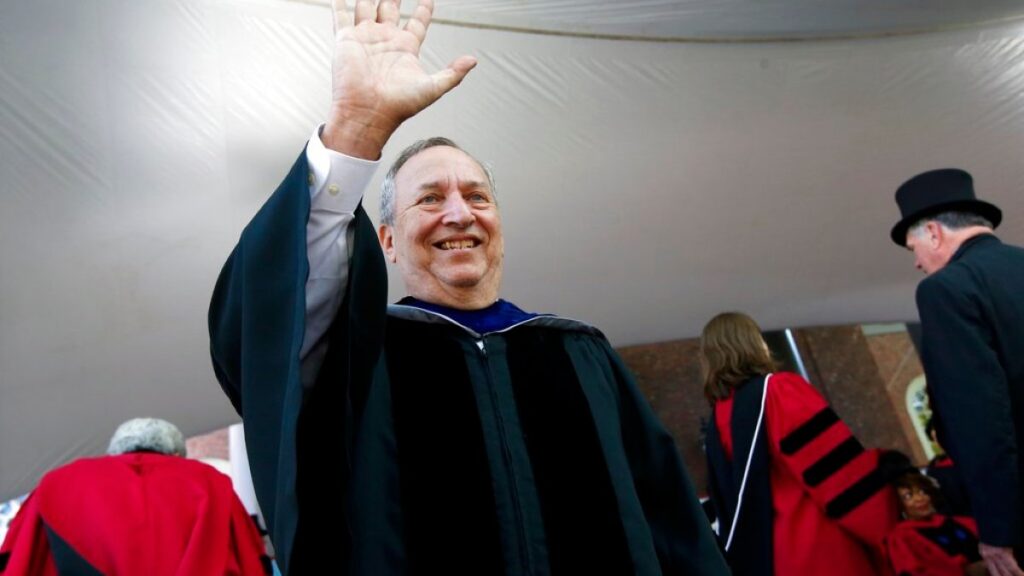
Larry Summers, a renowned economist and former President of Harvard University, has announced his decision to leave Harvard following the public revelation of his correspondence with Jeffrey Epstein. Epstein, a financier with a notorious reputation, was implicated in numerous criminal activities, and his associations have cast a shadow over several prominent figures. Summers’ departure marks a significant moment for the academic community as questions arise about the extent and nature of his ties with Epstein.
Summers, known for his influential role in shaping economic policy and his leadership at Harvard, found himself at the center of controversy after emails exchanged between him and Epstein came to light. These emails suggested a level of interaction that has prompted scrutiny and criticism from both the public and university officials.
In response to the disclosures, Summers stated that his decision to step down is intended to protect the integrity of the institution and to allow Harvard to move forward without distraction. He emphasized that his interactions with Epstein were related to academic and philanthropic discussions, distancing himself from Epstein’s criminal actions.
Harvard University expressed regret over the circumstances surrounding Summers’ departure but reaffirmed its commitment to transparency and ethical standards. University spokespeople highlighted that while Summers’ contributions to the academic field remain significant, the university must uphold the highest principles of conduct.
This incident contributes to ongoing discussions about the responsibility of public figures and institutions when associated with controversial individuals. The case has sparked broader debate about the influence of powerful personalities and the necessity for accountability in academic and public spheres.
Larry Summers’ exit from Harvard underscores the delicate balance institutions must maintain between honoring accomplished individuals and addressing ethical concerns. As the university navigates the fallout, it is expected to review its policies on associations and conduct to prevent similar situations in the future.
The broader economic and academic communities are watching closely, as this event highlights the impact of personal affiliations on professional reputations. Summers, who has held roles such as U.S. Treasury Secretary and Director of the National Economic Council, remains a significant figure whose career achievements continue to be recognized despite the controversy.
In conclusion, Larry Summers’ resignation from Harvard serves as a reminder of the complexities facing prestigious institutions when confronted with revelations about their members’ connections to questionable figures. The university’s decision to part ways with Summers is aimed at preserving its standing and ensuring that its values align with public expectations and ethical standards.