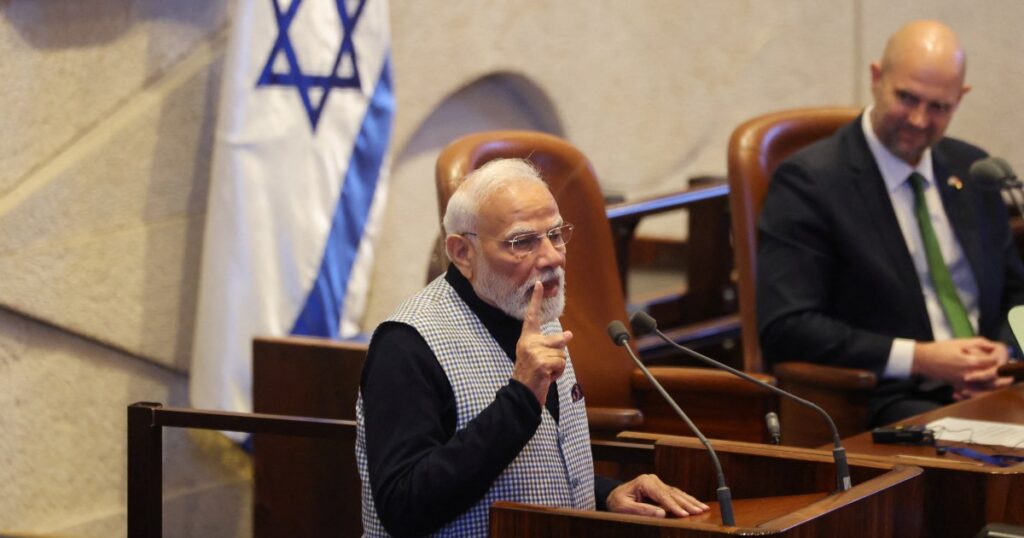
During his recent speech at the Knesset in Jerusalem, Indian Prime Minister Narendra Modi emphasized the deepening strategic partnership between India and Israel, highlighting key multilateral projects such as the IMEC corridor and the I2U2 grouping. These initiatives represent significant frameworks for collaboration, not only between India and Israel but also involving other global partners, aimed at fostering economic growth, innovation, and regional cooperation.
The IMEC corridor refers to a collaborative economic and industrial development zone envisioned to boost trade and investment between India and Israel. IMEC, standing for India-Middle East-Europe Corridor, is designed to link India with the Middle East and Europe via a seamless network of transport and trade routes. This corridor aims to strengthen logistics capabilities, reduce transit times, and enhance connectivity, creating new opportunities for businesses in technology, manufacturing, and services sectors. By ensuring smoother movement of goods and services, the IMEC corridor helps lay the groundwork for robust economic ties and mutual prosperity.
On the other hand, the I2U2 grouping is an innovative multilateral forum that includes India, Israel, the United States, and the United Arab Emirates. This coalition focuses on collaborative projects in various sectors such as water technology, energy, agriculture, and food security. The inclusion of diverse nations from South Asia, the Middle East, and North America exemplifies an evolving geopolitical alignment aimed at common economic and security interests. Through the I2U2 partnership, member countries strive to devise solutions to pressing challenges like climate change and sustainable development while fostering technological exchanges and investment.
Prime Minister Modi’s mention of these projects during his Knesset address not only underscored the growing India-Israel camaraderie but also signaled a broader regional integration agenda. The IMEC corridor reflects a strategic vision to position India as a pivotal trade hub connecting continents, leveraging Israel’s advanced technology and innovation capabilities. Meanwhile, the I2U2 grouping epitomizes a contemporary multilateral approach to diplomacy, where countries with complementary strengths unite to tackle global issues and harness economic opportunities.
These initiatives offer multiple benefits:
1. Economic Growth: Both the IMEC corridor and the I2U2 grouping facilitate enhanced trade flows, investment opportunities, and infrastructure development, bolstering economic growth.
2. Technological Collaboration: Israel’s expertise in areas such as cybersecurity, agriculture technology, and water management complements India’s innovation ecosystem, fostering joint research and development.
3. Regional Stability and Cooperation: By involving countries across Asia, the Middle East, and America, these projects promote peaceful cooperation and shared prosperity, crucial for regional stability.
4. Sustainable Development: Focus areas like clean energy and water security directly address environmental concerns and contribute to sustainable progress.
India’s collaboration with Israel through these avenues is part of a broader strategic vision to strengthen ties with key global players and promote multipolar global governance that aligns with mutual interests. The IMEC corridor and I2U2 grouping are tangible expressions of this vision, driving forward economic integration and diplomatic engagement.
In summary, the IMEC corridor and the I2U2 grouping are pioneering initiatives that reflect the deepening India-Israel axis, bridging continents and fostering multifaceted collaboration. As these projects develop, they are set to redefine regional connectivity, enhance technological cooperation, and contribute to global economic and environmental goals, embodying a new paradigm of international partnership.