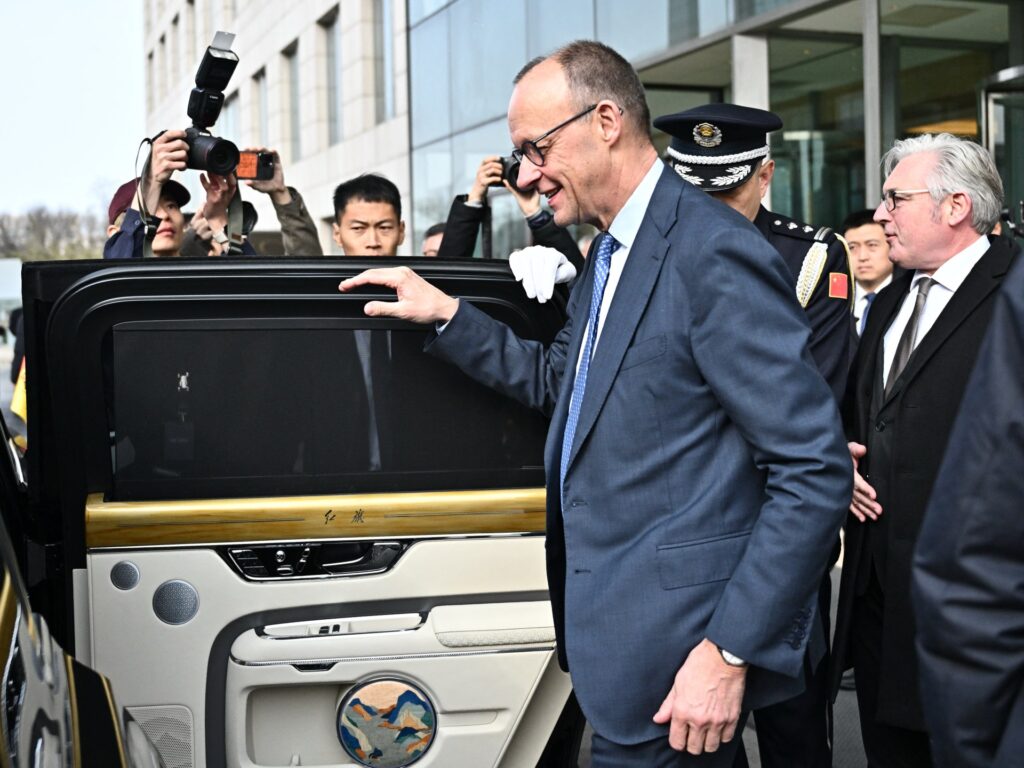
German Chancellor Friedrich Merz recently visited the eastern Chinese city of Hangzhou, a renowned technological hub known for its flourishing AI sector and e-commerce giants. The city, home to influential companies such as DeepSeek, an artificial intelligence firm, and Alibaba, the massive e-commerce powerhouse, offers vast potential for business collaborations and innovation.
During the visit, Chancellor Merz engaged with local business leaders and company executives, expressing Germany’s keen interest in exploring joint ventures and partnerships that could benefit both German and Chinese markets. The trip underscores Germany’s strategy to deepen economic ties with China, particularly in high-tech industries that are shaping the future of global commerce.
Hangzhou’s significance as a tech hub cannot be overstated. It has been at the forefront of China’s digital transformation, with enterprises pioneering technologies in AI, cloud computing, and big data analytics. For Germany, tapping into this ecosystem presents an opportunity to enhance its own technological advancements and foster innovations in fields such as automotive technology, manufacturing, and digital services.
Merz highlighted the importance of international cooperation in technology development amid a period of rapid digital change and economic uncertainty. By visiting companies like DeepSeek, which specializes in AI-driven solutions, and Alibaba, a leader in e-commerce infrastructure and logistics, Merz signaled Germany’s commitment to integrating cutting-edge digital technologies into its domestic industries.
The visit also signaled a broader diplomatic effort to sustain and expand economic dialogue between Germany and China, two of the world’s largest economies. Despite existing challenges in global trade and geopolitical tensions, both sides demonstrated a willingness to work collaboratively on innovation-driven economic growth.
Business leaders accompanying Chancellor Merz on the trip came from various sectors, including technology, logistics, and finance, all eyeing the innovative potentials that Hangzhou offers. Their presence indicates the diverse range of interests German industries have in China’s continued digital evolution.
Economists and analysts have noted that such visits can lead to improved trade relations and mutual investments, boosting employment and technological exchange. Germany’s proactive approach in Hangzhou is seen as a strategy to stay competitive in an increasingly digitalized world economy.
Furthermore, Hangzhou’s development strategy, which emphasizes sustainable technologies and smart city projects, aligns with Germany’s own goals to promote green tech and sustainability in its industrial practices. Partnerships emerging from this visit might include technologies related to energy efficiency, urban planning, and automated transport solutions.
In conclusion, Chancellor Friedrich Merz’s visit to Hangzhou is a significant stride toward strengthening Sino-German economic ties, particularly through collaborations in AI and e-commerce. The engagement not only serves as a platform for business opportunities but also as a beacon of hope for continued international cooperation in a rapidly evolving technological landscape. Both Germany and China stand to benefit from this deepening partnership, setting the stage for future innovations that could reshape global markets and industries.