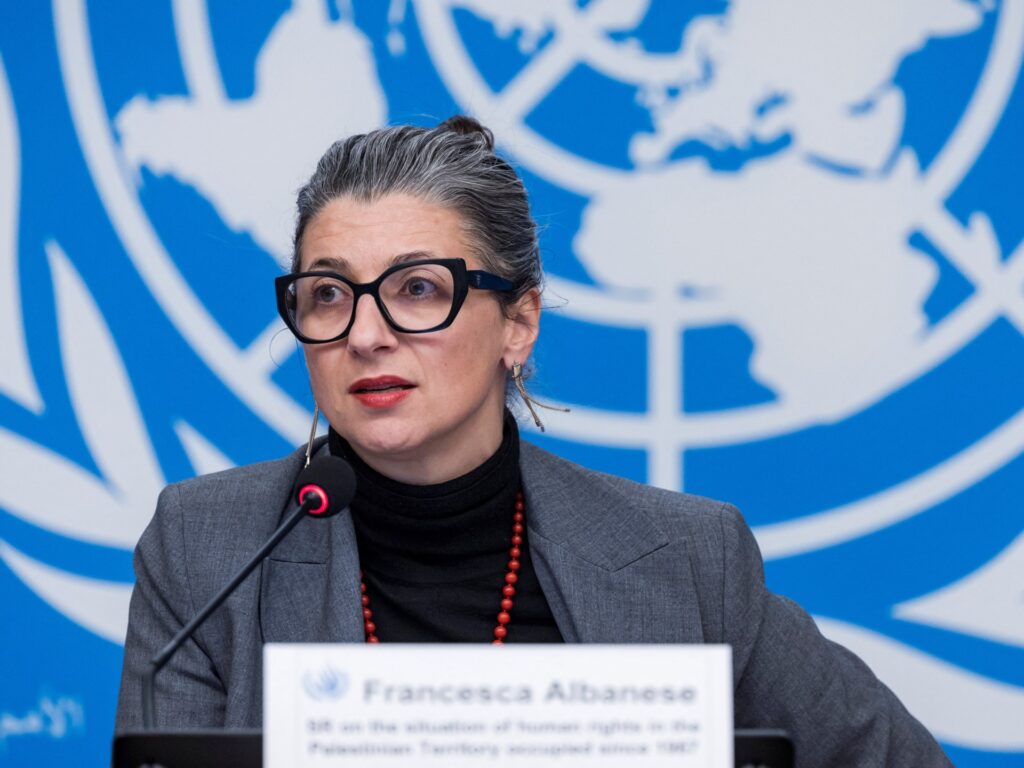
In a significant legal move, the family of UN Rapporteur Albanese has filed a lawsuit against the Trump administration. The lawsuit challenges the sanctions imposed by the U.S. government on Albanese since July. Albanese, known for her advocacy for Palestinian rights, has been a vocal critic of Israel, which has led to the U.S. government’s punitive measures against her.
The sanctions have been a source of controversy, with many viewing them as a political attempt to silence Albanese’s criticisms rather than a response to legitimate legal grievances. Albanese’s supporters argue that her work and statements are within the bounds of international human rights advocacy and that the sanctions undermine the principles of free speech and impartial human rights reporting.
The family lawsuit emphasizes the impact of the sanctions on Albanese’s ability to carry out her duties as a UN rapporteur effectively. It also raises concerns about the precedent it sets for international human rights officials who criticize powerful states.
Albanese’s outspoken stance on Palestinian rights has drawn considerable attention, with human rights organizations worldwide expressing solidarity with her. The case highlights the tensions between advocacy for Palestinian human rights and U.S. foreign policy support for Israel.
Since the sanctions were announced, there has been a growing debate about the role and independence of UN rapporteurs, and how external political pressures can influence their work. Albanese’s situation is seen by many as a critical test of international commitment to uphold the UN’s human rights mechanisms without interference.
The lawsuit not only contests the legality of the sanctions but also calls for their immediate removal, arguing that the sanctions violate international law and human rights norms. It underscores the need for protecting the integrity and independence of UN human rights experts in carrying out their mandates.
The Trump administration’s stance reflects a broader policy approach that seeks to protect its ally Israel from international criticism. This legal challenge by Albanese’s family could have far-reaching implications for international diplomacy and human rights enforcement.
Observers are closely watching the outcome of this case, as it may influence future interactions between the United States and the United Nations, particularly concerning contentious issues like the Israeli-Palestinian conflict.
In summary, the family of UN Rapporteur Albanese has taken a bold step in suing the Trump administration, challenging the sanctions rooted in her advocacy for Palestinian rights and criticism of Israel. This legal battle encapsulates the complex intersection of international human rights work, geopolitical alliances, and the fight to maintain independent oversight in a highly politicized global environment.