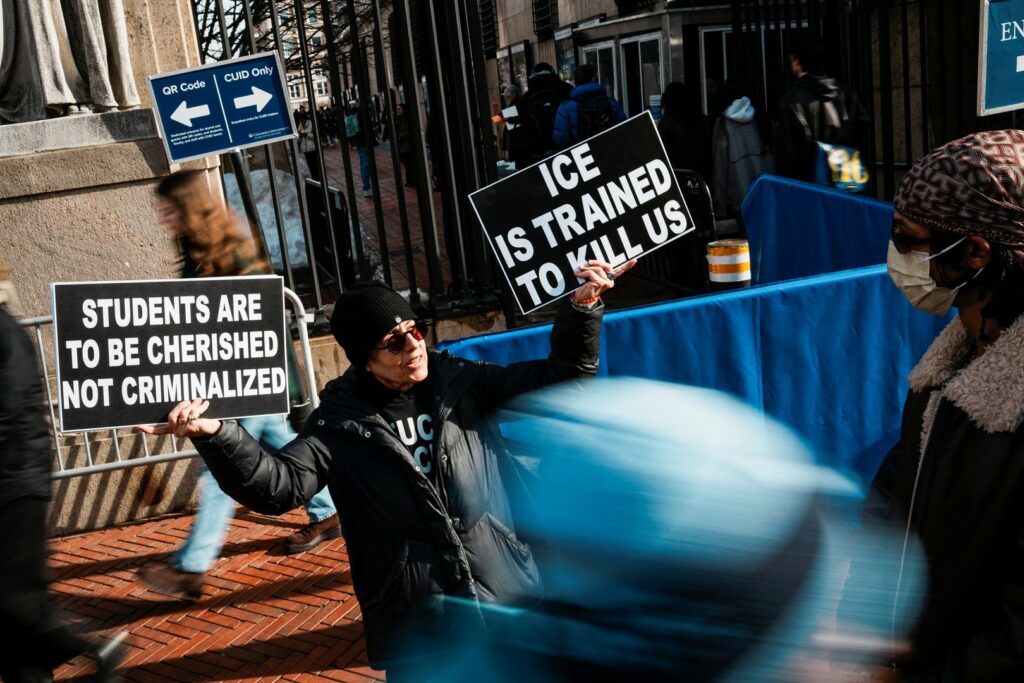
A person holds signs during a protest outside the Columbia University campus after agents from the U.S. Department of Homeland Security (DHS) detained a student in university housing, in New York City, U.S., February 26, 2026. REUTERS/Eduardo Munoz
Students at Columbia University recently organized a protest in response to the arrest of a student by agents from the Department of Homeland Security’s Immigration and Customs Enforcement (ICE). The incident took place on university grounds, specifically in university housing, sparking concerns and outrage among the student body and faculty.
The detained student, whose identity has not been publicly disclosed, was taken into custody by ICE agents without prior notice to the university community. This unexpected action has raised significant questions about the presence and authority of federal immigration enforcement on campus.
Protesters gathered shortly after the arrest, expressing solidarity with the student and condemning what they describe as an unjust and disruptive enforcement action. Chanting slogans and holding signs, the demonstrators called for the university administration to take a clear stance against ICE actions on campus and to protect the rights and safety of all students.
University officials released a statement expressing concern over the incident and reaffirming their commitment to maintaining a safe and inclusive environment for all students. They emphasized the importance of clear communication and support for those affected by immigration enforcement measures.
The protest at Columbia is part of a broader national movement among college students challenging ICE’s activities on university campuses. Many argue that such enforcement undermines the academic community’s commitment to diversity, equity, and inclusion, and disproportionately impacts students from immigrant backgrounds.
This event highlights ongoing tensions between immigration enforcement agencies and higher education institutions, raising critical questions about policy, jurisdiction, and student rights. As the situation continues to develop, both Columbia University and ICE face increased scrutiny over their roles and responsibilities in such incidents.
The student protest serves as a powerful reminder of the growing demand for reform in immigration enforcement practices and for heightened protections within educational settings. It underscores the need for ongoing dialogue among students, university leaders, and policymakers to address these complex and sensitive issues moving forward.