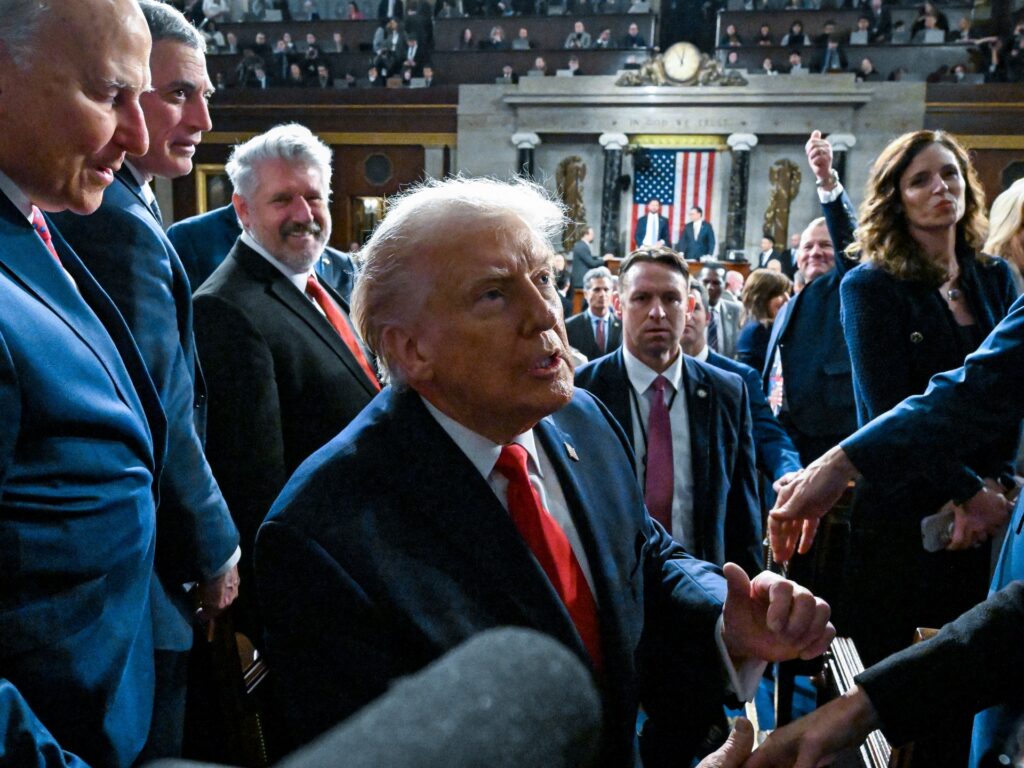
In the aftermath of the State of the Union address, President Trump presented a triumphant and optimistic vision for the future of the United States. His speech was marked by a tone of confidence and determination, highlighting his administration’s achievements and outlining ambitious goals for the coming years. However, despite the President’s upbeat message, the political landscape he faces is far more complicated and fraught with challenges than the speech might suggest.
One of the most significant hurdles confronting President Trump is the mounting legal challenges that have emerged in recent months. Various investigations and court cases continue to unfold, casting a shadow over the administration and diverting attention and resources. These legal setbacks threaten to undermine the President’s ability to effectively govern and advance his policy agenda.
On the legislative front, the midterm elections loom large, introducing an element of uncertainty that further complicates Trump’s agenda. The upcoming elections have energized opposition parties and activists, who are gearing up for intense campaigns to win control of Congress. The potential shift in the balance of power poses a direct challenge to the President’s legislative priorities, as any changes in congressional leadership could stall or block key initiatives.
Despite these obstacles, President Trump remains resolute in his commitment to push forward with his vision. His speech underscored a focus on economic growth, national security, and American exceptionalism, themes that resonate deeply with his political base. He argued that the country is at a pivotal moment, one that requires strong leadership and bold action.
However, political analysts caution that the reality in Washington is less straightforward. The divisions within Congress are deepening, with partisanship and ideological conflicts intensifying. This environment makes compromise and consensus increasingly difficult to achieve.
Moreover, the President’s agenda faces skepticism even within segments of his own party, where some members express concern about the risks posed by ongoing legal controversies and the potential fallout from midterm electoral losses. This internal discord adds another layer of complexity to an already challenging political calculus.
In response to these challenges, the Trump administration has signaled a willingness to engage in strategic negotiations and adapt its tactics. This includes efforts to build coalitions around shared goals and to leverage public support to pressure Congress. Navigating these political realities will require careful maneuvering and a recalibration of priorities.
As the midterm elections draw nearer, all eyes will be on the dynamic interplay between the White House and Capitol Hill. The outcomes will shape the trajectory of President Trump’s agenda and the broader direction of U.S. policy.
In summary, while President Trump’s State of the Union speech conveyed confidence and ambition, the path ahead is marked by significant legal and political obstacles. The administration’s ability to realize its goals will depend on how effectively it manages these challenges in an increasingly complex and divided political environment.