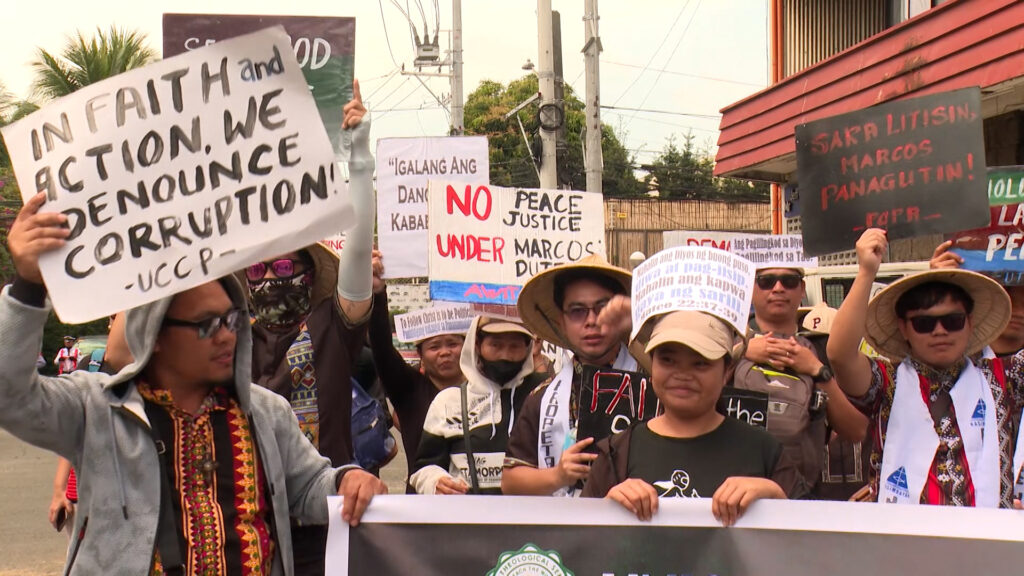
On the 40th anniversary of a pivotal popular uprising in the Philippines, thousands of demonstrators gathered in Manila to protest against corruption, reigniting the spirit of the movement that once led to significant political change in the country. The protest, marked by passionate calls for justice and reform, saw clashes erupt between the protesters and police forces.
The day holds historical significance, commemorating the People Power Revolution of 1986, which led to the toppling of the Marcos dictatorship. This anniversary was expected to be a peaceful remembrance but evolved into a display of widespread public dissatisfaction with ongoing issues of governance and corruption in the nation.
Protesters, including activists, civil society members, and ordinary citizens, rallied around demands for transparency, accountability, and an end to corrupt practices in government institutions. The demonstration highlighted persistent grievances over corruption that many believe undermine democracy and economic progress in the Philippines.
Authorities deployed police forces in large numbers to manage the crowd, leading to tense encounters. These confrontations included dispersal efforts, use of tear gas, and arrests as police sought to control the situation amid the swelling numbers of participants.
The government’s handling of the protest drew criticism from human rights organizations and opposition groups, who called for restraint and dialogue rather than force. Despite official statements emphasizing the right to peaceful assembly, the clashes underscored the fragile relationship between the state and its citizens regarding public dissent.
The event also saw renewed calls for reforms in systems prone to corruption, with demonstrators urging the government to take concrete steps towards improving governance, enforcing anti-corruption laws, and ensuring that officials are held accountable.
Social media played a crucial role in mobilizing protesters, spreading information, and drawing international attention to the unrest. Images and videos of the clashes circulated widely, sparking discussions on government accountability and human rights.
As the protest unfolded, many participants expressed a collective hope that the anniversary would not just be a commemoration of past victories, but a catalyst for meaningful change in the present political landscape.
The 40th anniversary thus became a powerful moment for Filipinos to reflect on their history, voice contemporary struggles, and demand a future free from corruption and injustice. The protest in Manila remains a testament to the enduring spirit of activism and the ongoing quest for democratic rights in the Philippines.