USA-TRUMP/CONGRESS
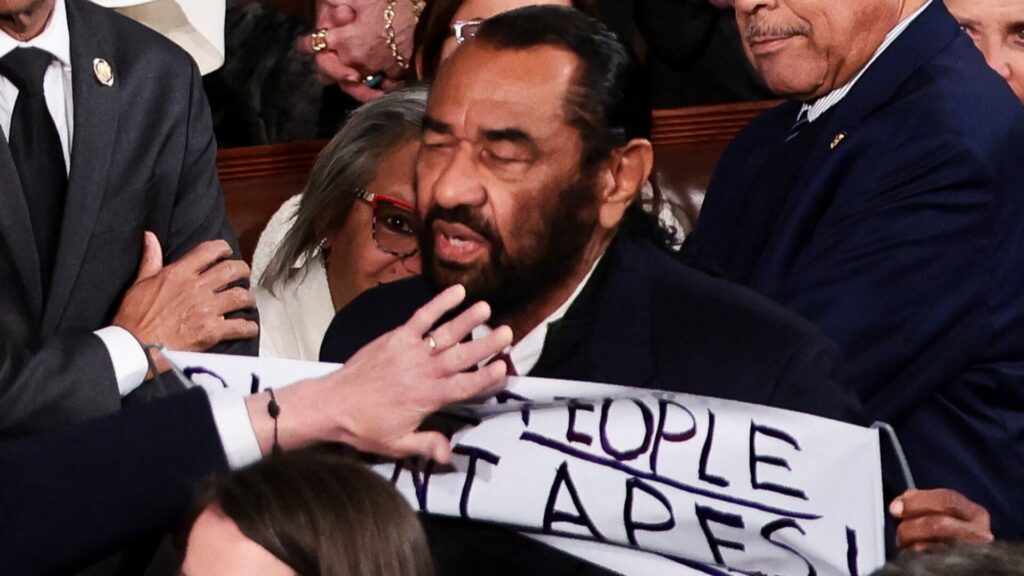
During the recent State of the Union address delivered by US President Donald Trump, a notable incident occurred involving Democratic Congressman Al Green. The lawmaker was ejected from the House chamber after displaying a protest sign during the speech. This unprecedented event captured national attention, highlighting the deep political tensions present in the United States.
Al Green, a Democrat known for his vocal opposition to President Trump, brought a protest sign into the chamber as the President was addressing Congress. The sign was a visible act of dissent, challenging the content and tone of the State of the Union address. Congressional rules prohibit such displays within the chamber to maintain decorum during the address.
House officials acted swiftly, citing the rules of conduct in the chamber which bar members from displaying signs and making disruptions during the President’s speech. Following a warning, Al Green was asked to leave the chamber by the Sergeant at Arms. Despite some protests from other members of Congress, the ejection was enforced to preserve the procedural integrity of the event.
The incident underscored the polarized nature of current US politics, with clear divisions not only between the opposing parties but also within the public discourse around the President’s policies. Al Green has been a prominent critic of President Trump, and his protest was seen by supporters as a courageous stand against policies they oppose.
However, opponents argued that the ejection was justified to maintain respect and order during a significant national event. The State of the Union address is traditionally a ceremonial occasion where the country’s priorities and achievements are outlined, demanding a controlled and respectful environment.
Following his ejection, Al Green issued a statement reaffirming his position and the reasons behind his protest sign. He emphasized the importance of raising voices against what he perceives as harmful policies and expressed his disappointment over the enforcement action but vowed to continue his advocacy through other means.
The event reignited debates about freedom of expression within the halls of Congress, the appropriate limits of protest during formal proceedings, and the challenges of maintaining civility amid intense political strife. Media coverage varied, with some outlets highlighting the legality and decorum aspects, while others focused on the symbolic nature of Green’s protest.
In the aftermath, both political parties have reiterated calls for unity and respect during important national addresses, though the underlying political divisions remain deeply entrenched. The incident involving Al Green serves as a reminder of the ongoing struggles over the tone and direction of American politics.
As the US continues to grapple with a polarized political landscape, events such as this demonstrate the challenges lawmakers face in balancing protest and procedure. The ejection of a sitting congressman during the State of the Union address is a rare and significant moment, reflective of broader national tensions and the complex dynamics within the US government.