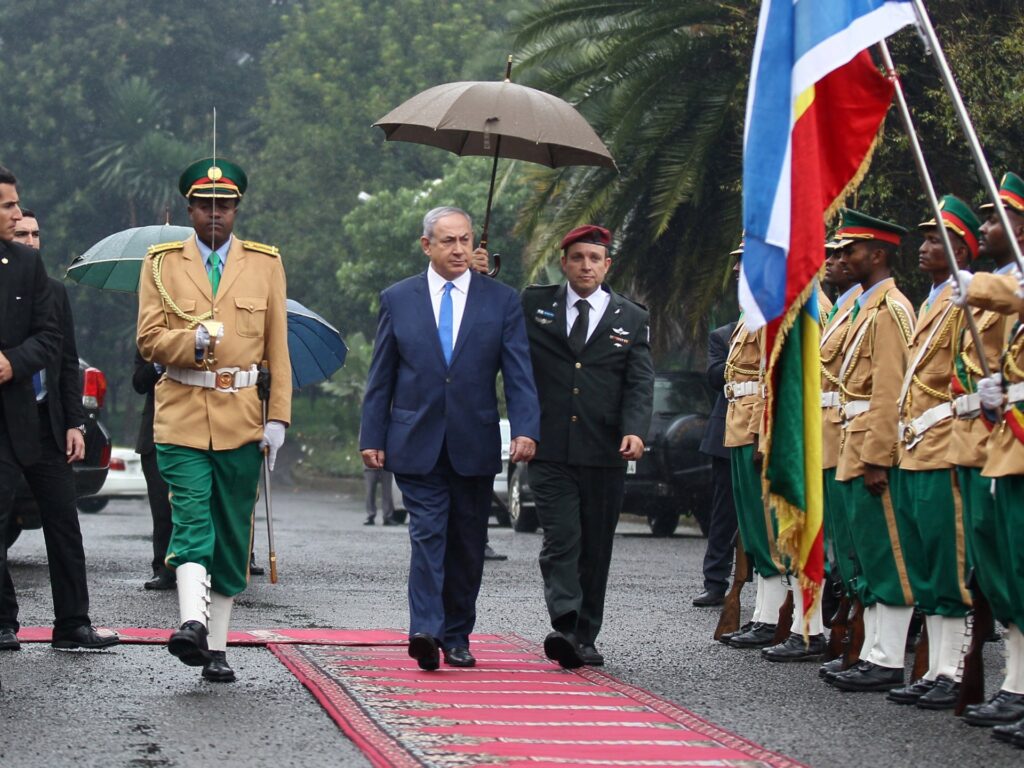
In a significant development within the geopolitical landscape of the Middle East and the Horn of Africa, Israeli President Isaac Herzog recently visited Addis Ababa, Ethiopia. This visit comes on the heels of high-level delegations from Turkey and Saudi Arabia also traveling to the Ethiopian capital, signaling a surge in regional diplomatic activities.
The backdrop to these visits is Israel’s strategy to forge what has been informally dubbed a “hexagon” alliance. This emerging coalition is perceived as an effort to balance and counteract shared adversaries in the region, aiming to enhance political, security, and economic collaboration among member countries.
Ethiopia’s potential inclusion in this alliance is noteworthy due to its strategic location and growing influence in the Horn of Africa. Historically, Ethiopia has been a stable partner to various international actors but has maintained a non-aligned stance in many regional conflicts. Its participation could significantly bolster the alliance’s geographic reach and influence.
The term “hexagon” alliance refers to a group of six countries reportedly collaborating closely to address common challenges. While the full composition of this group has not been officially disclosed, Israel’s outreach to Ethiopia, alongside its growing ties with Turkey and Saudi Arabia, indicates a complex web of partnerships driving regional security and economic initiatives.
President Herzog’s discussions in Addis Ababa likely centered on mutual interests including counterterrorism, trade, technology exchange, and regional stability. Ethiopia could serve as a crucial bridge linking Israel to other African nations, given its extensive diplomatic relations and leadership role within the African Union.
The visits from Turkish and Saudi high-level delegations also underline a broader trend of normalization and strategic realignment in Middle Eastern and African relations. Turkey and Saudi Arabia, both with significant regional ambitions, appear keen to deepen ties with Ethiopia, potentially to create a counterweight against rival influences.
This diplomatic momentum coincides with shifting alliances and the realignment of power blocs across the Middle East and Africa. Israel’s effort to construct a “hexagon” alliance underscores its intent to build multidisciplinary partnerships that extend beyond traditional bilateral relations, embracing a multilateral coalition approach.
Challenges remain, including Ethiopia’s internal political dynamics and complicated relations with neighboring states. However, the mutual benefits of collaboration with Israel—spanning defense technology, agriculture, and infrastructure development—present compelling incentives.
Furthermore, Ethiopia’s inclusion would enable Israel to strengthen its influence on the African continent, tapping into emerging markets and enhancing security cooperation across the Red Sea corridor.
In conclusion, while it is not yet officially confirmed that Ethiopia is a formal part of Israel’s “hexagon” alliance, the recent high-profile visits and diplomatic engagements strongly suggest a move towards greater integration. This potential alliance represents a strategic pivot that could reshape regional alliances and rivalries, fostering a new era of cooperation aimed at addressing shared geopolitical challenges.