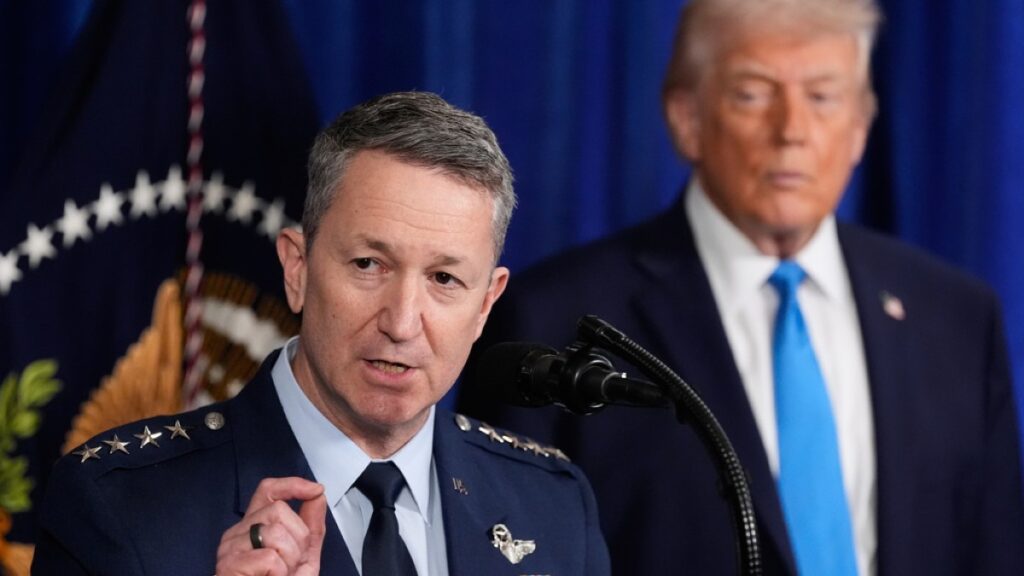
Former US President Donald Trump has vehemently denied reports suggesting that his top general, General Dan Caine, had warned him about the risks associated with attacking Iran. According to Trump, such claims are “100 percent incorrect.”
The controversy arose following media reports that General Dan Caine cautioned Trump about potential risks of escalating military action against Iran, highlighting the dangers of war and its geopolitical consequences. These reports suggested that the general advised the president to carefully weigh the consequences before engaging in any hostile actions.
However, Trump has firmly rejected these accounts. In a recent statement, he labeled the allegations as outright false, asserting that no such warnings were given by General Caine. Trump has often emphasized his tough stance on Iran, but he appears to be challenging the narrative that his military advisers urged caution against armed conflict.
The alleged warning from General Caine would have been significant because tensions between the United States and Iran have remained high over the years, with potential conflict risks looming large. Both countries have engaged in a war of words and proxy conflicts, especially after the US withdrawal from the Iran nuclear deal and the imposition of stringent sanctions.
Experts say that military advisers like General Caine play a crucial role in informing presidential decisions about foreign policy and military strategy. Their assessments often encompass not only military capabilities but also the broader geopolitical and humanitarian consequences.
The reports originated from unnamed sources within the military and intelligence communities, which has sparked debate about the reliability of anonymous briefings and the motives behind such leaks.
Trump’s rejection of the claims raises questions about internal communications within the US administration during his tenure and whether dissenting voices were acknowledged or suppressed.
Iran responded to the controversy by reasserting its own position on confrontation with the United States, emphasizing the need for diplomacy over aggression.
Meanwhile, political analysts note that the dispute over these reports underscores the highly sensitive nature of US-Iran relations and the complexity of decision-making at the highest level of government.
The White House has declined to comment directly on the matter, maintaining a policy of confidentiality on internal discussions.
Observers continue to monitor developments closely, as any indication of internal disagreements over Iran policy could have significant implications for current and future administrations.
This episode highlights the challenges leaders face in balancing military advice with political objectives, especially in the context of volatile international relations.
As dialogue and tensions persist in the region, the accurate portrayal of military counsel and presidential decisions remains critical for public understanding and policy accountability.
In summary, Trump’s outright dismissal of the reports alleging General Dan Caine’s warnings about risks of attacking Iran adds another layer to the ongoing discourse about US foreign policy strategy, civilian-military relations, and transparency in governance regarding sensitive security issues.