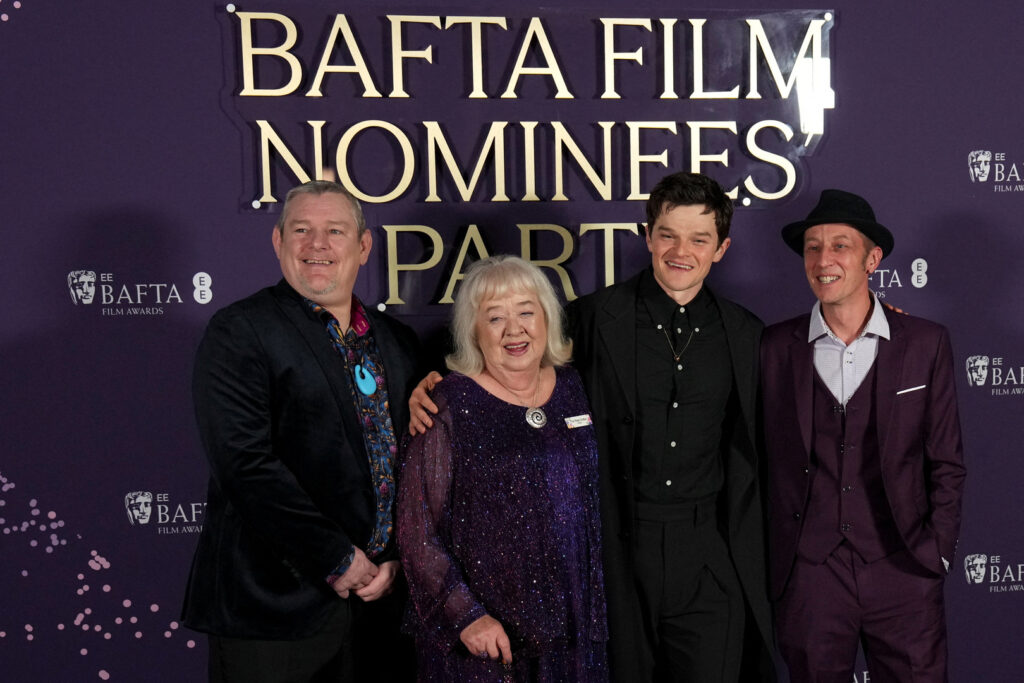
John Davidson, Dottie Achenbach and Robert Aramayo attend the BAFTA Film Awards Nominees' Party at The National Gallery, in London, Britain, February 21, 2026. REUTERS/Carlos Jasso
At the 2024 BAFTA Film Awards, an unexpected incident occurred involving a guest diagnosed with Tourette syndrome who involuntarily shouted a racial slur during the live BBC broadcast. The incident quickly drew attention due to the nature of the condition, which can cause involuntary vocalizations or movements known as tics. Tourette syndrome is a neurological disorder that affects individuals’ ability to control such tics. According to medical experts, these outbursts are not intentional and are uncontrollable by those affected.
The guest in question had been attending the prestigious ceremony to celebrate achievements in film but inadvertently uttered a racial slur, causing discomfort and confusion among viewers and attendees. The BBC, which was airing the event live, faced criticism from some quarters for failing to delay the broadcast or take immediate action to mute the offensive language. In response, the broadcaster issued a statement explaining the situation and emphasizing the involuntary nature of the outburst due to the individual’s condition.
BAFTA representatives expressed sympathy for the guest and highlighted the importance of understanding neurological disorders such as Tourette syndrome. They reiterated that the incident did not reflect the values or beliefs of the BAFTA organization or the wider film community. Mental health advocates and organizations that support individuals with Tourette syndrome called for greater awareness and education around the condition following the incident.
Tourette syndrome campaigns focus heavily on educating the public to dispel myths and reduce stigma. Involuntary tics, especially vocal tics, can sometimes involve inappropriate words or phrases, which may be socially unacceptable but are not spoken with malicious intent. The condition affects around 1 in 100 children and can continue into adulthood, though symptoms often improve with age.
This incident at the BAFTA Film Awards has sparked broader discussions about inclusivity, medical understanding, and the challenges faced by individuals with neurological disorders in high-profile public settings. Many expressed support for the individual affected and called for a compassionate response rather than condemnation.
The BAFTA ceremony continued after a brief pause, with presenters and attendees encouraging a respectful and understanding atmosphere. The event organizers have indicated plans to review their live broadcast procedures to better handle similar situations in the future.
In summary, the unexpected outburst at the BAFTAs highlighted the complexities surrounding Tourette syndrome and the importance of empathy from both the public and media outlets. This incident serves as a reminder of the need for increased education about neurological disorders to foster a more inclusive society.