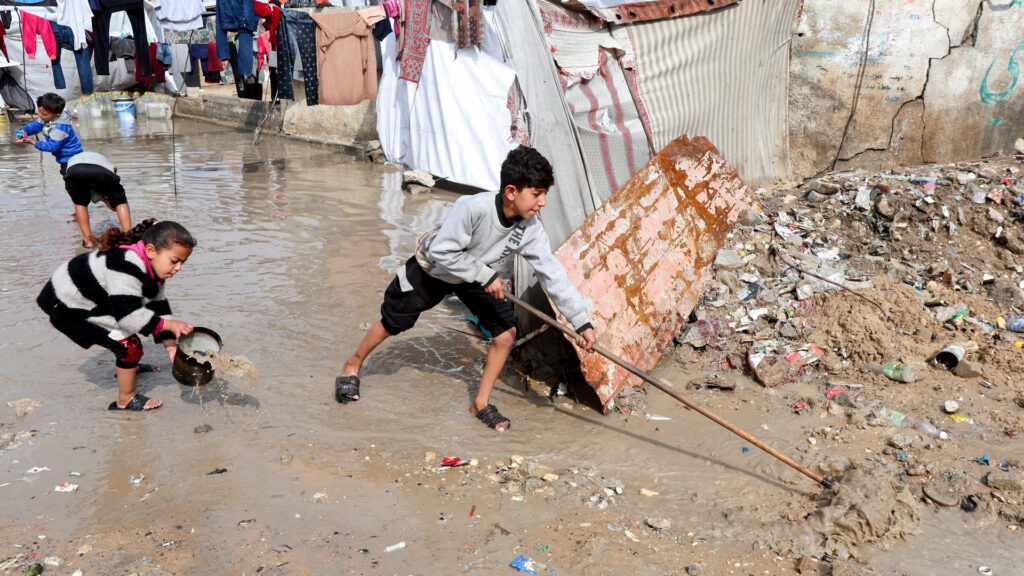
As the holy month of Ramadan is observed, Palestinians living in Gaza face a significant challenge as thousands of tents have been flooded due to the region’s first winter storm since the start of Ramadan. The flooding has exacerbated already difficult living conditions, causing distress among the displaced populations residing in these temporary shelters.
The storm brought heavy rains and strong winds, leading to widespread water accumulation inside the tents, making them uninhabitable or severely uncomfortable. Many families, already coping with limited resources, find themselves struggling to keep dry and maintain basic hygiene and health standards. This situation has highlighted the critical need for improved shelter conditions and emergency responses in Gaza.
Humanitarian organizations operating in the area have expressed concern about the vulnerable conditions faced by the affected populations. They emphasize the urgent need for aid, including waterproof materials, additional tents, and medical assistance to prevent the spread of waterborne diseases. This flooding incident underscores the ongoing challenges in Gaza, where political and economic constraints severely limit access to adequate housing and infrastructure.
Local authorities and community leaders are coordinating efforts to provide immediate relief to those impacted by the floods. However, the scale of the damage and the harsh weather conditions pose significant obstacles to rapid recovery and rehabilitation. The situation also adds emotional and physical stress during a period that is traditionally marked by reflection, fasting, and community gatherings.
The flooding has brought to light the precarious nature of life in Gaza, where natural disasters compound the effects of long-term conflict and blockade. Appeals for international support have been renewed, as Palestinians seek not only temporary relief but sustainable improvements to their living conditions to withstand future seasonal challenges.
Overall, the flooding of tents in Gaza during Ramadan represents a critical humanitarian issue that requires coordinated local and international response to alleviate suffering and provide stability in a region already facing immense hardships.