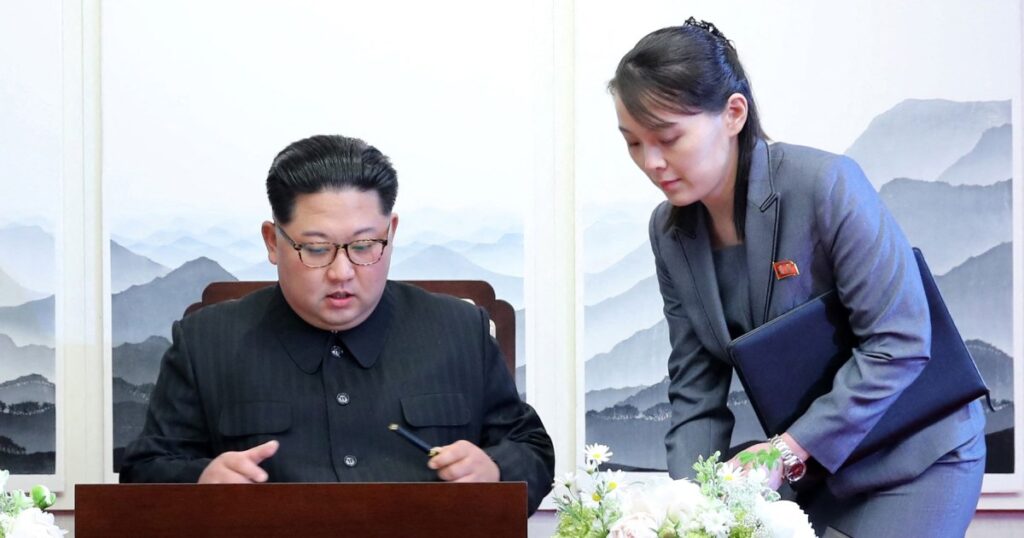
In a significant political development, North Korea’s ruling Workers’ Party Central Committee has promoted Kim Jong Un’s sister, Kim Yo Jong, to the position of full department director. This promotion was announced during the key party congress, highlighting her rising influence within the regime.
Kim Yo Jong, known for her close association with her brother and pivotal role in the regime, has been steadily gaining power in North Korean politics. Her elevation to full department director signifies a consolidation of power and an enhanced role in shaping policy and party affairs.
Alongside the announcement, Kim Jong Un vowed to bolster the country’s economy, which has faced numerous challenges, including international sanctions and the impact of the global pandemic. The commitment to economic development underscores the regime’s focus on strengthening domestic stability and improving the living standards of its citizens.
The Workers’ Party Central Committee’s decision to promote Kim Yo Jong reflects the leadership’s trust in her capabilities and loyalty, especially as North Korea seeks to navigate complex geopolitical and economic landscapes.
Political analysts view this move as a strategic effort to solidify the Kim family’s control over the party and government apparatus. Kim Yo Jong’s role is expected to be crucial in advancing the regime’s agenda, particularly in areas related to domestic policy and international diplomacy.
The party congress, a critical event in North Korea’s political calendar, sets the tone for future policies and priorities. Kim Jong Un’s economic pledge, coupled with the promotion of his sister, indicates a dual approach focused on reinforcing leadership stability and addressing pressing economic needs.
Observers note that North Korea has been facing severe economic constraints, exacerbated by stringent sanctions imposed due to its nuclear activities and missile tests. The government’s renewed focus on economic growth suggests a potential shift in strategy to mitigate these pressures.
In recent years, Kim Yo Jong has also been the face of North Korea’s outreach efforts and propaganda campaigns, often speaking out against perceived external threats and sanctions. Her increased prominence may signal a more proactive role in managing North Korea’s narrative domestically and internationally.
This development comes at a time when the international community is closely watching North Korea’s next moves, especially concerning its nuclear program and diplomatic engagements.
The promotion of Kim Yo Jong is expected to influence the dynamics within the ruling elite, possibly impacting succession plans and the future direction of leadership.
Economic boosting measures hinted at by Kim Jong Un might include attempts to enhance agricultural production, increase industrial output, and expand foreign trade within the limits imposed by sanctions.
While detailed plans regarding economic reforms or initiatives were not disclosed, the emphasis on economic growth is a clear indication that the regime is prioritizing internal development amidst external challenges.
Kim Yo Jong’s ascendancy also serves as a potent symbol of the consolidation of power within the Kim family, reaffirming their central role in North Korea’s governance and strategic planning.
In summary, North Korea’s latest political reshuffle, with Kim Yo Jong’s promotion, coupled with Kim Jong Un’s vow to boost the economy, marks a significant step in the country’s leadership strategy. This move not only reinforces family control over power but also signals a renewed focus on economic resilience in the face of ongoing challenges.