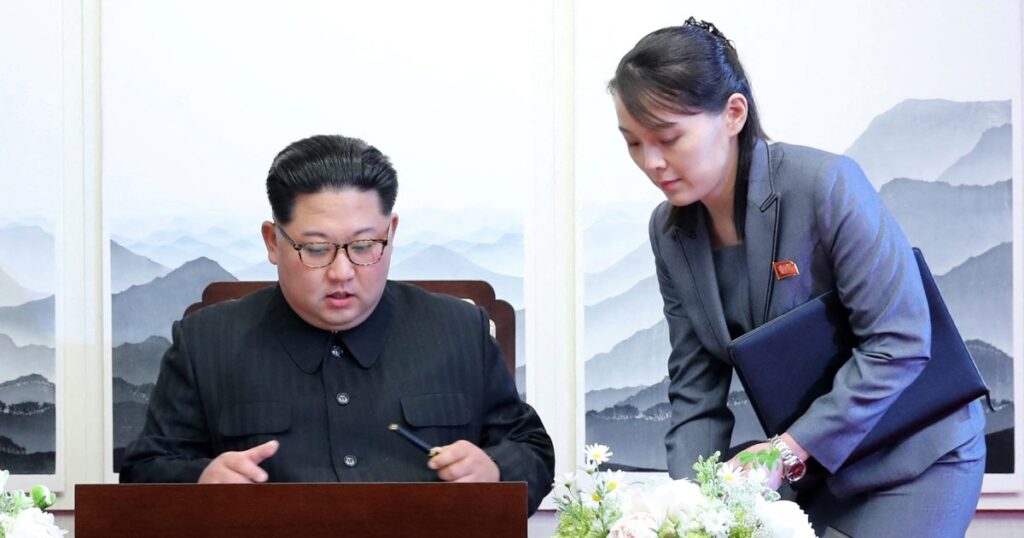
In a significant development ahead of the key party congress, North Korea has officially promoted Kim Jong Un’s sister, Kim Yo Jong, to the position of full department director within the ruling Workers’ Party Central Committee. This move underscores her rising political influence and signals a consolidation of power within the Kim family, which has ruled North Korea for decades.
Kim Yo Jong’s appointment comes at a pivotal moment as her brother, Supreme Leader Kim Jong Un, pledged to prioritize economic growth during the party congress. The congress, a rare and crucial political event, sets the tone for North Korea’s policy direction and strategic priorities.
The promotion of Kim Yo Jong is widely seen as a reinforcement of the regime’s stability and an indication that the leadership is focusing on strengthening internal unity. As full department director, she now holds significant authority in the party’s hierarchy, giving her substantial control over policies and administrative functions.
Kim Jong Un’s vow to boost the economy is particularly noteworthy given the country’s ongoing challenges. North Korea has faced a multitude of obstacles, including international sanctions, the impact of the COVID-19 pandemic, and natural disasters, all of which have strained its economy. By elevating his sister and setting ambitious goals, Kim aims to present a united front and demonstrate the regime’s commitment to economic recovery.
Observers note that Kim Yo Jong has been a prominent figure in North Korean politics for several years, often acting as her brother’s close adviser and a key player in diplomatic engagements. Her increased authority suggests a strategic emphasis on consolidating power within the family to maintain regime continuity and stability.
The Workers’ Party Congress, which convenes infrequently, is essential for formulating policy and discussing the country’s future. During the event, new leadership appointments and policy frameworks are typically announced, setting the stage for North Korea’s domestic and foreign policy advancements.
Economically, North Korea has struggled with shortages of food and fuel, as well as limited access to global markets due to sanctions related to its nuclear weapons program. Kim Jong Un’s focus on economic development may involve efforts to improve self-reliance, invest in infrastructure projects, and possibly seek ways to alleviate sanctions’ impact.
The international community will be closely watching how these developments unfold, assessing whether the leadership’s rhetoric translates into tangible economic reforms or if the regime continues to prioritize military advancements and nuclear capabilities.
In summary, Kim Yo Jong’s promotion is a clear indicator of her rising prominence in North Korea’s political structure, reflecting both a consolidation of power within the ruling family and a strategic emphasis on economic revival as outlined by Kim Jong Un at the party congress. As the country navigates complex internal and external challenges, the leadership appears to be positioning itself to maintain control while attempting to address pressing economic issues.