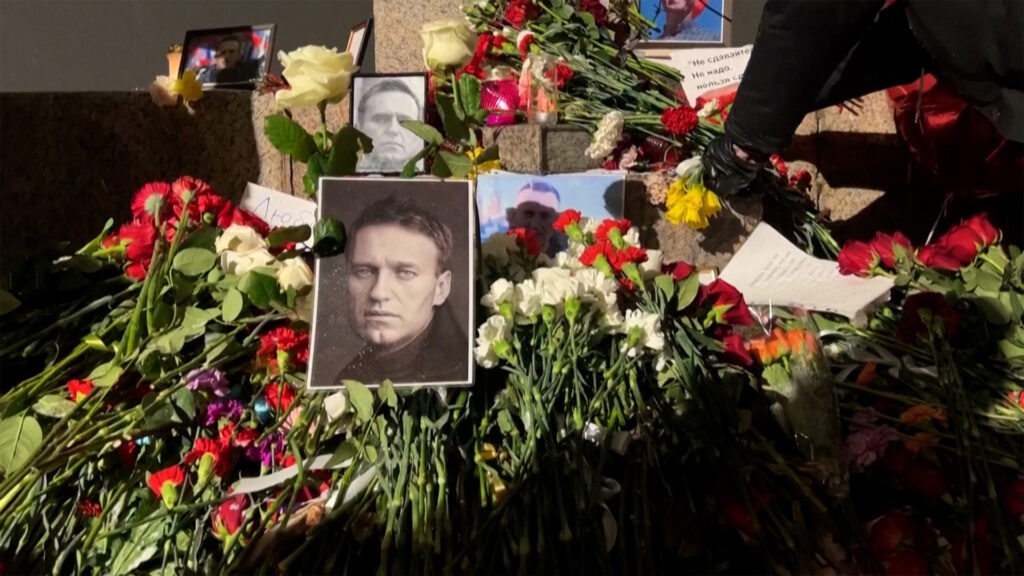
In a significant development that has captured international attention, five European countries have released a joint statement asserting that Russian opposition leader Alexey Navalny was poisoned with a toxin derived from dart frogs. Navalny, a prominent critic of the Russian government, was reported to have been killed in 2024 according to these claims.
The European nations involved conducted independent laboratory tests on samples related to Navalny’s case. Their findings collectively indicate the presence of a rare and highly potent toxin, commonly associated with dart frogs, which are known for their toxic secretions. This type of poison is notorious for causing severe physiological effects and complications, which could lead to death if administered in sufficient quantities.
Alexey Navalny has long been known as a vocal opponent to Vladimir Putin’s administration, exposing corruption and rallying opposition within Russia. His political activism has placed him under significant threat multiple times, with earlier incidents pointing to attempts on his health and freedom.
The use of such an exotic and controlled toxin is unprecedented in the context of political poisoning cases, raising serious concerns about the methods used to silence dissent in Russia. European officials have emphasized the gravity of the accusation and have called for a thorough international investigation to hold those responsible accountable.
Russia has vehemently denied these allegations, dismissing them as politically motivated and lacking credible evidence. The Kremlin has challenged the findings of the European labs and accused the West of attempting to destabilize Russian internal affairs.
Experts in toxicology and international law have weighed in on the case. Some have highlighted the complexities in tracing and proving the use of rare toxins in targeted killings, while others stress the importance of transparency and cooperation between nations to ensure justice and prevent the normalization of such acts.
The poisoning of Alexey Navalny fits a broader pattern of suppression against political opponents in Russia, including imprisonment, exile, and mysterious health crises. This recent revelation has intensified diplomatic tensions between Russia and European nations, further polarizing international relations.
Human rights organizations have condemned the incident and urged a global response to protect activists and dissidents from similar threats. They emphasize that the use of poison as a weapon against political figures undermines fundamental human rights and democratic principles.
As investigations continue, the world watches closely, hoping for clarity and accountability in one of the most high-profile cases involving political dissent and alleged state-sponsored assassination tactics. The implications of this case extend beyond Russia, touching on the global commitment to human rights, rule of law, and the safety of political activists worldwide.
In summary, the European countries’ allegation that Alexey Navalny was killed using dart frog toxin marks a chilling escalation in the methods reportedly used against Russian opposition figures. This development calls for concerted international efforts to address political persecution and to safeguard the voices that challenge authoritarian regimes.