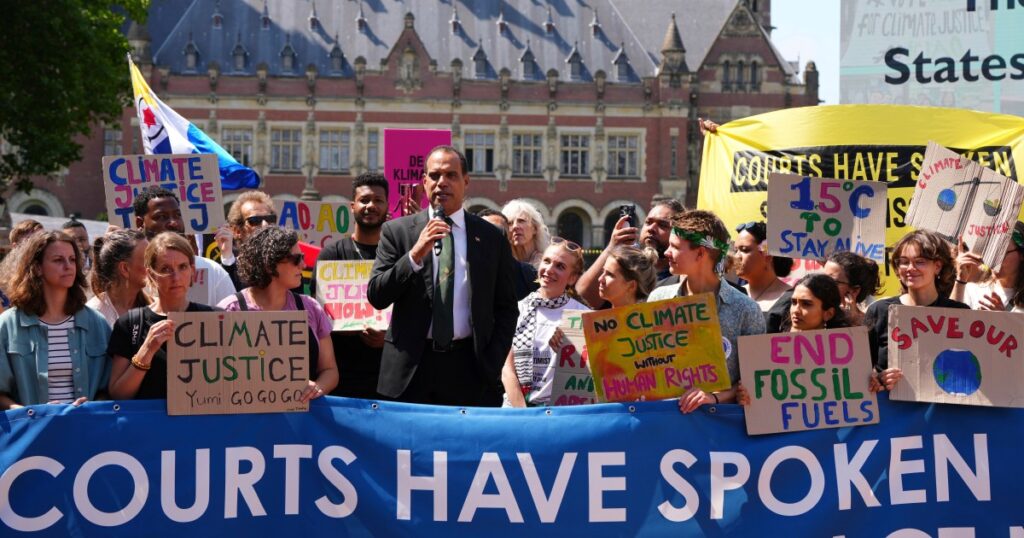
The United States has reportedly exerted pressure on the Pacific island nation of Vanuatu at the United Nations, voicing strong objections to its efforts to garner international support for a landmark ruling by the International Court of Justice (ICJ) related to climate change. According to a confidential cable obtained by Al Jazeera, the US government expressed significant resistance to Vanuatu’s push for backing in the global arena regarding the ICJ’s decision.
Vanuatu, a small island developing state profoundly vulnerable to the impacts of climate change, sought to leverage the ICJ’s ruling as a powerful tool to amplify its concerns and demands for international action on climate change. The ICJ ruling is considered a landmark decision, highlighting the legal obligations of states to address the climate crisis and the potential for holding nations accountable under international law.
The cable reveals that the US diplomatically opposed efforts by Vanuatu to build consensus and support at the United Nations for the ICJ judgment. This development reflects ongoing tensions in global climate negotiations, where emerging legal precedents on climate responsibility are met with resistance, often from powerful nations wary of legal and financial implications.
This friction comes as Vanuatu continues to experience firsthand the devastating effects of climate change, including increased frequency and severity of cyclones, sea level rise, and coastal erosion, threatening the nation’s very existence. Vanuatu and other Pacific island states have long advocated for stronger international commitments and accountability mechanisms to address climate change impacts.
The International Court of Justice ruling in question marks a significant moment in environmental law, as it may set a precedent for climate change litigation worldwide. It underscores the emerging role of international legal institutions in tackling climate change, beyond political negotiations and voluntary commitments.
Experts note that the US’s objection to the ruling and Vanuatu’s advocacy underscores the complex interplay between diplomatic interests, international law, and climate change policy. While some countries push for heightened legal accountability for climate impacts, others fear that such rulings could lead to increased liabilities and reshape international relations.
Vanuatu’s push at the United Nations illustrates the persistent efforts by vulnerable nations to hold bigger emitters accountable and seek global solidarity in combating climate change. The US opposition indicates the challenges that lie ahead for international climate litigation and the broader global climate governance framework.
As climate change continues to pose existential threats, especially to small island nations, the outcomes of these diplomatic confrontations and legal rulings could determine the future of international climate action and justice.