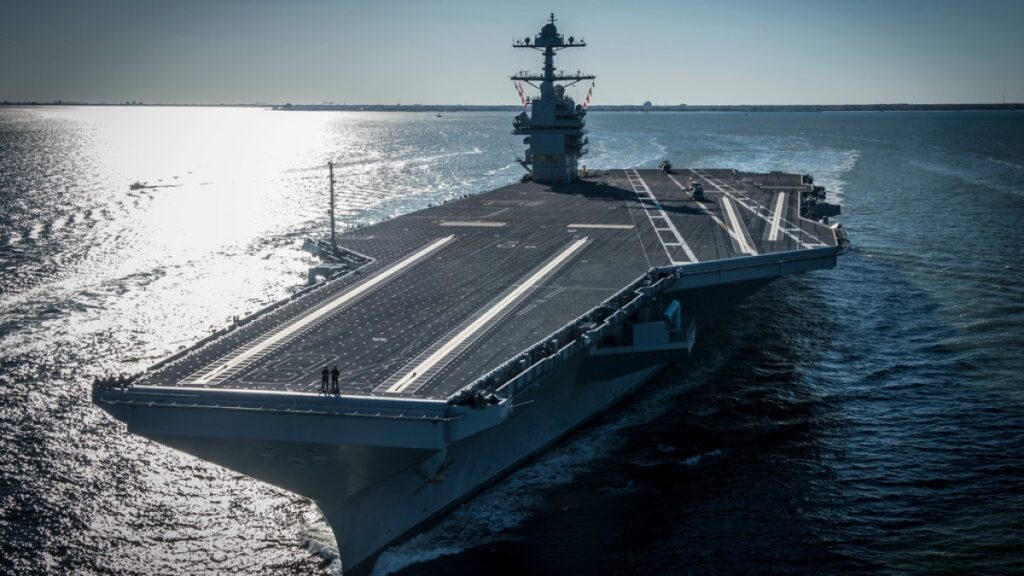
Former President Donald Trump has confirmed that the United States will be sending a second aircraft carrier to the Middle East very soon, a move that underscores the growing tensions and strategic interests in the region. Trump specifically mentioned the deployment of the USS Gerald R. Ford, one of the most advanced aircraft carriers in the US Navy. This announcement coincides with ongoing negotiations with Iran, which Trump expressed optimism about, stating he believes the talks will be successful.
The decision to deploy an additional aircraft carrier highlights the US’s commitment to maintaining a strong military presence in the Middle East. This region has been a focal point of geopolitical conflict, particularly concerning Iran’s nuclear program and its influence across the Middle Eastern countries. By increasing naval assets in the area, the US aims to bolster deterrence and support allied nations, ensuring stability amidst ongoing uncertainties.
The USS Gerald R. Ford, named after the 38th President of the United States, is a flagship vessel equipped with state-of-the-art technology and weaponry, making it a significant force projection tool. Its deployment not only serves military purposes but also sends a strong diplomatic message regarding US readiness to defend its interests and those of its allies.
Trump’s optimistic view on the negotiations with Iran suggests a dual approach of diplomacy backed by military strength. While the talks aim to address nuclear non-proliferation and regional security concerns, the added military presence could also serve as leverage to encourage more constructive dialogue from Tehran.
The return of a second aircraft carrier underscores the heightened level of alert and preparedness in Washington in response to evolving threats. It signals to both allies and adversaries that the United States is prepared to act decisively if necessary.
Historically, aircraft carriers have played a pivotal role in US military strategy, especially in conflict regions. Their mobility and power projection capabilities provide crucial support for ground forces, intelligence gathering, and demonstrate US naval supremacy. This deployment is consistent with previous measures taken to counterbalance Iranian activities and safeguard international maritime routes.
Further details on the timing of the USS Gerald R. Ford’s arrival and the specific objectives of its mission have not been disclosed. However, military analysts note that increased carrier presence often correlates with heightened diplomatic activity, indicating that the US is closely monitoring developments in the Middle East.
In conclusion, the announcement by Trump of the forthcoming deployment of a second US aircraft carrier to the Middle East amid ongoing negotiations with Iran reflects a complex and multifaceted approach to regional security. The combination of military readiness and diplomatic engagement is aimed at promoting stability, deterring aggression, and securing American and allied interests in a volatile geopolitical landscape.