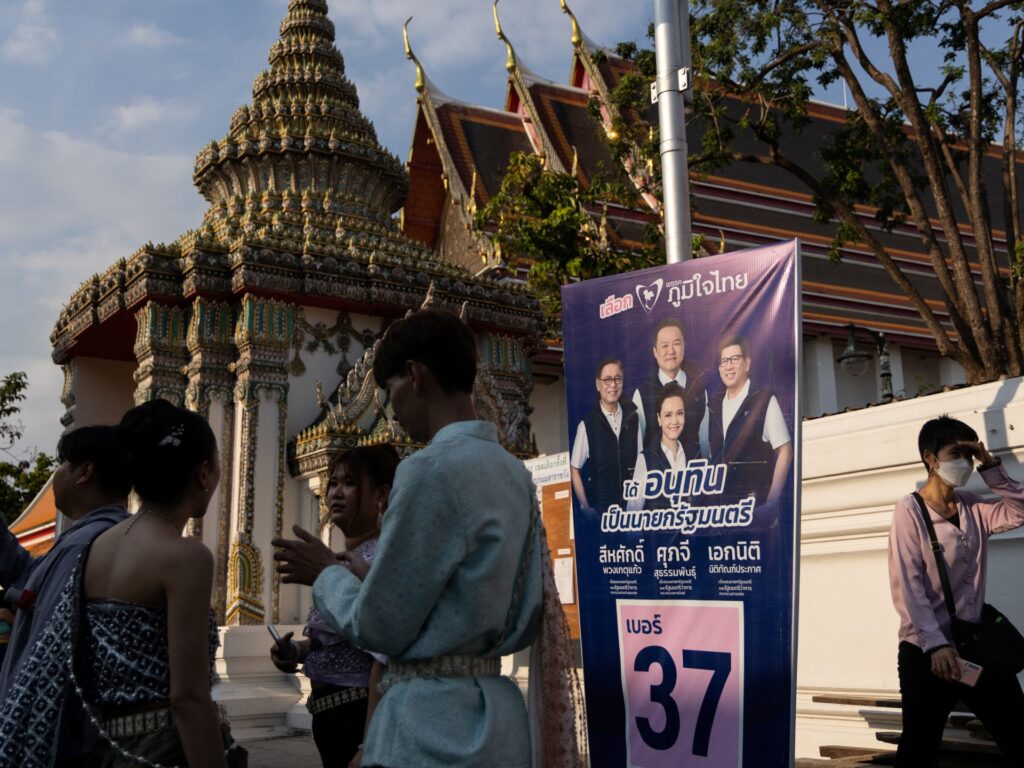
Thailand’s recent election has marked a significant revival of the traditional political order, underscoring the continuing influence of established dynasties in shaping the country’s political landscape. The so-called ‘Baan Yai’ or Big Houses—historically powerful family-based political patronages—played a crucial role in swelling support for conservative candidates across the nation.
This election cycle saw a pronounced preference among voters for candidates affiliated with long-standing political families who have deep roots in local communities and a history of political dominance. These dynasties leverage their established networks and socio-economic clout to sway public opinion and secure votes, thereby reinforcing the status quo.
The ‘Baan Yai’ system, named for the grand ancestral homes that symbolize their authority, has been a cornerstone of Thailand’s political fabric for decades. These political families often maintain influence through patronage systems that distribute favors, jobs, and resources in exchange for electoral support.
Critics argue that this dynastic dominance stifles political innovation and maintains a cycle of oligarchic control. They contend that despite promises of reform and modernization, the electoral process is heavily skewed in favor of entrenched elites, limiting opportunities for newer, more progressive voices to emerge.
Supporters, however, view these traditional centers of power as stabilizing forces that maintain social order and continuity in governance. In volatile political climates, they claim that experienced political families bring a degree of predictability and reliability that newer political groups lack.
The outcome of the election reinforces the conservatism that has characterized much of Thailand’s political history, especially in rural areas where local loyalties to ‘Baan Yai’ families remain strong. Voters in these regions often see these families as protectors of local interests against the broader uncertainties of national-level politics.
This election also highlights the ongoing tension between Thailand’s push towards democratization and the persistence of feudal-like political structures. Although the country has experienced several democratic reforms and electoral contests, the grip of these old political orders suggests a complex coexistence of modern electoral practices and traditional power dynamics.
Analysts note that for Thailand to advance politically, it may need to address the influence of these dynastic systems by promoting greater transparency, encouraging political pluralism, and fostering a political culture that values merit and new ideas over inherited influence.
The election results serve as a reminder of the deep-rooted nature of political patronage in Thailand and the challenges faced in reforming a system that has historically concentrated power within a few influential families. As the country moves forward, the balance between respecting tradition and embracing democratic evolution will remain a key issue in shaping Thailand’s political future.