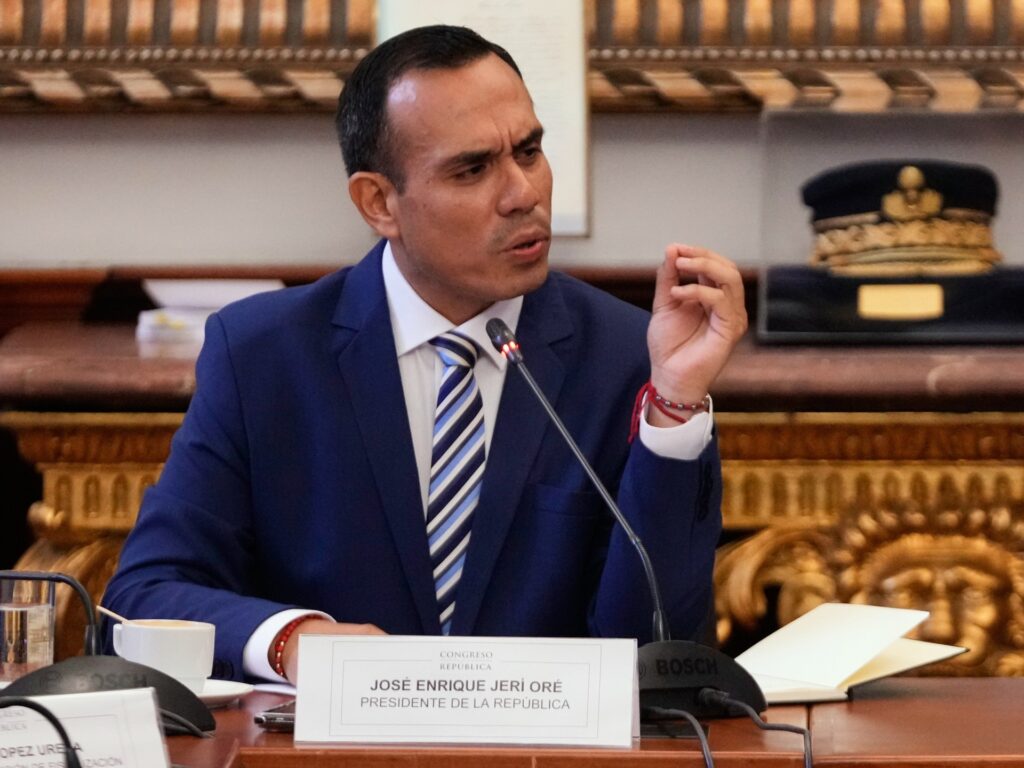
Peru is bracing for a significant political event as the nation’s legislature prepares to debate the possible removal of President Jose Jeri, who has only been in office for four months. This unprecedented move unfolds amid serious allegations against Jeri, including bribery and influence-peddling claims that have cast a shadow over his nascent presidency.
President Jose Jeri, despite being relatively new in his role, has rapidly become a controversial figure. Notably, he has announced that he will not seek re-election, a decision that adds a complex dimension to the ongoing political turmoil. The debate over his removal is expected to be intense, reflecting deep divisions within the Peruvian political landscape.
The allegations against Jeri allege that he engaged in corrupt practices, including bribery and leveraging his office for personal or political gain. These accusations have ignited widespread public concern and have led to calls from various political factions for his immediate dismissal.
Analysts suggest that the move to remove the president so early into his term is a rare and telling sign of political instability in Peru. It raises questions about governance, accountability, and the robustness of Peru’s democratic institutions.
The debate itself is scheduled to take place in the coming weeks, with lawmakers expected to weigh heavily the evidence and testimonies related to the accusations. International observers and human rights groups are closely monitoring the situation, emphasizing the importance of due process and the rule of law.
Public opinion in Peru is divided, with some citizens supporting the president’s removal as a necessary step to combat corruption, while others warn that such political upheaval could further destabilize the country.
Political commentators note that the government’s response to these allegations and the unfolding debate will have significant implications for Peru’s political future. It could set precedents for how allegations of misconduct are managed at the highest levels of power.
Furthermore, the economic repercussions of political uncertainty are a growing concern among investors and business leaders, who fear that ongoing instability could hinder economic growth and development.
As Peru navigates this challenging period, the focus remains on ensuring transparency, fairness, and justice throughout the process. The outcome of the debate will not only determine Jose Jeri’s political fate but will also be a critical test of Peru’s democratic resilience and commitment to clean governance.
In summary, Peru’s decision to debate the removal of President Jose Jeri less than half a year into his presidency highlights serious challenges facing the country. The ongoing allegations of corruption have sparked a fierce political debate and polarized public opinion, raising important questions about the future of Peruvian democracy and governance.