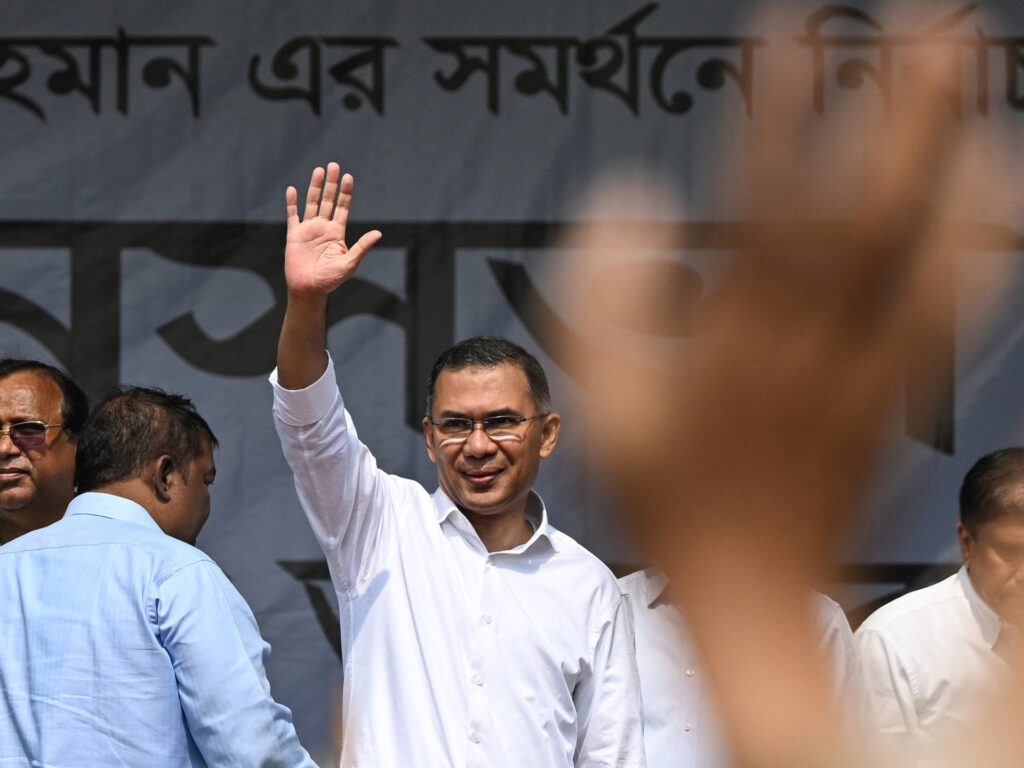
The Bangladesh Nationalist Party (BNP) has emerged victorious in the recent Bangladesh general elections, with early reports indicating a landslide win. The party’s success marks a significant political shift in the country, ending years of dominance by the rival Awami League.
Tarique Rahman, the influential BNP leader, is set to become the next Prime Minister of Bangladesh. Rahman, who has been a prominent figure in Bangladeshi politics for decades, is widely credited with reinvigorating the party and leading its campaign to a decisive victory.
Interim leader Muhammad Yunus extended his congratulations to Tarique Rahman following the election results. Yunus praised Rahman for the “landslide victory of his party,” highlighting the strong mandate the people have given BNP to govern the nation.
The BNP’s victory is expected to bring significant policy changes, with Rahman emphasizing economic development, anti-corruption measures, and improving the nation’s infrastructure during his campaign. Analysts suggest that the election outcome reflects the public’s desire for change and new governance approaches.
This election was closely watched both domestically and internationally due to Bangladesh’s strategic importance in South Asia and its growing economy. The peaceful conduct of the elections was also noted as a positive sign for the country’s democratic maturity.
However, challenges remain for the incoming government. Rahman and the BNP will need to address issues such as poverty, healthcare, education, and relations with neighboring countries. The administration’s ability to deliver on its promises will be crucial to maintaining the public’s trust going forward.
Political analysts have highlighted Tarique Rahman’s leadership style as a blend of pragmatism and strong political will. His ability to appeal to both urban voters and rural constituencies played a key role in the sweeping victory.
The Bangladesh Nationalist Party’s return to power raises expectations among supporters for reforms in governance and economic policies. At the same time, opposition groups are watching closely, ready to challenge new policies they disagree with.
As Bangladesh prepares for a new chapter under Tarique Rahman’s leadership, the international community is hopeful for continued stability and growth in the region. Diplomatic missions have expressed eagerness to engage with the new government to enhance bilateral relations and cooperation.
In conclusion, the BNP’s sweeping victory in the recent polls and Tarique Rahman’s imminent appointment as Bangladesh’s Prime Minister symbolize an important political transition. The nation looks forward to seeing how this leadership will guide Bangladesh’s future development and positions on the world stage.