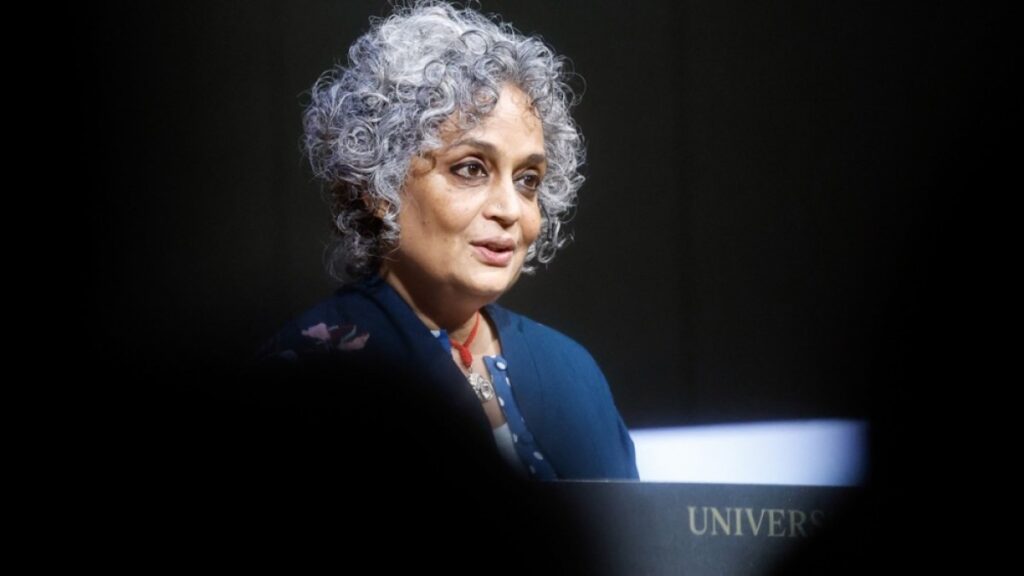
Arundhati Roy, the acclaimed author and activist, has taken a stand by resigning from the Berlin Film Festival jury after being ‘shocked’ by controversial remarks made about the Gaza conflict. The incident unfolded when Wim Wenders, the jury chair and renowned filmmaker, stated that filmmakers should ‘stay out of politics’ while addressing questions about Germany’s support for Israel amidst the ongoing war in Gaza.
Roy, known for her outspoken views on global conflicts and human rights issues, found Wenders’ comments dismissive and contrary to her belief in the power of art as a platform for political expression. Her decision to quit the prestigious festival jury highlights the tensions between art, politics, and the responsibilities of cultural institutions during times of international crisis.
The Berlin Film Festival, one of the world’s foremost film events, has often been a venue for challenging discussions and showcasing politically charged films. However, Wenders’ statement sparked widespread debate among filmmakers, critics, and audiences about the role of artists and festivals in addressing geopolitical issues.
Wenders, a respected figure in the film community, made his remark during a press conference when asked about Germany’s stance in supporting Israel’s military actions in Gaza. His assertion that filmmakers must remain apolitical was seen by many as an attempt to depoliticize an intensely political and humanitarian conflict.
Roy’s exit has ignited discussions about the ethical responsibilities of artists and cultural platforms during wartime and humanitarian crises. By stepping down, she aims to emphasize that silence or neutrality can often be interpreted as complicity in injustice.
The controversy underscores the complex relationship between art and politics, especially in regions afflicted by conflict. It raises critical questions about whether cultural events like the Berlin Film Festival should maintain political neutrality or leverage their influence to advocate for peace and human rights.
This development also draws attention to how Germany, as a nation, navigates its political alliances and historical context in relation to the Israel-Palestine conflict. The festival’s response to Roy’s resignation and the remarks of its jury chair remain awaited, as the incident has already sparked significant global media attention.
Arundhati Roy’s reaction aligns with her long-standing activism for justice and humanitarian causes, and her departure from the Berlin Film Festival jury sends a powerful message about the intersection of art, politics, and moral responsibility in times of crisis.