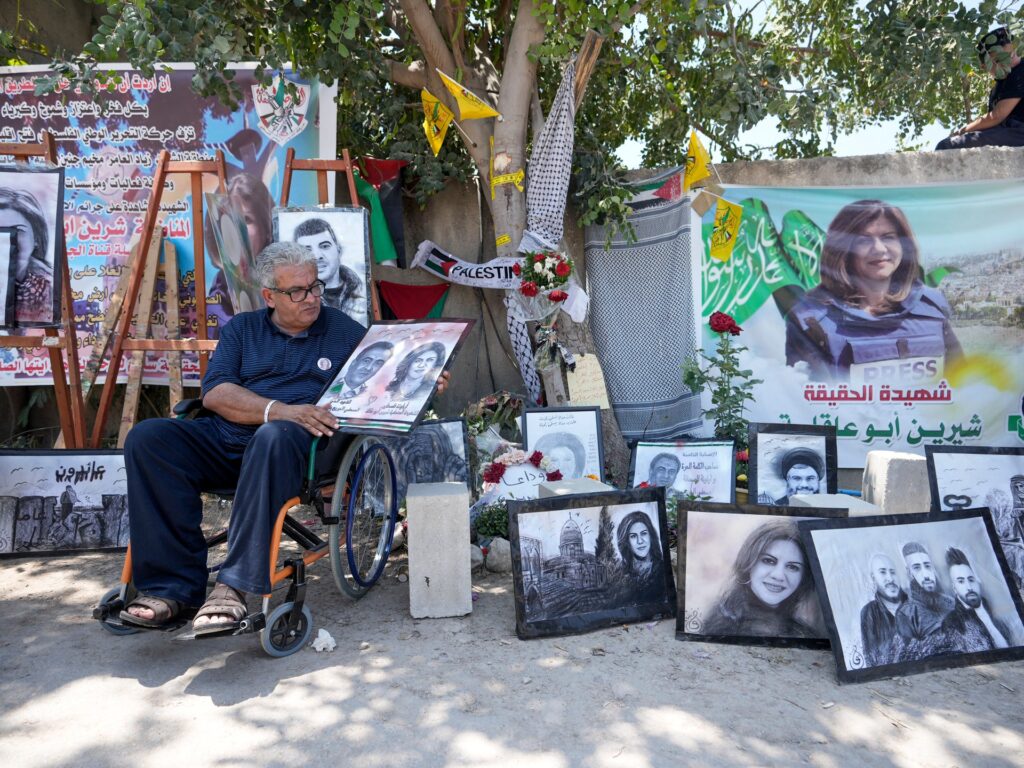
In a significant and controversial development, Palestinian journalist Ali al-Samoudi was arrested by Israeli authorities after witnessing the fatal shooting of veteran Al Jazeera reporter Shireen Abu Akleh in 2022. Abu Akleh, a prominent journalist known for her extensive coverage of the Israeli-Palestinian conflict, was shot dead by an Israeli sniper while reporting in the West Bank.
Al-Samoudi was alongside Abu Akleh at the time of the incident, providing a firsthand account of the attack that has raised substantial international concern and condemnation. His arrest has triggered outrage among press freedom advocates, international organizations, and many governments who view it as an attempt to suppress independent witness accounts of the killing.
The killing of Shireen Abu Akleh itself was a focal point for intense scrutiny regarding Israel’s military operations and the safety of journalists covering conflict zones. She was known for her fearless reporting and was respected globally for shedding light on the realities faced by Palestinians.
Following the incident, various investigations pointed to Israeli sniper fire as the cause of her death, leading to widespread calls for accountability. However, the Israeli government has repeatedly denied intentional targeting and has criticized the narratives emerging from the eyewitness testimonies, including that of Ali al-Samoudi.
Al-Samoudi’s detention is seen by many human rights groups as a crackdown designed to intimidate journalists and witnesses who might challenge the official accounts. These actions threaten press freedom, particularly in areas of conflict where independent reporting is paramount for unbiased information dissemination.
Human rights organizations have urged the Israeli government to release al-Samoudi immediately and to ensure the protection of journalists operating in volatile environments. They emphasize the critical role that witnesses and journalists play in documenting truth and ensuring accountability amidst conflict.
The international community continues to call for transparent investigations into both Abu Akleh’s killing and the subsequent treatment of her colleagues and witnesses, including al-Samoudi. The situation highlights the broader risks faced by journalists in conflict zones globally, where freedom of the press often collides with military and political interests.
The case has also ignited discussions about the protections afforded to journalists under international law, stressing the need for stringent enforcement to prevent such detentions and attacks in the future.
As the world watches, the arrest of Ali al-Samoudi remains a contentious and pivotal issue in the ongoing discourse about press freedom, human rights, and justice in the Israeli-Palestinian conflict. His detention underscores the dangers journalists confront and the urgent need to safeguard their role as bearers of truth in times of turmoil.