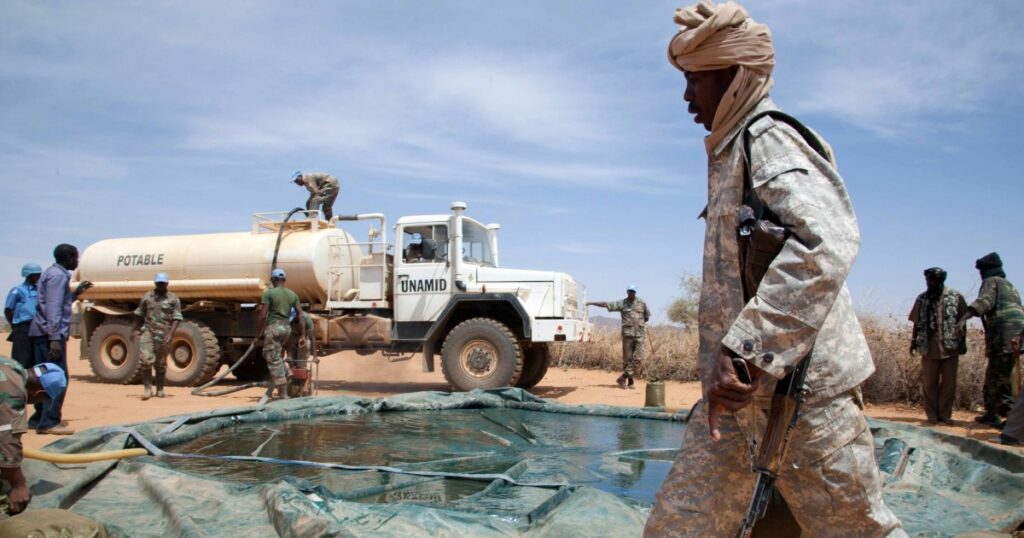
Water scarcity is rapidly becoming one of Africa’s most pressing challenges, prompting the African Union (AU) to place the issue of water security high on its diplomatic and policy agenda. The prospect of ‘water wars’—conflicts over access and control of vital water resources—is no longer a distant hypothetical scenario but a potential reality, according to experts monitoring the continent’s evolving situation.
Africa is endowed with significant water resources, including major rivers like the Nile, Congo, Niger, and Zambezi, as well as extensive freshwater lakes and aquifers. Yet, the distribution of these resources is highly uneven, and many regions face acute water shortages exacerbated by rapid population growth, urbanization, and industrial expansion. Moreover, climate change is intensifying droughts, reducing rainfall, and causing unpredictable weather patterns, all of which heighten vulnerability to water stress.
The AU’s decision to prioritize water issues reflects growing concerns about both natural and human-made pressures on shared water bodies. Transboundary water management is particularly critical in this regard, as many rivers and lakes cross multiple national borders. Conflicts can arise between upstream countries that control the sources and downstream countries reliant on inflows, leading to disputes over water allocation, dam construction, and pollution.
Experts highlight several factors fueling tension over water in Africa:
1. **Climate Change Impact:** Changing precipitation patterns and frequent droughts reduce water availability, often disproportionately affecting already vulnerable communities.
2. **Upstream-Downstream Conflict:** Countries along shared waterways face competing demands. For instance, major hydroelectric projects upstream may limit water flow to downstream farmers relying on river water for irrigation.
3. **Population and Urbanization:** Rapid population growth and the expansion of cities increase domestic and industrial water consumption, putting additional pressure on finite resources.
4. **Industrial Pollution and Mismanagement:** Unregulated industrial discharge contaminates water sources, reducing usability and threatening public health.
5. **Weak Governance and Institutional Challenges:** Lack of effective water governance frameworks hinders cooperation and equitable resource management among nations and within countries.
The Nile Basin provides a vivid example of these dynamics. The Grand Ethiopian Renaissance Dam (GERD) has been a source of contention between Ethiopia (upstream), Sudan, and Egypt (downstream). While Ethiopia views the dam as vital for its development and energy generation, Egypt and Sudan fear it will significantly reduce their water supply.
Similarly, the Congo River Basin involves multiple countries where deforestation, mining, and industrial activities cause pollution that crosses borders and jeopardizes water quality.
African leaders, through the AU, are pushing for strengthened regional cooperation frameworks, emphasizing sustainable and equitable water management to prevent conflict. Initiatives like the African Water Vision 2025 advocate for integrated water resource management, improved infrastructure, and investment in climate-resilient water systems.
Experts suggest that preventing ‘water wars’ requires a combination of scientific, diplomatic, and community-level approaches. Enhanced data collection and sharing, joint water monitoring, conflict resolution mechanisms, and inclusive policies that consider vulnerable populations are vital components.
In addition, international partners and development agencies have a role in supporting capacity-building and financing for infrastructure projects that enhance water availability and sanitation across the continent.
Climate resilience must also be prioritized to adapt agricultural practices, safeguard wetlands, and restore watersheds.
While the threat of water-related conflicts is real, it also presents an opportunity for African countries to pioneer cooperative models that prioritize shared benefits and long-term sustainability over unilateral gains.
The AU’s proactive stance signals recognition that water security transcends national borders and is integral to peace, development, and human well-being.
In conclusion, African ‘water wars’ are not inevitable if strategic and collaborative actions are taken promptly. The continent faces complex challenges from climate change, population pressures, and economic development, but with coordinated policies and robust governance, water resources can become a source of stability rather than conflict.