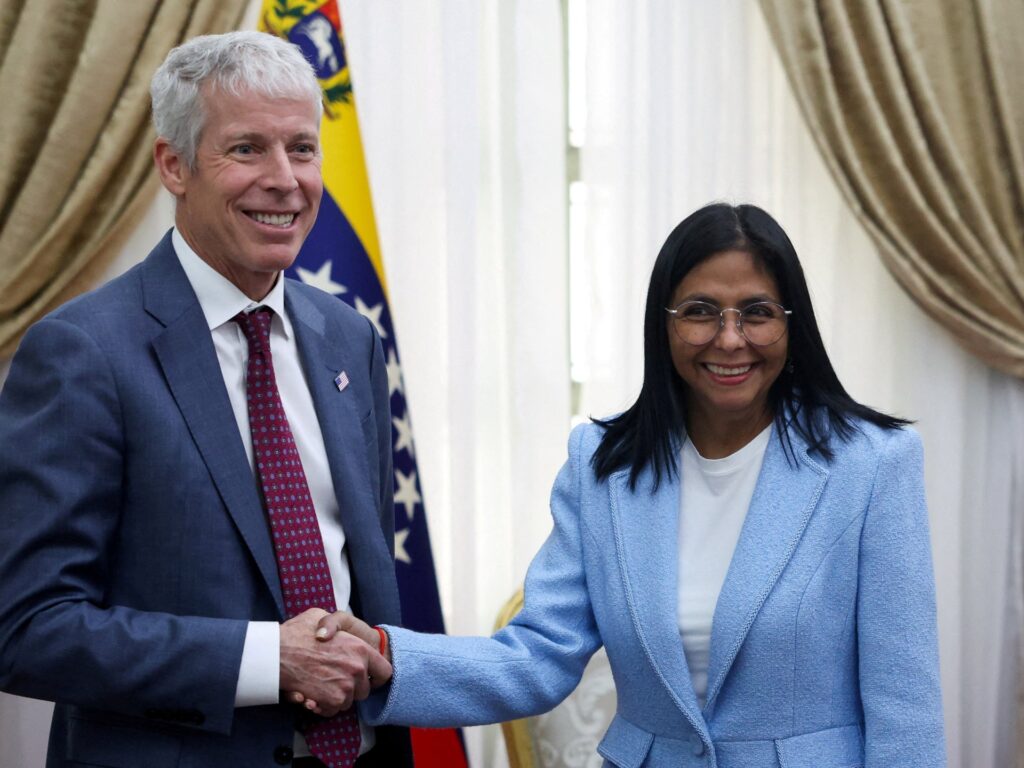
In a significant development concerning United States-Venezuelan relations, US Energy Secretary Chris Wright recently visited Venezuela to advocate for increased oil production in the country. His visit underscores the strategic importance of Venezuelan oil amidst fluctuating global energy markets and geopolitical tensions.
During his visit, Secretary Wright highlighted the potential of Venezuela’s oil industry to contribute substantially to global energy supplies. He emphasized collaboration and investment opportunities aimed at revitalizing the sector, which has faced numerous challenges in recent years due to economic sanctions and political instability.
However, this visit has not occurred without controversy. Concurrently, a group of Democrats in the US Congress introduced new legislation aimed at increasing transparency regarding Venezuelan oil sales handled during the administration of former President Donald Trump. The proposed bill seeks to shed light on the extent and nature of oil transactions with Venezuela, ensuring accountability and compliance with US foreign policy objectives.
Democratic lawmakers argue that the opaque nature of these deals raises concerns about the potential circumvention of US sanctions and the implications for American energy security and foreign relations. They insist that transparency is crucial for maintaining ethical standards and for making informed policy decisions.
The legislation also reflects broader concerns within the US government about the complex relationship with Venezuela, which involves balancing sanctions designed to pressure the Venezuelan government with the economic and strategic importance of Venezuelan oil.
Secretary Wright’s visit to Venezuela and his promotion of the country’s oil production capabilities can be viewed as a pragmatic approach to addressing current energy demands. It signals a willingness within parts of the US administration to engage with Venezuelan energy resources, potentially softening the hardline stance that has characterized previous US policies.
Meanwhile, the Democrat-led push for transparency indicates ongoing scrutiny of past administrations’ dealings with Venezuela, highlighting the contentious political environment that surrounds US-Venezuelan energy relations.
Energy experts note that Venezuela holds one of the largest proven oil reserves in the world, presenting a significant opportunity for energy markets. However, decades of mismanagement, corruption, and sanctions have hindered the country’s ability to fully capitalize on this resource.
The US interest in Venezuelan oil comes at a time when the global energy landscape is undergoing rapid changes, with increasing demands for energy security, price stability, and diversification of supply sources.
By encouraging increased oil production in Venezuela, Secretary Wright seeks to bolster global energy supplies while also potentially improving diplomatic ties. His engagement may pave the way for future cooperation that balances economic interest with international political realities.
The controversy sparked by the Democrats’ legislation underlines the delicate balance US policymakers must navigate between fostering energy partnerships and upholding ethical and legal standards.
This dual approach — promoting Venezuelan oil production while demanding transparency in past dealings — reflects the complexity of modern energy diplomacy. It illustrates how energy issues can intersect with political accountability and international relations.
Looking ahead, these developments suggest that US policy towards Venezuela might evolve to incorporate both strategic engagement and stringent oversight, aiming to maximize benefits while minimizing risks.
The international community will be watching closely as these policy threads unfold, recognizing the broader implications for global energy markets, democracy, and governance.
In conclusion, Secretary Chris Wright’s visit and the Democrats’ legislative initiative collectively underscore the intricate and multifaceted nature of US-Venezuela relations in the energy sector. They highlight the ongoing challenges and opportunities that come with managing one of the world’s most significant oil resources amidst political complexities.