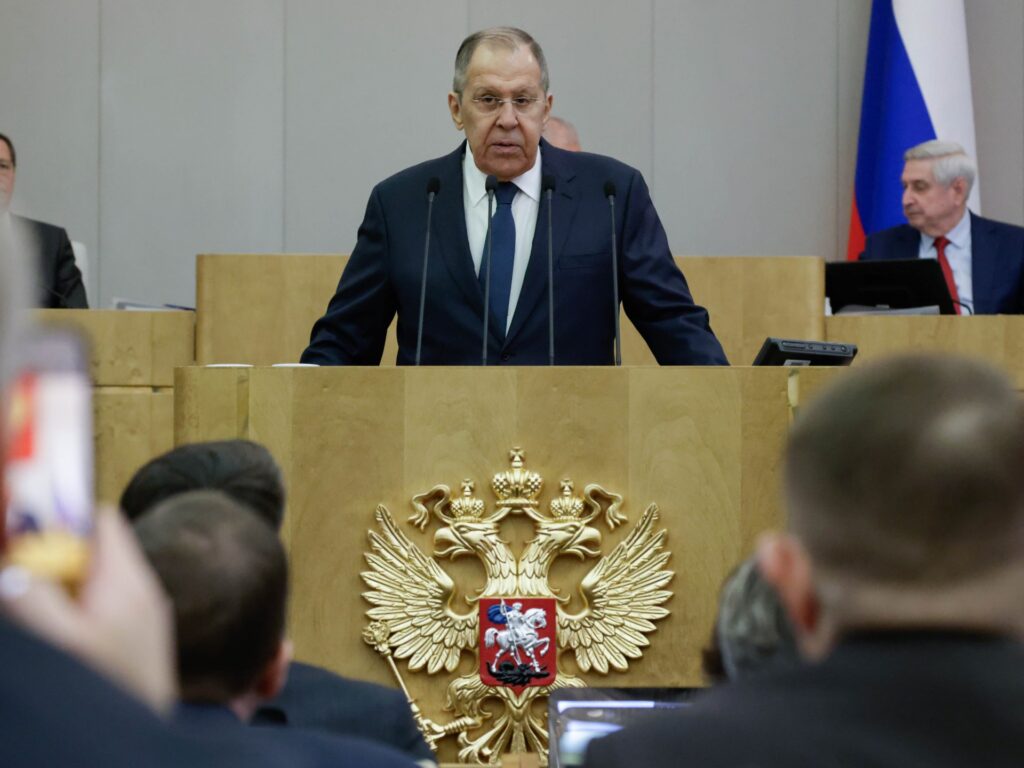
In a recent statement, Russia has declared its intention to adhere to the nuclear arms limits established by the New START treaty, despite its expiration. This commitment, announced by Foreign Minister Sergey Lavrov, hinges on the United States also honoring the same restrictions. Lavrov did not elaborate on the reasons behind his belief that the US would comply with these terms.
The New START treaty, which was originally signed in 2010, set caps on the number of deployed strategic nuclear warheads and delivery systems that both countries could maintain. It has been a cornerstone of arms control between the two global powers, aiming to reduce the risk of nuclear confrontation and promote stability.
Although the treaty expired recently, both Russia and the US have previously extended and adhered to its provisions, underscoring its significance in managing nuclear arsenals.
Lavrov’s announcement reflects ongoing tensions and uncertainty in international arms control agreements. While Russia’s stance suggests a desire to maintain some form of strategic stability, the hesitation regarding US compliance highlights mistrust.
Arms control experts view the continuation of the treaty’s limits as vital for global security. Should either party disregard the limits, it could lead to an escalation in nuclear armament and increased geopolitical risks.
This development comes amid broader geopolitical challenges, including strained relations and competing interests between Russia and the West. Observers are keenly watching for further diplomatic moves and potential negotiations on renewing or replacing the treaty with a new framework.
The New START treaty limits included a cap of 1,550 deployed nuclear warheads and 700 deployed delivery vehicles for each side. Both countries consistently reported their arsenals, providing transparency and confidence-building measures.
Lavrov’s statement suggests Russia is willing to maintain transparency and restraint for the time being, but the uncertainty leaves the arms control landscape fragile.
The international community widely supports continued dialogue and agreements to prevent nuclear proliferation and promote disarmament.
As Russia and the US navigate this critical juncture, the future of nuclear arms control remains uncertain. Stakeholders hope for constructive engagement to preserve the crucial frameworks that have kept nuclear threats in check for decades.